HMO management
HMO Tenant Management: From Move-In to Move-Out
· 10 min read
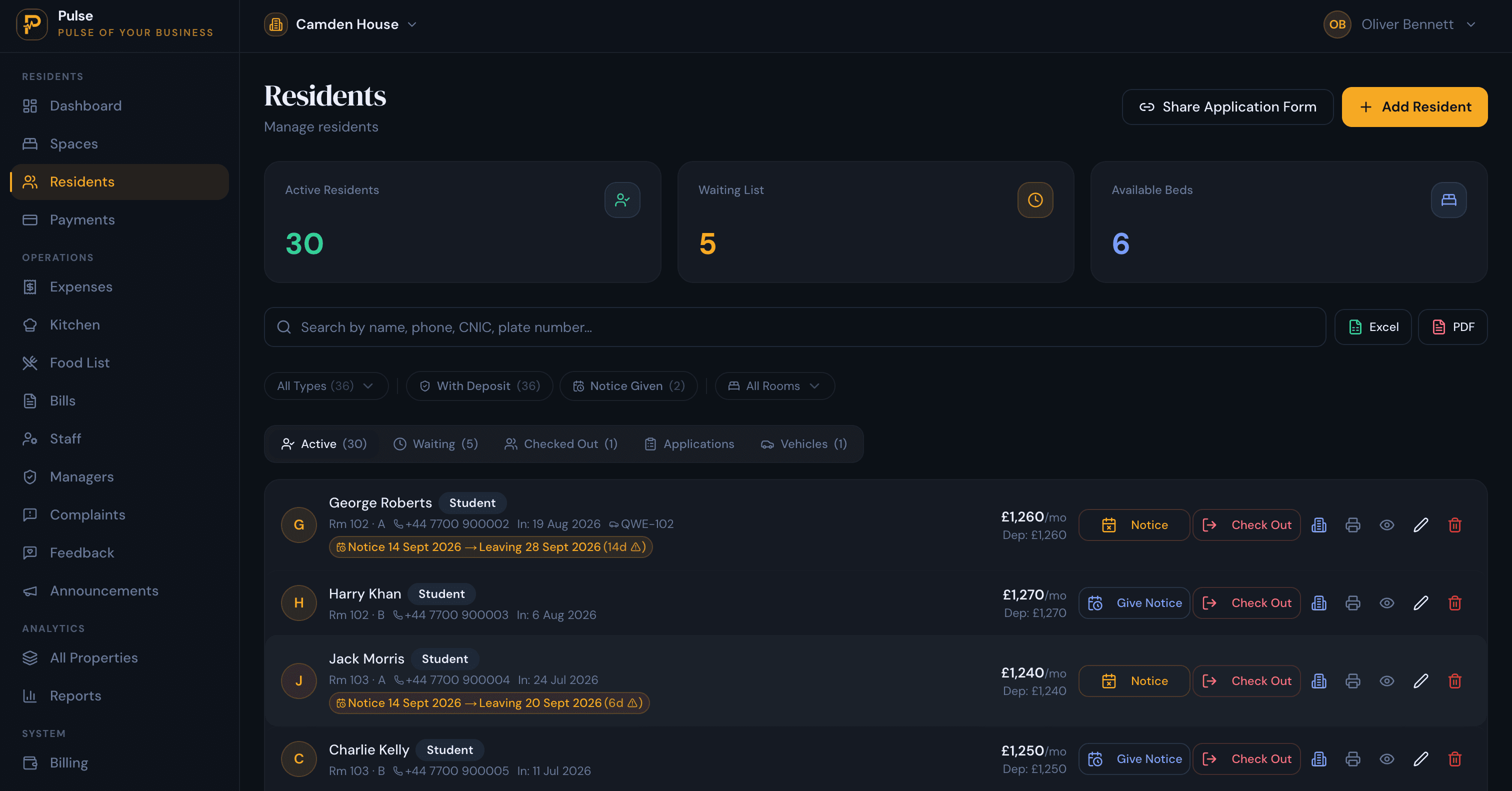
A single tenant in a single flat is easy to keep in your head. An HMO is not that. A six-bed house is six tenants, six sets of dates, six deposits and six people who each move in, occasionally change rooms, raise the odd issue and eventually leave, all on their own timeline. Manage four houses and you are running dozens of these little lifecycles at once.
Most of the friction in running an HMO is not the big moments; it is the small records that quietly go missing. The move-in meter reading no one wrote down. The deposit amount you are now unsure about. The tenant who swapped rooms in March, so their rent no longer matches the spreadsheet. By the time someone moves out, the gaps show up all at once, right when you need to settle a deposit fairly.
This guide to HMO tenant management walks through the tenant lifecycle stage by stage, from before a tenant arrives to after they leave, and sets out what to record at each point so nothing has to be reconstructed later. It is written for UK HMO landlords and property managers who let by the room.
What is HMO tenant management?
HMO tenant management is the work of running each tenant through their entire stay, rather than managing the building as a whole. Because an HMO holds several separate tenancies under one roof, the useful unit is the tenant in a room: their dates, their rent, their deposit, their documents and their history. Property management keeps the house running; tenant management keeps each person’s record accurate from the day they enquire to well after they have gone.
It helps to think of it as a lifecycle rather than a filing job. Each tenant moves through the same stages, and each stage has a small set of things worth recording. Get them at the right moment and the rest of the tenancy looks after itself.
The HMO tenant lifecycle
Here is the whole lifecycle at a glance. The sections that follow take each stage in turn.
| Stage | What needs to be managed |
|---|---|
| Before move-in | Tenant details, room and bed, tenancy dates, deposit and documents |
| Move-in | Check-in date, room confirmed, deposit, documents, opening meter reading |
| During the tenancy | Rent and payments, deposit, documents, utility charges, issues |
| Changes | Room transfers, rent changes, renewals and updated details |
| Move-out | Departure date, final readings, outstanding balances, deposit settlement, room back to vacant |
| After move-out | Final settlement, payment history, documents and room history |
1. Preparing for a new tenant
Good tenant management starts before anyone has a key. Once you have agreed to let a room, capture the essentials while they are fresh: the tenant’s contact and emergency details, the specific room and bed they are taking, the tenancy start and end dates, the rent and its payment schedule, and the deposit amount. Note which documents you need (the tenancy agreement, ID and the Right to Rent check) and record the room’s condition. Where you recharge utilities, take an opening meter reading now, not later, because a missing start reading is impossible to recreate at the end.
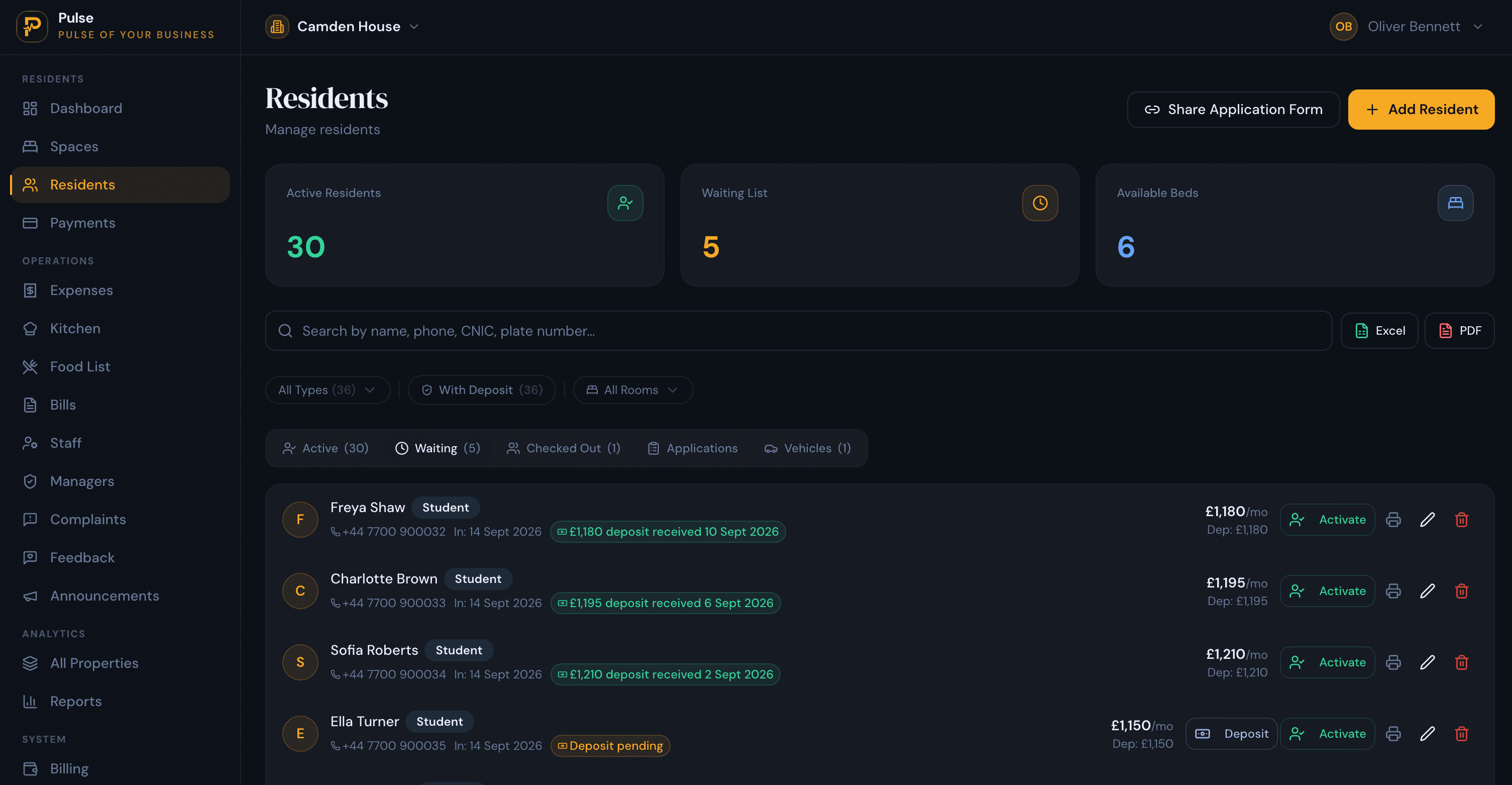
The point of doing this up front is that everything you record afterwards, every payment and every issue, attaches to a record that already exists and is already correct. A waiting list is a natural home for this: an incoming tenant sits there with their move-in date and deposit recorded, ready to activate on the day they arrive.
2. Managing the tenant move-in
Move-in day turns the plan into a live tenancy. Confirm the tenant is going into the room you assigned, record the check-in date, and take and record the deposit. Store the signed documents against the tenant rather than in a separate folder, confirm the rent amount and due date one more time, and, most importantly, link the tenant to the correct property and room. That link is what makes occupancy, rent and history line up for the rest of the stay.
On deposits, most assured shorthold tenancy deposits in England must be protected in a government-approved scheme; the rules are on GOV.UK. Recording the deposit in your own system is operational housekeeping, and separate from that legal duty to protect it.
3. Managing an active tenancy
During the tenancy, the tenant record becomes the single place you look when a question comes up. A useful record holds the tenant profile, the room and property they belong to, their rent and payment history, the deposit held, their documents and any utility charges, plus maintenance and issues, notes and the key events of the tenancy. The value is not any single field; it is that a question about a specific tenant is answered on one screen instead of across an inbox, a spreadsheet and a chat.
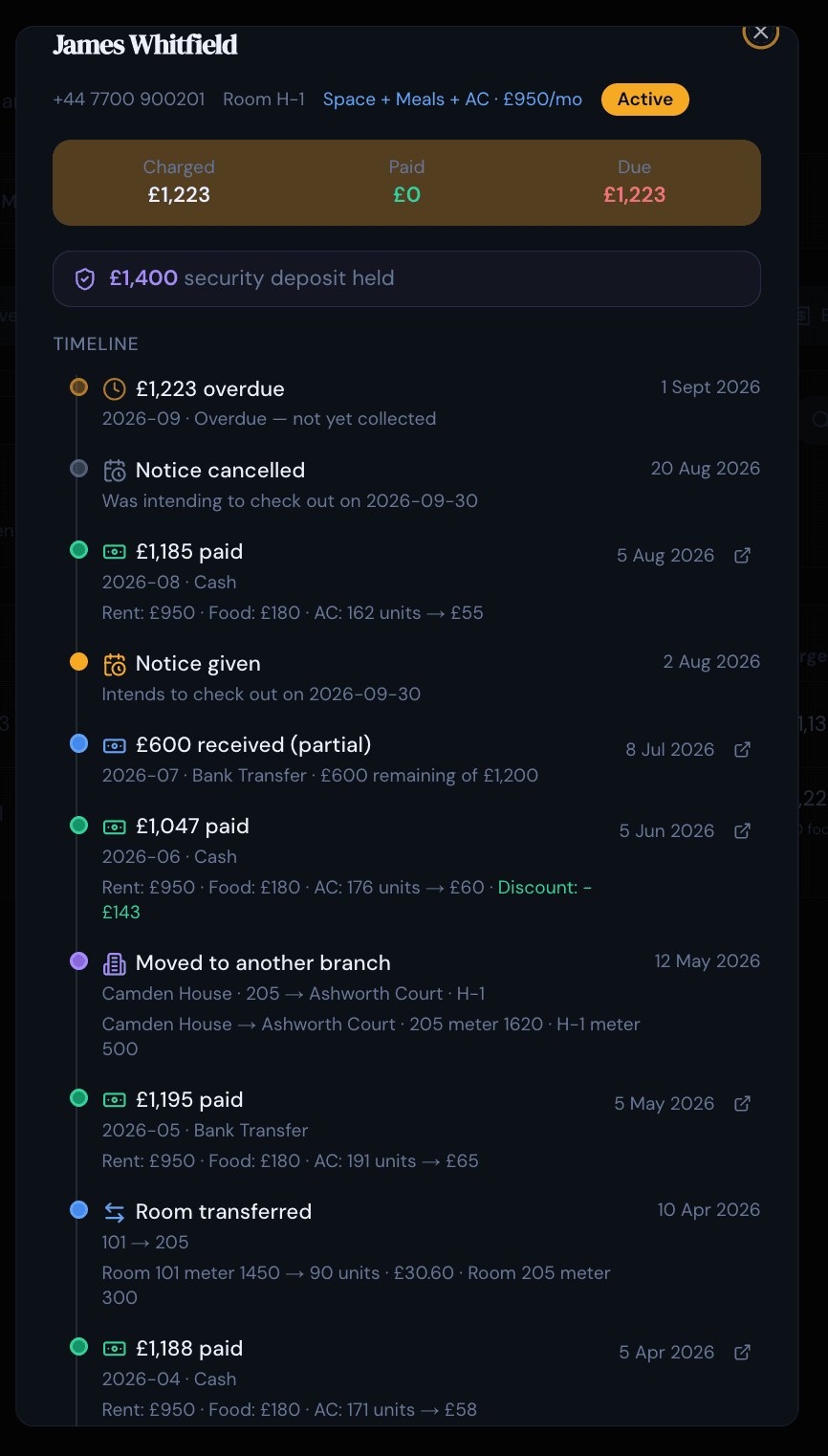
In PulseHub, this lives on the resident record as a member timeline: admissions, rent charges, payments, deposits, room moves and issues sit in one running record, so the full picture of a tenant is a single look rather than a reconstruction.
4. Managing changes during the tenancy
Tenancies rarely stay still. A tenant moves to a bigger room in the same house, the rent is reviewed at renewal, a fixed term rolls into a periodic tenancy, an extra charge is agreed, or a phone number changes. Each of these is routine, but each one has the same trap: overwriting the old value loses the history you may later need.
A room transfer is the clearest example. When a tenant moves from Room 3 to Room 5 in March, the rent, the occupancy of both rooms and the tenant’s record all have to move together, and you want the record to show that Room 3 was theirs until March and Room 5 after it. If you simply edit the room field, you cannot answer “who was in Room 3 in February?” six months later. Treat changes as new entries on the record rather than replacements, so the timeline stays honest.
5. Managing tenant payments
Payments belong on the tenant record too: the rent schedule, the deposit held separately from rent, any utility charges, and a ledger that ties them to the tenant. Kept current, this is the tenant-level view of the money, and each tenancy’s position stays clear instead of being pieced back together later.
The mechanics of rent schedules, part-payments, arrears and chasing overdue amounts across a portfolio are a topic in their own right, so rather than repeat them here, see our dedicated guide to HMO rent tracking, payments and arrears.
6. Managing maintenance and tenant issues
Issues are part of the tenancy too, and they are easiest to handle when they live on the record rather than in memory. When something is reported, capture the issue, the property and room it affects, its status, any notes, and how it was resolved, so there is a history for both you and the tenant. In a shared house, that record also helps when an issue affects more than one room. PulseHub logs maintenance and complaints with their status and history, and its complaints screen supports QR-based submission so a tenant can report a problem from the property itself.
7. The tenant move-out process
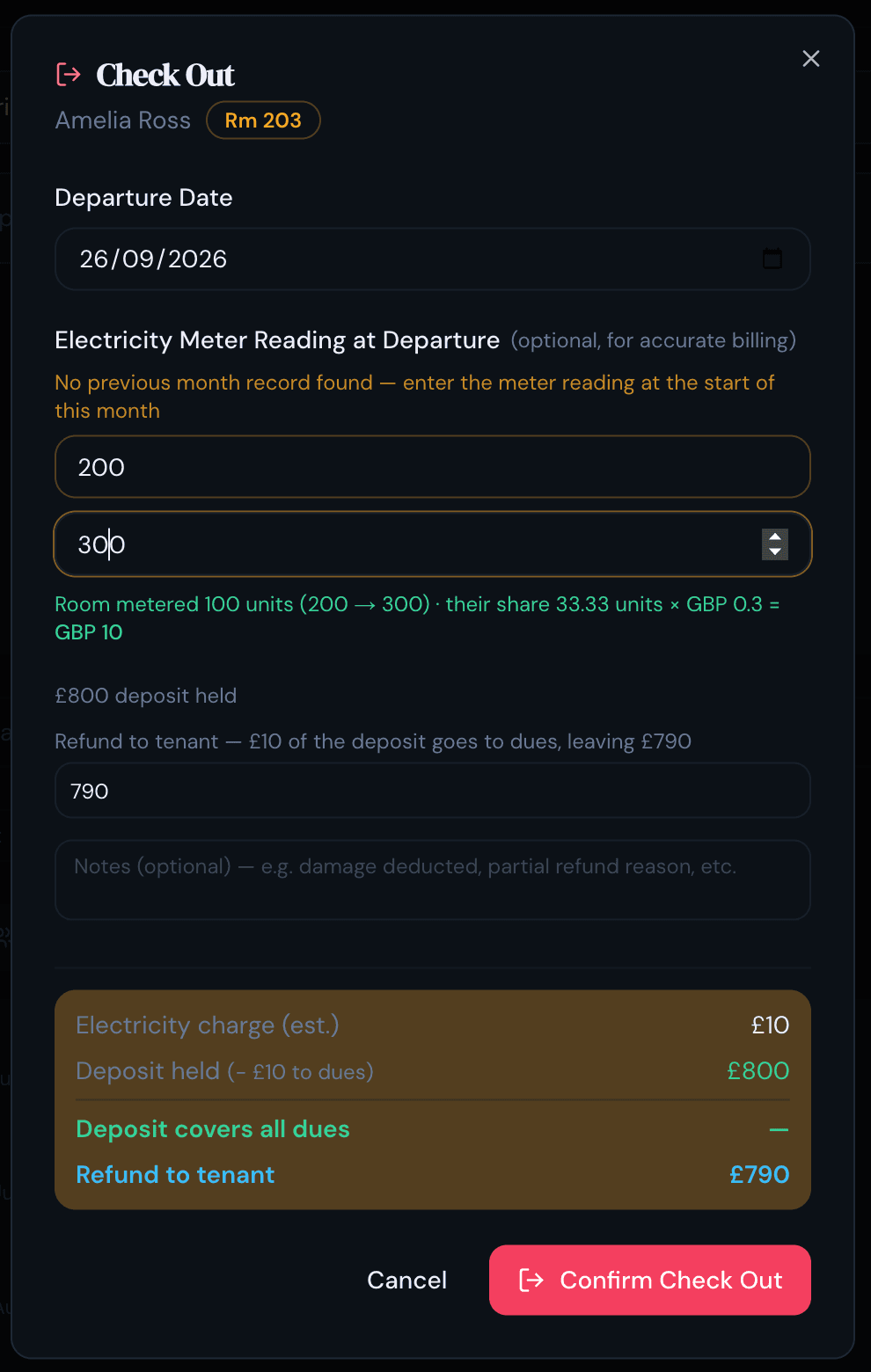
Move-out is where the whole tenancy is settled, and it is the stage most exposed by weak records. Work through it in order. Confirm the departure date. Take a final meter reading where you recharge utilities, and compare it with the opening reading you captured at move-in. Total any outstanding rent and utility charges, apply any legitimate deductions for damage beyond fair wear and tear, and set that against the deposit you are holding. What is left is either a refund to the tenant or a balance still owed to you, and it should be clear enough that the tenant can see how you reached it. Finally, return the room to vacant so it is ready to re-let, and close the tenant record without deleting its history.
This is exactly the calculation PulseHub’s check-out screen is built for: it takes the final meter reading, works out the closing charges, settles outstanding dues against the deposit, and shows the amount to refund or collect, then frees the room.
8. What should happen to the tenant record after move-out?
A tenancy ending is not a reason to delete the record. Keep the tenancy dates, the payment history, the documents, the final settlement and the room history, so that if a question or dispute surfaces weeks later you can answer it from your own files. Retained records also build a history for the room itself: who lived there, what it let for, and how it performed over time. Closing a tenancy should archive it and free the room, not erase what happened.
Retention periods for tenancy and financial records are a legal and tax question rather than an operational one, and they depend on your circumstances, so check current guidance on GOV.UK rather than relying on a rule of thumb. Operationally, the safe default is simple: keep the history intact.
HMO tenant management checklist
Use this as a quick audit of how you run a tenancy from start to finish.
Before move-in
- Tenant details and emergency contact recorded
- Room and bed assigned, tenancy dates set
- Rent, payment schedule and deposit agreed
- Documents and room condition captured, opening meter read
Move-in
- Check-in date and deposit recorded
- Signed documents stored on the tenant record
- Tenant linked to the correct property and room
During the tenancy
- Payments logged as they arrive, balance kept current
- Utility charges, issues and key events recorded
- Any change made on the record, with history preserved
Move-out
- Departure date and final meter reading recorded
- Outstanding rent, utilities and deductions totalled
- Deposit settled, refund or amount owed recorded
- Room returned to vacant
After move-out
- Tenancy dates, payments and documents retained
- Final settlement and room history kept as an audit trail
HMO tenant management software: when does it become useful?
None of this needs software. A careful landlord with a couple of tenants in one house can run the whole lifecycle on a spreadsheet and a document folder. It works because everything still fits in one place and one head.
The case for software appears when the information has to stay connected across more moving parts: several properties, many rooms and tenants, payments and deposits, documents, utilities, check-ins and check-outs, and the historical records behind all of them. At that point the job stops being data entry and becomes keeping everything in step, which is where a single system pays off. PulseHub is one example: it holds tenants against their property and room, keeps each tenant’s history on a timeline, records rent, deposits and utility charges, and handles check-in and check-out, so the lifecycle in this guide lives in one place. You can see how it is framed for the UK on the HMO management software page, or read the wider guide to what HMO management software is and how to choose. If you are moving off spreadsheets across several houses, our guide to managing multiple HMOs without spreadsheets covers that transition. If you also let student rooms, the same lifecycle applies in our guide to student accommodation management.
Frequently asked questions
What is HMO tenant management?
HMO tenant management is the day-to-day running of each tenant through their whole stay: taking their details and deposit at move-in, keeping their record current during the tenancy, handling changes such as a room move, and settling rent, utilities and the deposit at move-out. In a house of several tenancies, it is about keeping each tenant accurate and up to date, not just the property.
What information should an HMO landlord keep about tenants?
For each tenant: contact details, the room they occupy, tenancy start and end dates, the rent and payment schedule, the deposit held, documents such as the tenancy agreement and Right to Rent check, any meter readings, and a running history of payments, charges, room moves and issues raised.
How do you manage HMO tenant check-ins?
Confirm the room and bed, record the check-in date, take and record the deposit, note the opening meter reading where utilities are recharged, store the signed documents, confirm the rent amount and due date, and link the tenant to the correct property and room so everything after that attaches to the right record.
How do you manage HMO tenant check-outs?
Confirm the departure date, take a final meter reading where relevant, total any outstanding rent and utility charges, apply any legitimate deductions, settle the balance against the deposit, and record what is refunded or still owed. The room then returns to vacant and the tenant record is closed without deleting its history.
How should HMO tenant rent and deposits be tracked?
Hold the rent schedule and deposit against the individual tenant, and record every payment (including part-payments) as it arrives so the outstanding balance stays accurate. Keep the deposit separate from rent. For the detail on rent, payments and arrears, see the dedicated guide linked in this article.
What happens to a tenant record after they move out?
Keep it. The tenancy dates, payment history, documents, final settlement and room history are worth retaining in case a question or dispute comes up later, and they build a history for the room itself. Closing a tenancy should archive the record, not erase it.
When should an HMO landlord consider tenant management software?
A spreadsheet can cope with a handful of tenants in one house. Software usually earns its place once you are keeping connected information (rooms, tenants, payments, deposits, documents, meter readings and check-in and check-out records) across more tenants or more than one property, where a single source of truth saves real time.
Manage your HMO tenants with PulseHub
Run the tenancy lifecycle well and the hard moments get easier: the deposit settles fairly because the readings and charges are there, the room re-lets quickly because its status is current, and a question months later has an answer because nothing was overwritten. If you would like to keep every tenant, from move-in to move-out, in one place, explore PulseHub for HMO operators, see it for UK operators, or start a 14-day free trial. There is no card required.