HMO management
HMO Compliance in England: The Complete Landlord Compliance Checklist
· 13 min read
Last reviewed
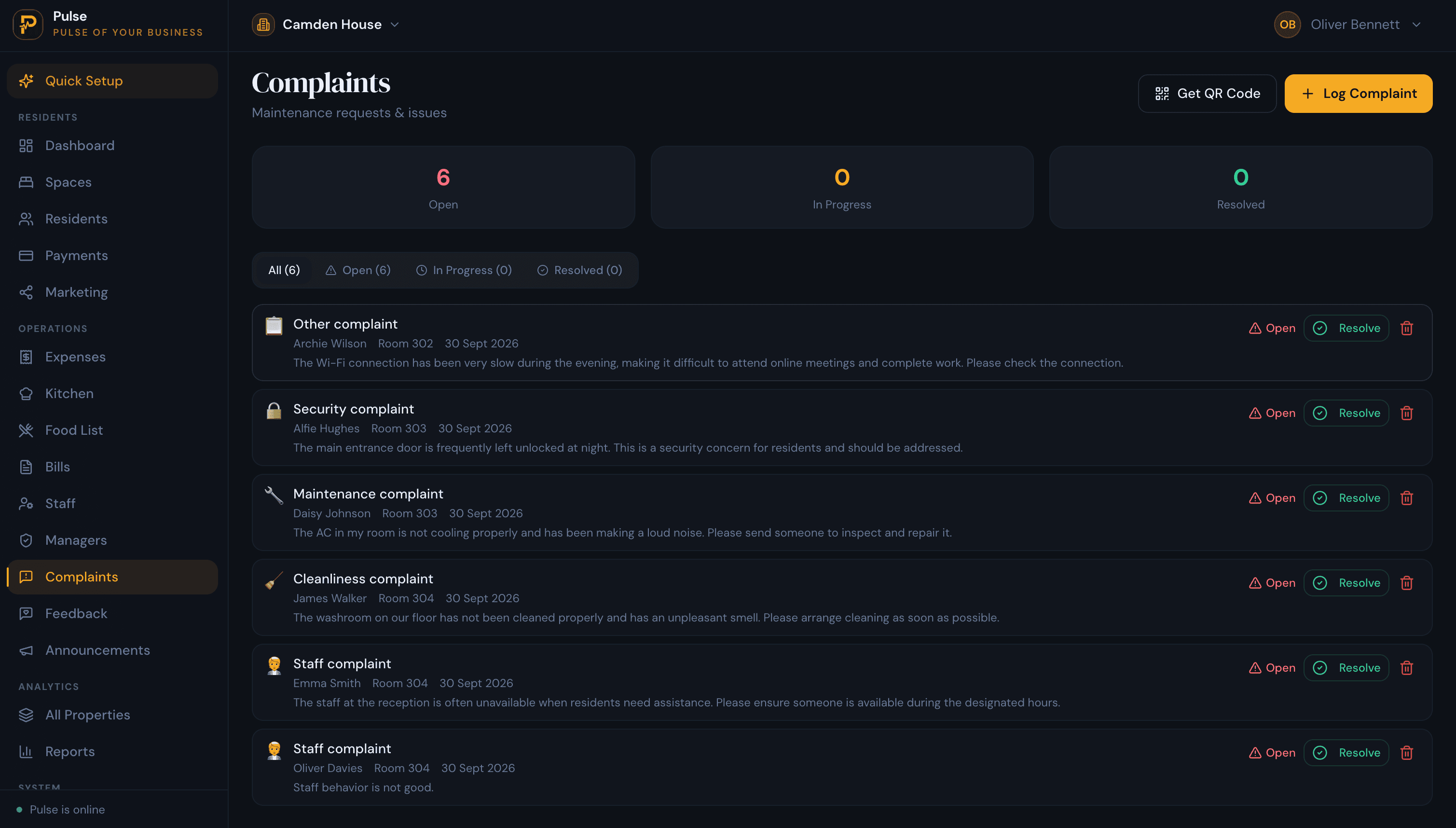
Running one HMO, compliance is a short mental checklist: the licence, the gas record, the alarms, the odd repair. Running several, it becomes a scatter of certificates in email, renewal dates in a calendar, inspection notes in a folder and repairs in a message thread. The requirements have not changed; there are just more of them, spread across more properties, and the day a certificate lapses is rarely the day you meant to check.
This guide sets out what an HMO operator in England should keep track of to stay organised and support compliance: whether the property needs a licence, the records and certificates that matter, the local authority layer, and how to keep it all in order as a portfolio grows.
What HMO compliance actually involves
It is easy to treat the licence as the whole job. In practice the licence is one part of it. Compliance is the wider set of duties that come with letting a shared property: keeping it safe, keeping the required certificates current, meeting the standards in the landlord responsibilities and, for HMOs, the management regulations, and being able to show the records that prove it. A property can hold a valid licence and still fall short if an alarm is missing or a gas check has lapsed. The useful way to think about it is by category: the licence and property records, the safety checks and certificates, who occupies the property, and the condition and maintenance history.
Does my HMO need a licence?
In England, a large HMO always needs a mandatory licence. The general test is straightforward, and it is worth checking against your property first:
- 015 or more occupants
- 02More than one household
- 03Shared facilities
- 04Check HMO licensing
Put simply, a property let to five or more people who form more than one household and share a kitchen, bathroom or toilet is a large HMO and needs a licence. Smaller HMOs are not automatically exempt: councils can run additional licensing schemes that bring smaller shared properties into scope, and the conditions attached to a licence vary too. Confirm what applies on the GOV.UK licence guidance and with your local authority, rather than assuming one rule covers your whole portfolio.
Which records should an HMO landlord track?
Most of the day-to-day work is keeping a small set of records current, each with a date or a trigger attached. The table below is a practical tracking framework, not a statement of what the law requires for your specific property: exactly what applies depends on the property, its occupancy and your council, and licence conditions can add more. Treat timings as typical for England and confirm them at the sources linked later.
| Compliance item | Typical timing or trigger | Record to keep |
|---|---|---|
| HMO licence | Where required (all large HMOs; others depending on the council) | Licence document, its conditions and expiry date |
| Gas safety | Every 12 months, where there is gas | Gas safety record, shared with tenants |
| Electrical (EICR) | At least every 5 years | EICR report, shared with tenants |
| Fire safety | Reviewed regularly and when circumstances change | Fire risk assessment and fire-safety measures, where applicable |
| Fire detection / alarms | In place and working; checked and repaired when reported | Alarm locations and checks (smoke and carbon monoxide, where required) |
| Energy performance (EPC) | Valid EPC (10 years); minimum energy efficiency rules apply | EPC certificate |
| Property inspections | As you decide; licence conditions may require them | Inspection notes, findings and dates |
| Repairs & maintenance | Ongoing | What was reported, the action taken and anything outstanding |
| Tenancy & occupancy | Ongoing; a licence may cap occupancy | Who occupies which room, the dates and documents |
| Local authority requirements | Check with your council | Additional licensing, amenity standards and any conditions |
In a tracker, each item also carries a status:
- 🟢 Current
- 🟡 Action required
- 🔴 Overdue or needs attention
A simple status per item is what turns a list of records into something you can scan and act on.
Licensing and property records
Where a licence applies, keep the essentials in one place: the licence number and the property it covers, the conditions attached to it, the issue and expiry dates, and the evidence the council asked for. A licence lasts up to five years, so a renewal date belongs on your calendar well before it lapses. Because occupancy limits are often a licence condition, the licence and the occupancy records are worth keeping side by side.
Safety checks and certificates
These are the records auditors and tenants ask about, and the ones with dates that catch operators out. For the current rules, go to the source: gas safety on the HSE landlords’ pages (a check every 12 months where there is gas), the electrical safety standards (an EICR at least every five years), the smoke and carbon monoxide alarm rules, and Energy Performance Certificates. Fire safety in an HMO goes beyond alarms, from fire doors to escape routes, and the standards for a large HMO can be set by your council, so treat it as its own area and confirm locally.
Tenancy and occupancy records
Compliance is not only about the building; it is also about who lives in it. Licence conditions often limit how many people may occupy a property or a room, so it matters to know who is in which room and when. Keep the occupancy picture current: the tenants in each room, their move-in and move-out dates, and changes such as room moves. This is the tenant side of the operation rather than the compliance side, and we cover it in full in our guides to HMO tenant management and HMO rent tracking, payments and arrears.
Condition, repairs and maintenance records
The condition of a property is where compliance and everyday operations meet. Routine inspections catch issues early, and a clear maintenance history is the evidence that you acted on them. For each issue, it is worth recording what was reported and when, which room or property it affects, the action taken, who did the work, and whether anything is still outstanding. Kept consistently, that history answers most condition questions without a search through messages, and it shows a pattern of upkeep rather than a scramble after the fact.
Important dates and a compliance calendar
If one habit prevents most compliance slips, it is keeping the dates in one place. Certificates and licences expire on their own schedule, and across several properties those dates rarely line up. A simple compliance calendar, with a reminder ahead of each one, covers the essentials: the gas check each year, the electrical inspection on its five-year cycle, the EPC, the licence renewal, and any follow-up actions from an inspection or a report. The aim is to act before a date passes, not to discover it afterwards.
Why HMO compliance gets hard across multiple properties
One property is manageable by memory. The difficulty is multiplication. Each property has its own licence, its own certificates on their own dates, its own occupancy and its own repair history, and by default each ends up in a different place. Nothing is wrong with any one of them, but together they fragment, and the gap between them is where a lapsed certificate hides. Moving off that sprawl is a theme in itself, which we cover in managing multiple HMOs without spreadsheets.
Local authority requirements
HMO compliance is not only national rules. Local authorities can introduce additional licensing, attach their own conditions, and set amenity standards such as minimum room sizes and shared facilities. The practical consequence is that it helps to track compliance at the property level, because two properties in different areas can carry different requirements. Here is an illustrative example of what a property-level view can look like.
Illustrative example, not actual legal requirements
- Property
- 25 Example Street
- Council
- Example Council
- HMO licence
- Valid
- Licence expiry
- 14 March 2028
Compliance records
- Gas safety record
- EICR
- Fire safety inspection
- Fire risk assessment
- EPC
Can HMO management software help with compliance?
It can help with the part that is really an organisation problem. Software can hold your property and room records, who occupies them, the maintenance and complaints history, the documents attached to a tenancy, an activity history, and reporting across every property, so the operational evidence lives in one place instead of five. Some systems also let you record important dates and set reminders against them.
What it cannot do is more important to be clear about. Software does not make a property compliant by itself. It does not carry out a gas or electrical inspection, replace a qualified professional, satisfy a licensing requirement, or decide which rules apply to your property. Understanding and meeting the applicable requirements remains the landlord or manager’s responsibility; software just removes the excuse of not being able to find the records.
Without a system vs with PulseHub
The difference is not the work; it is where the work lives. On the left is the familiar path a single certificate takes when everything is manual. On the right is how the same records sit when a property is managed in one place.
Without a system
- Certificate arrives by email
- Saved to a folder
- Date typed into a spreadsheet
- Reminder set in a calendar
- Chased manually when it is due
- Spreadsheet updated after the fact
With PulseHub
- Each property held as a record
- Rooms and tenants linked to it
- Documents kept on the record
- Maintenance and complaints logged with status
- A portfolio view across every property
- An activity history you did not have to keep by hand
How PulseHub fits into the HMO compliance workflow
PulseHub is accommodation management software, so it sits on the operational side of this guide rather than the legal side. It helps landlords organise and track the records, documents and history involved in running an HMO, in one place instead of scattered spreadsheets and folders. In practice you can use it to:
- Keep each property, with its rooms and beds, as a single record.
- Keep a record for every tenant and who occupies which room, with documents on the record.
- Log maintenance and complaints with their status and history, including QR-based submission so a resident can report an issue from the property.
- See occupancy against the property, which matters where a licence caps how many people may live there.
- Compare properties in one portfolio view, with an activity history you did not have to keep by hand.
To be clear about the boundary: PulseHub helps organise and track compliance-related records; it does not make a property compliant, provide legal advice, satisfy licensing requirements, or replace inspections or qualified professionals. You can see the wider platform on the HMO management software page and how it is set up for UK operators, or read the companion guide to what HMO management software is and how to choose.
HMO compliance tracking checklist
Use this to sense-check how organised your records are. It is an organisation aid, not a statement of what the law requires for your specific property; confirm that with your local authority.
- HMO licence details recorded
- Licence expiry date tracked
- Gas safety documentation recorded (where there is gas)
- Electrical inspection (EICR) documentation recorded
- Fire safety and alarm records organised
- EPC information recorded
- Property inspection records maintained
- Repairs and maintenance history recorded
- Local authority requirements checked for each area
- Upcoming deadlines reviewed
Frequently asked questions
What is HMO compliance?
HMO compliance is meeting the legal and safety requirements that apply to a house in multiple occupation, and keeping the records that show you have. It is broader than holding a licence: it covers safety checks such as gas and electrical inspections, working alarms, fire safety, the condition of the property, and the duties in the HMO management regulations. Exactly which rules apply depends on the property, its occupancy and the local council.
Do all HMOs need a licence?
Not automatically. In England a large HMO (rented to five or more people forming more than one household who share facilities) needs a mandatory licence. Smaller HMOs may also need one where the council runs an additional licensing scheme, so you have to check with your local authority. Rules and licensing differ elsewhere in the UK.
What records should an HMO landlord keep?
Typically: licence details and conditions, the gas safety record where there is gas, the electrical inspection report (EICR), fire safety and alarm records, an Energy Performance Certificate, who occupies each room and when, and a history of repairs and inspections with dates. Keeping these organised, with their renewal dates, is most of the day-to-day work of staying on top of compliance.
How often does an HMO need safety checks?
The common ones in England: a gas safety check every 12 months by a Gas Safe registered engineer where there is gas, and an electrical installation inspection (EICR) at least every 5 years. Smoke alarms must be on each storey with living accommodation and carbon monoxide alarms in rooms with a fixed combustion appliance (except gas cookers), kept working. Licence conditions can add more, so confirm the current rules on GOV.UK and with your council.
Do HMO requirements vary by council?
Yes. Beyond national rules, local authorities can run additional or selective licensing schemes and set their own HMO amenity standards, such as minimum room sizes and facilities. Two properties in different areas can face different requirements, which is why you should check the rules for every area you operate in.
What happens if an HMO certificate expires?
An expired certificate, such as a gas record or EICR that has run past its date, means the property may no longer meet the requirement it evidences, and you would need to arrange the check and obtain a current record. The practical fix is to track renewal dates and act before they pass. This is general information, not legal advice; confirm the consequences and any enforcement position with your local authority.
Can HMO management software help with compliance?
It can help with the organisation side: keeping property, room and tenant records, occupancy, maintenance history and documents in one place instead of scattered across spreadsheets, folders and email. It does not carry out inspections, replace qualified professionals, or make a property compliant on its own. Meeting the applicable requirements remains the landlord or manager’s responsibility.
Does PulseHub provide legal compliance advice?
No. PulseHub is a management and record-keeping platform, not a legal adviser. It helps you organise the records, documents and history involved in running an HMO. Landlords should verify the requirements that apply to their property with the relevant local authority and official government guidance.
Keep your HMO records organised in one place
Managing multiple HMOs becomes easier when property, tenant and maintenance records are organised in one place, with the history and dates you need already there. PulseHub will not make a property compliant for you, but it helps keep the operational records that support it out of scattered folders and spreadsheets. Explore PulseHub for HMO operators, or start a 14-day free trial. There is no card required.
Sources and further reading
Official sources for the requirements referenced above. Always check the current version and your local authority.
- Houses in multiple occupation: licensing (GOV.UK)
- Renting out a property: landlord responsibilities (GOV.UK)
- Private renting: houses in multiple occupation (GOV.UK)
- Gas safety for landlords (HSE)
- Electrical safety standards in the private rented sector (GOV.UK)
- Smoke and carbon monoxide alarm rules (GOV.UK)
- Energy Performance Certificates (GOV.UK)
- The Management of Houses in Multiple Occupation (England) Regulations 2006 (legislation.gov.uk)