Staff accommodation
Worker and Staff Accommodation Management Software
· 10 min read
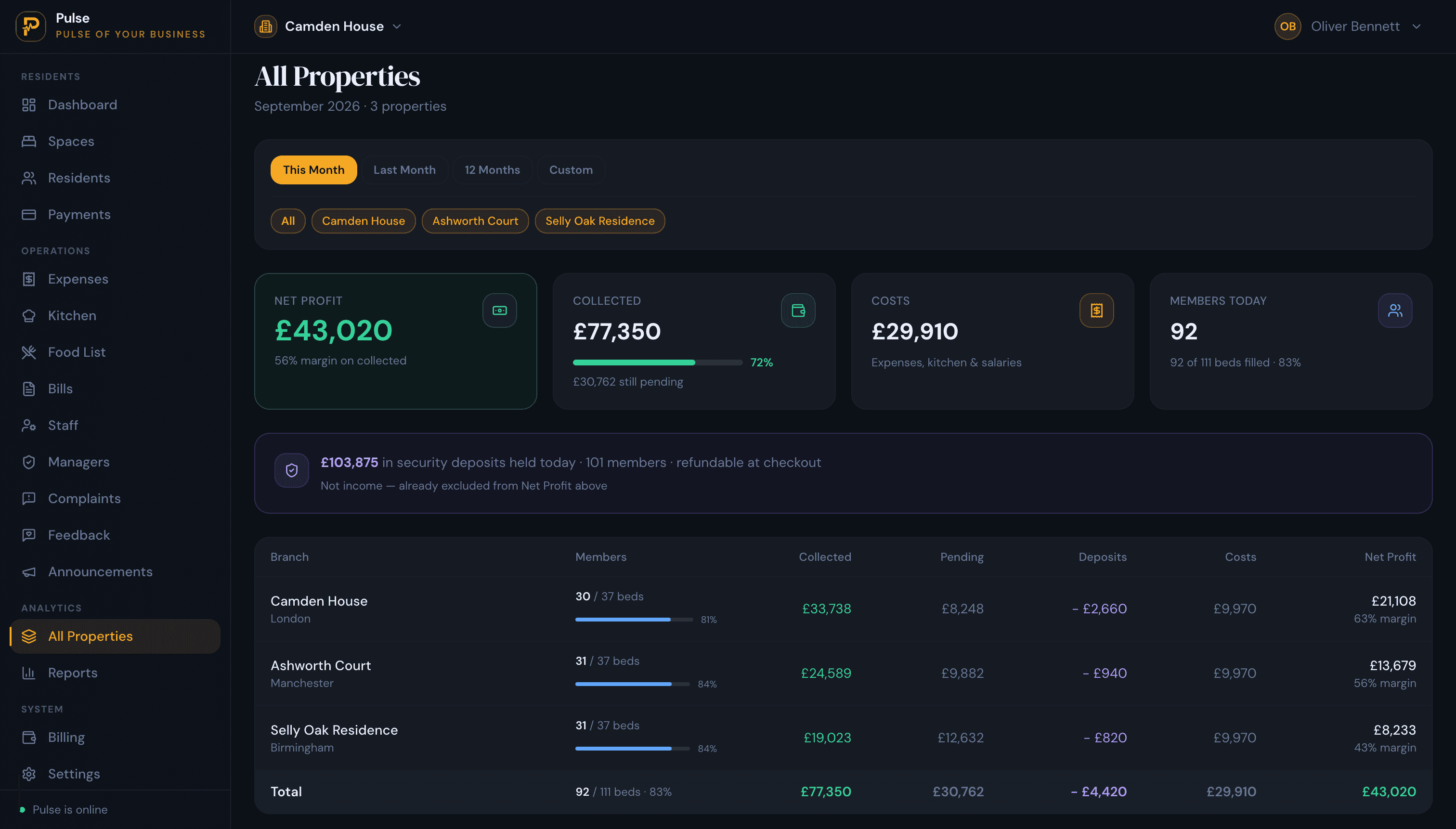
Worker accommodation management software runs the housing an employer or provider gives workers, where people rent a bed rather than a whole unit: who is in which bed, what they or their employer owe, what has been paid, what needs fixing, and how each site is performing. It is the bed-level cousin of a hotel system, built for high turnover, shared bills and the fact that an employer is often in the loop.
Worker and staff accommodation is one of the harder things to run on spreadsheets. Beds fill and empty as projects start and finish, several people share a room and its bills, meals are often part of the deal, and the person paying may be the worker, the employer, or a mix of both. This guide covers what the software does, why a hotel or residential tool does not fit, the features that matter, how billing usually works, and how to choose. It is written for employers and accommodation providers of any size.
What worker accommodation management software is
It is software that runs the day-to-day of housing provided to workers from one place. Instead of a bed list in one spreadsheet, a rent tracker in another and maintenance notes on paper, it keeps them together: a record for every worker, true occupancy down to the bed, a running balance for whoever pays, and a clear view of occupancy and cost for each site. The same system can run a single staff house or a portfolio of camps.
You will see it called worker accommodation, staff accommodation, labour accommodation or workforce housing software, and the underlying job is the same: manage beds, residents, rent, shared bills and maintenance across however many sites you run.
Why a hotel or residential tool does not fit
A hotel system is built around nightly stays, a front desk and distribution to booking channels. A residential or rental system is built around one tenant signing for one whole unit on a long lease. Worker housing sits between the two and matches neither: many people live under one roof, each in a bed, staying weeks to months, sharing utilities and often meals, with the employer frequently paying or arranging the stay.
Run that on a tool built for whole units and you fight it every month: you cannot bill a bed, you cannot split a shared meter, and a fast move-in or move-out as a project ramps up or ends becomes a manual rebuild. Worker accommodation needs software that models a room as several beds, keeps occupancy true, and bills each resident, or their employer, for their actual share.
The features that matter
Use this as a checklist when you compare tools:
- Bed-level occupancy that cannot be over-filled, so a room with three of four beds taken reads as three-quarters full.
- Fast admissions and a record per worker, with documents, the employer, an emergency contact and the deposit held in one place.
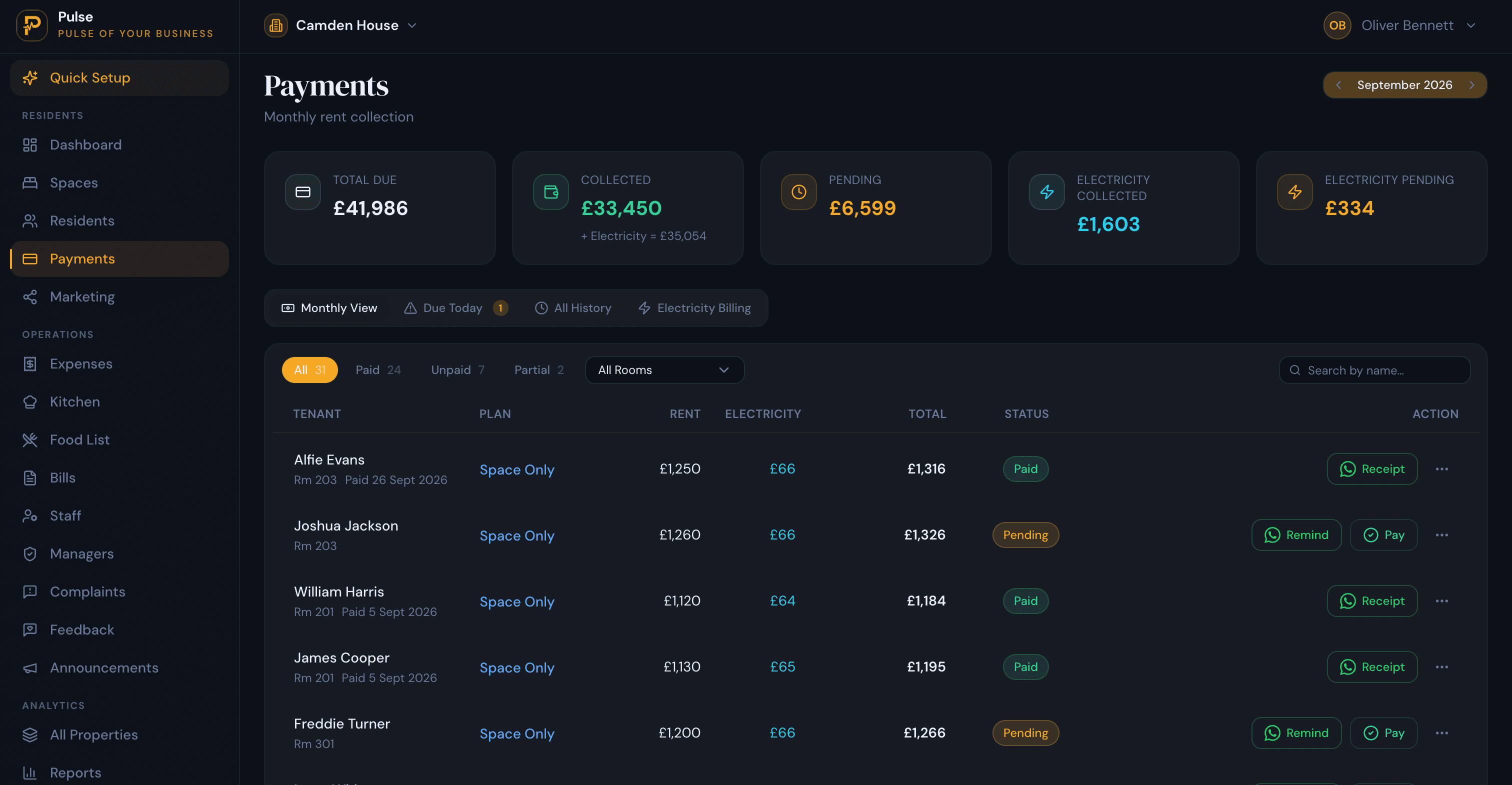
- Flexible billing: bill each worker or the employer, on one monthly bill that gathers rent, utilities and meals, with part-payments tracked.
- Metered utilities split between the residents who shared them, rather than a flat split.
- Deposits held and settled against final dues at move-out.
- Meals or a mess charged as part of the package where you provide them.
- A portfolio view across every site, with occupancy, collections and cost per site side by side.
- Roles and permissions, so a site manager sees only their own site.
- Maintenance and complaints logged and tracked to resolution against the room.
How workers, or their employers, get billed
Billing is where worker housing differs most from ordinary renting, because the payer is not always the person in the bed. Three setups are common: the worker pays their own rent; the employer pays for the beds it has booked; or the cost is shared, for example the employer covers the bed and the worker covers extras.
Good software records who the payer is for each resident and tracks what each one owes and has paid, with one monthly bill that can gather rent, metered utilities and meals. It is worth being clear on one point: this is billing and record-keeping, not payroll. A system like this records payments and issues receipts, so if you recover rent through salary, the deduction itself happens in your payroll and the payment is recorded here.
How PulseHub handles worker and staff accommodation
PulseHub is built for renting by the room and the bed, which is exactly the worker-housing model. It organises each site into floors, rooms and beds and keeps occupancy true so a bed is never double-booked. Every worker is one record with their documents, employer, deposit and full history. Each resident gets one monthly bill that gathers rent, metered electricity split between residents by their move-in dates, recurring charges such as water and gas, and meals where you provide them, and you can bill the worker or the employer. Deposits are settled against final dues at move-out, every site rolls up into one portfolio view, and a manager can be given access to just their own site.
One honest boundary: PulseHub handles the operations, not a given country’s worker-housing licensing, welfare reporting or payroll. Handle those through the relevant authority and your payroll. For the wider category, see property management software for shared housing, what a property management system is, and our guide to an accommodation management system; for peso-billed Philippine dormitories specifically, see dormitory and bedspace management software.
How to choose
Work through these before the price and the feature list:
- Does it fit the model? It has to bill a bed and split a shared room, not just a whole unit.
- Does the billing match reality? Make sure it can bill the employer or the worker, and gather utilities and meals onto one bill.
- Does it scale to more than one site without turning back into a spreadsheet?
- Can you get your data in and out, with bulk import to start and export whenever you want?
- Is the reporting clear enough to see cost and collections per site?
- Is support there when a camp fills up overnight?
In short
If you house workers by the bed, across one site or many, you need software built for that model, not a hotel system or a single-let tool bent to fit. Look for true bed-level occupancy, billing that can charge the worker or the employer, shared utilities and meals on one bill, and a portfolio view across every site.