Student accommodation
Rent Collection and Arrears for Student Accommodation
· 8 min read
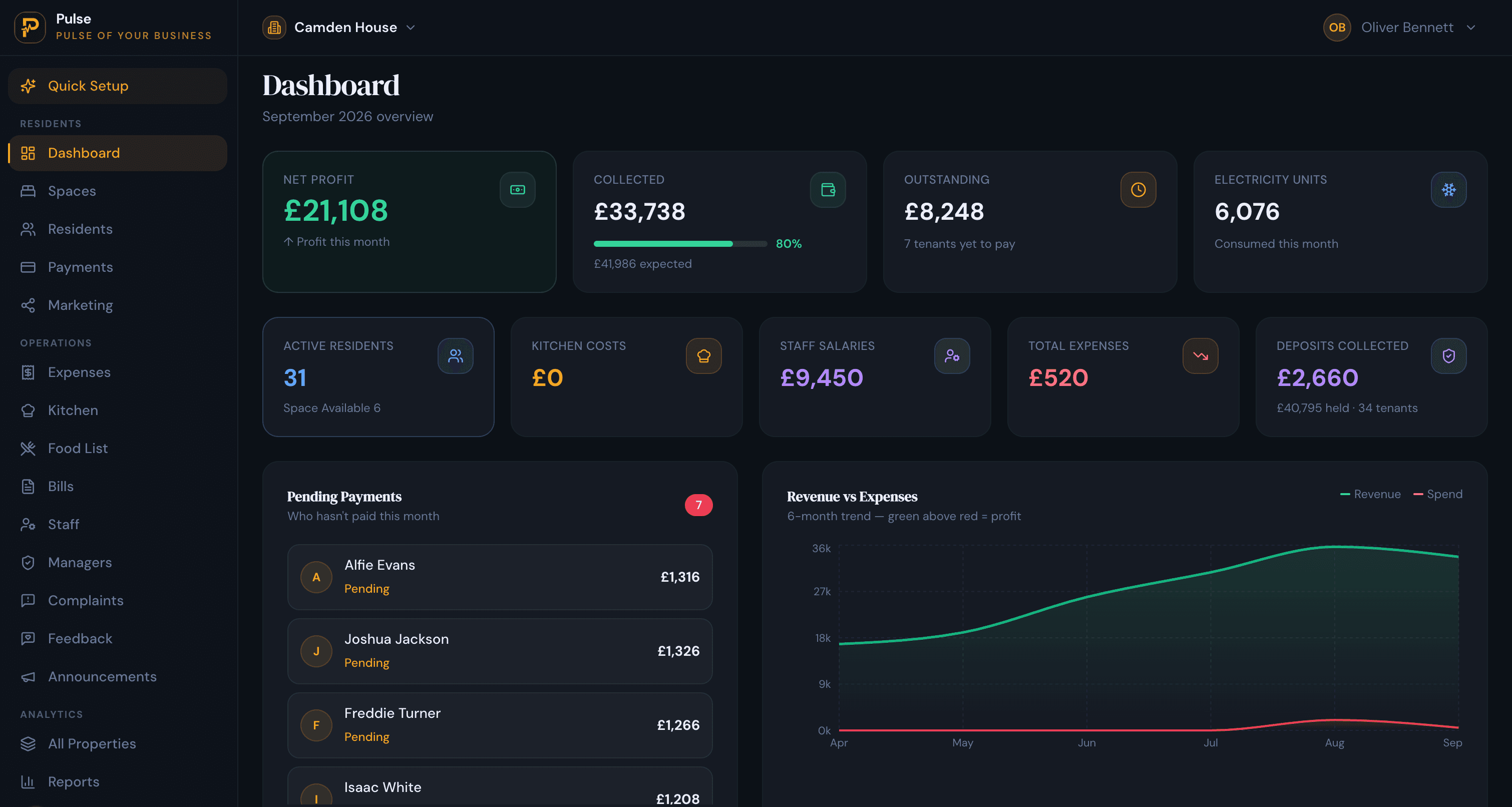
Rent collection in student accommodation is hard for one reason: you are not chasing one rent on one flat, you are tracking a bill per resident, per bed, that people pay in parts and at different times. The right software keeps each resident’s balance, receipts and arrears straight, and chases what is overdue for you, so a busy month does not turn into a reconciliation puzzle.
A six-bed house can carry six separate balances, some paid in full, some paid by term, one short since September. On a spreadsheet that is where arrears hide and receipts go missing. This guide covers how by-the-bed rent collection should work, how arrears and guarantors are handled, and one honest line on what the software does and does not do with the money itself.
Why student rent collection is a by-the-bed problem
In most lettings one tenant signs for one unit and pays one rent, so collection is one line to watch. Student accommodation is the opposite: several residents share a house or flat, each on their own bed with their own rent, deposit and guarantor. Collect that on a whole-unit tool and you cannot see who within a flat is behind, you cannot issue a receipt per resident, and the student who is short disappears into the flat total until the end of the year.
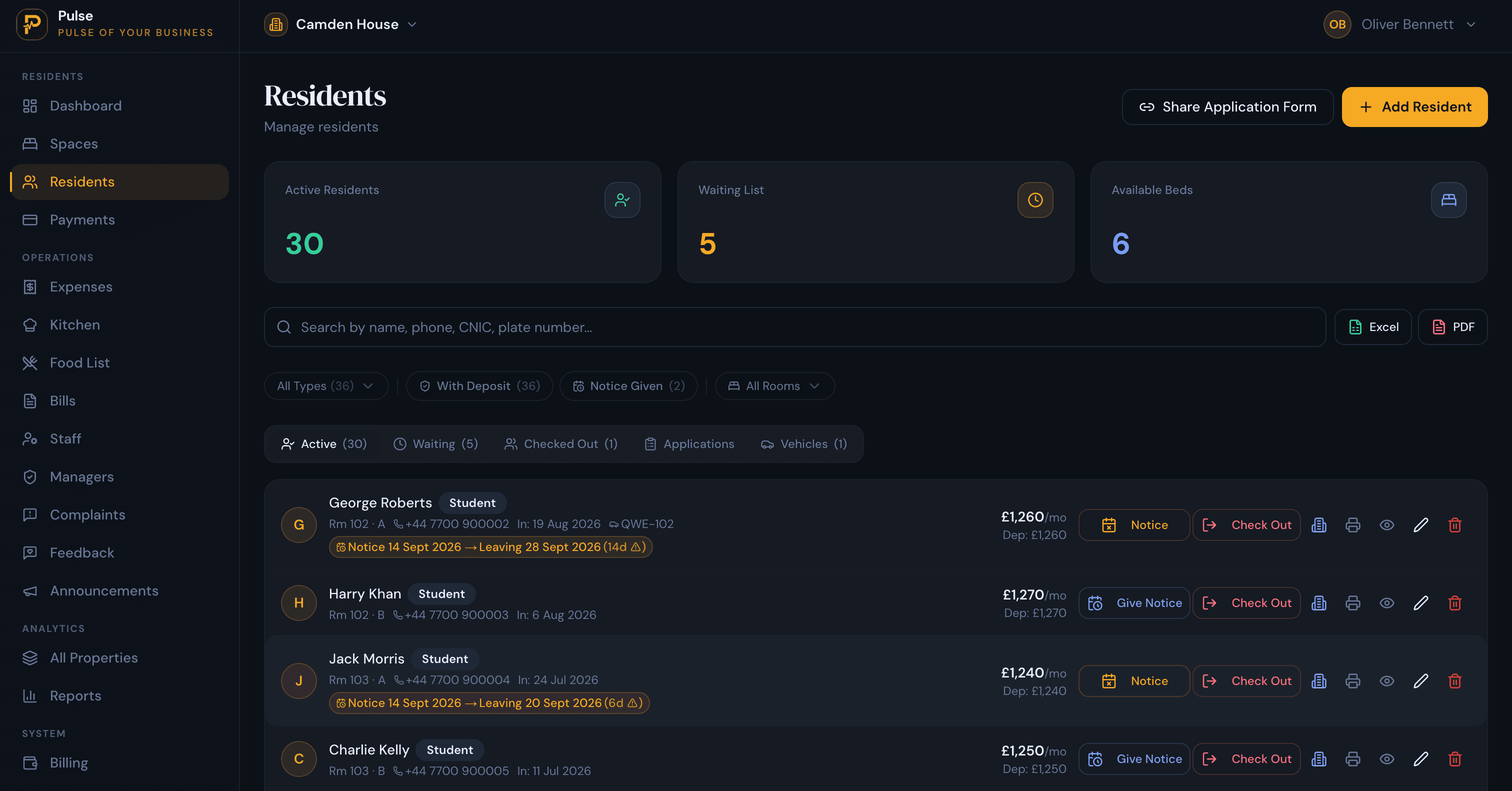
By-the-bed collection fixes that: each resident is one record with one bill, and every payment lands against that bill. You see the whole house and each bed within it, so arrears are a name, not a guess.
Part-payments, terms and running balances
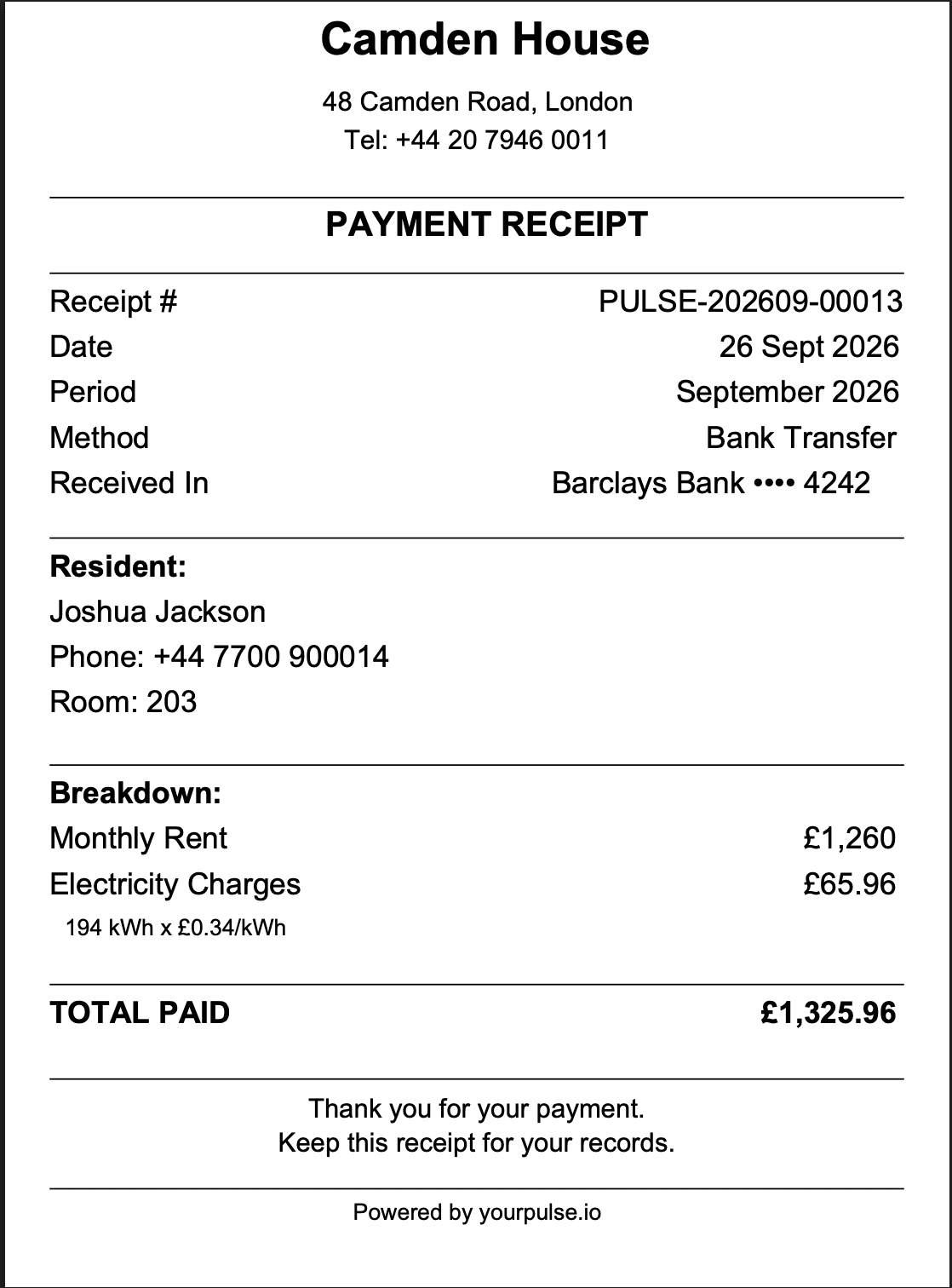
Students rarely pay the full year in one go, and they rarely all pay on the same day. Many pay by term, some pay in parts as a loan instalment or a parent’s transfer comes in. Good software records each of those as an installment against the one bill, dates it, issues a receipt, and carries the balance forward. The effect is that staggered, partial payment, which is normal for students, stays clear instead of breaking your records.
Arrears and chasing, without doing it by hand
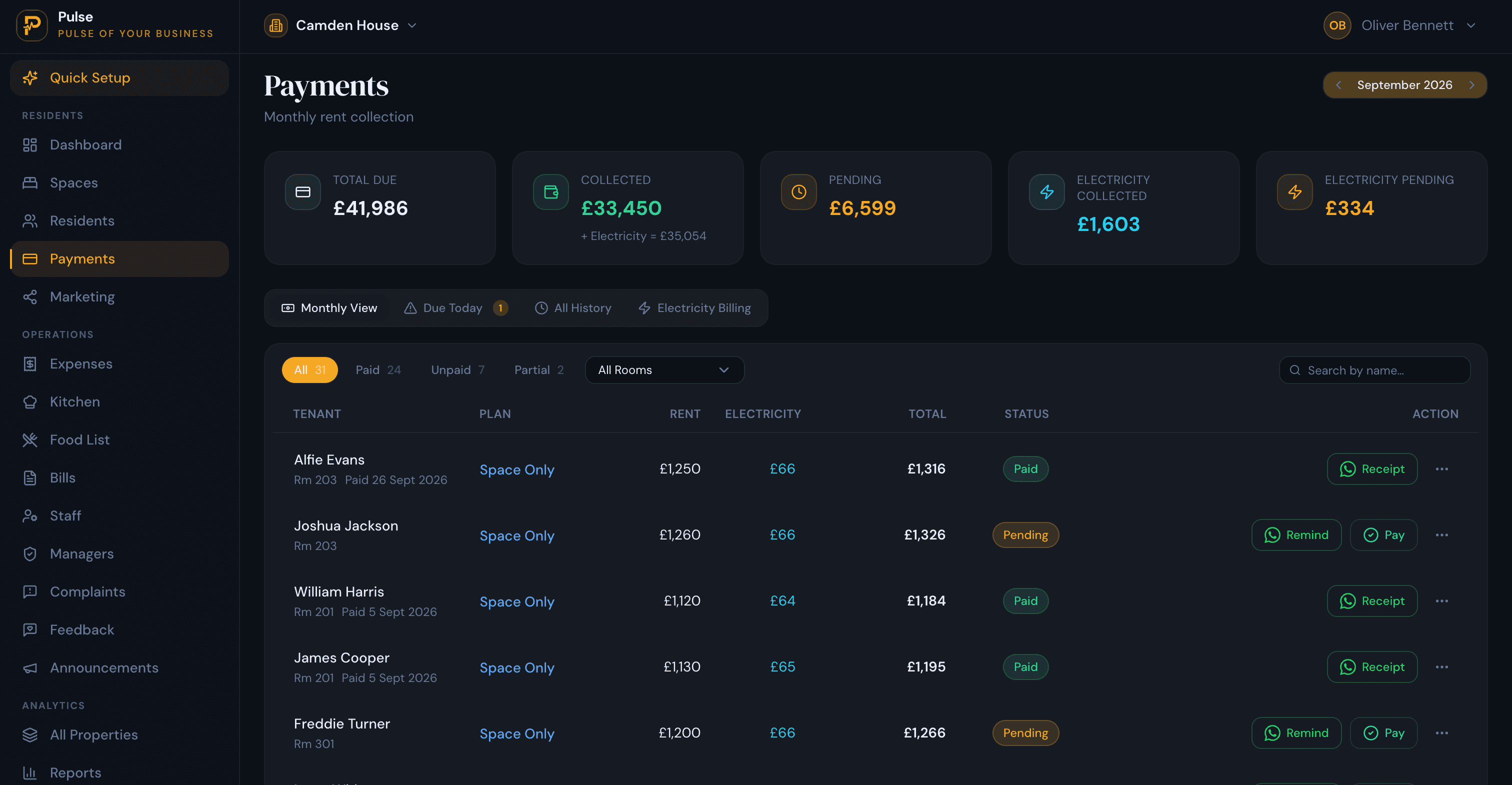
The point of good collection is that you stop chasing manually. Overdue balances are visible per resident and across the portfolio, and automatic reminders go out, WhatsApp-first, as rent falls due and when it is late. Most students pay once reminded, and the ones who do not are a short, clear list rather than a surprise at year end.
When a balance does need escalating, the guarantor is already on the resident’s record as a contact, with uploaded documents and the full payment history alongside, so you escalate with the evidence in one place. PulseHub records the guarantor relationship; it does not underwrite or guarantee the rent, which is a separate guarantor service if you use one.
The honest line: records and chasing, not the rails
This is the part most tools blur, so to be clear: PulseHub records payments and issues receipts, but it is not a payment gateway or direct-debit processor and does not move money. You collect by your usual method, a bank transfer, a card payment, or a provider you already use, and you log what was paid so the balance, arrears and receipts stay correct. What you get is the record, the receipts and the chasing done properly, not a new set of payment rails you have to adopt.
How PulseHub fits
PulseHub is built for letting by the room and the bed, so rent collection is by-the-bed by default. Each resident is one record with one bill, part-payments are recorded as installments with receipts, arrears are visible per resident and across the portfolio, and reminders are chased automatically. The guarantor and documents sit on the same record for escalation. For the product in general, see student accommodation management software and our UK guide to student accommodation management; running a purpose-built scheme? Read PBSA management software, and if you are still comparing tools, how to choose student accommodation management software walks through it.
In short
Student rent collection is a by-the-bed problem: a bill per resident, paid in parts and at different times, with arrears that must not hide in a flat total. Look for one bill per resident, part-payments as installments with receipts, arrears visible per bed, automatic reminders, and guarantor details on record, and be clear whether the tool processes the money or, like PulseHub, records and chases it while you collect your own way.