Student accommodation
PBSA Management Software for Independent and Mid-Sized Operators
· 8 min read
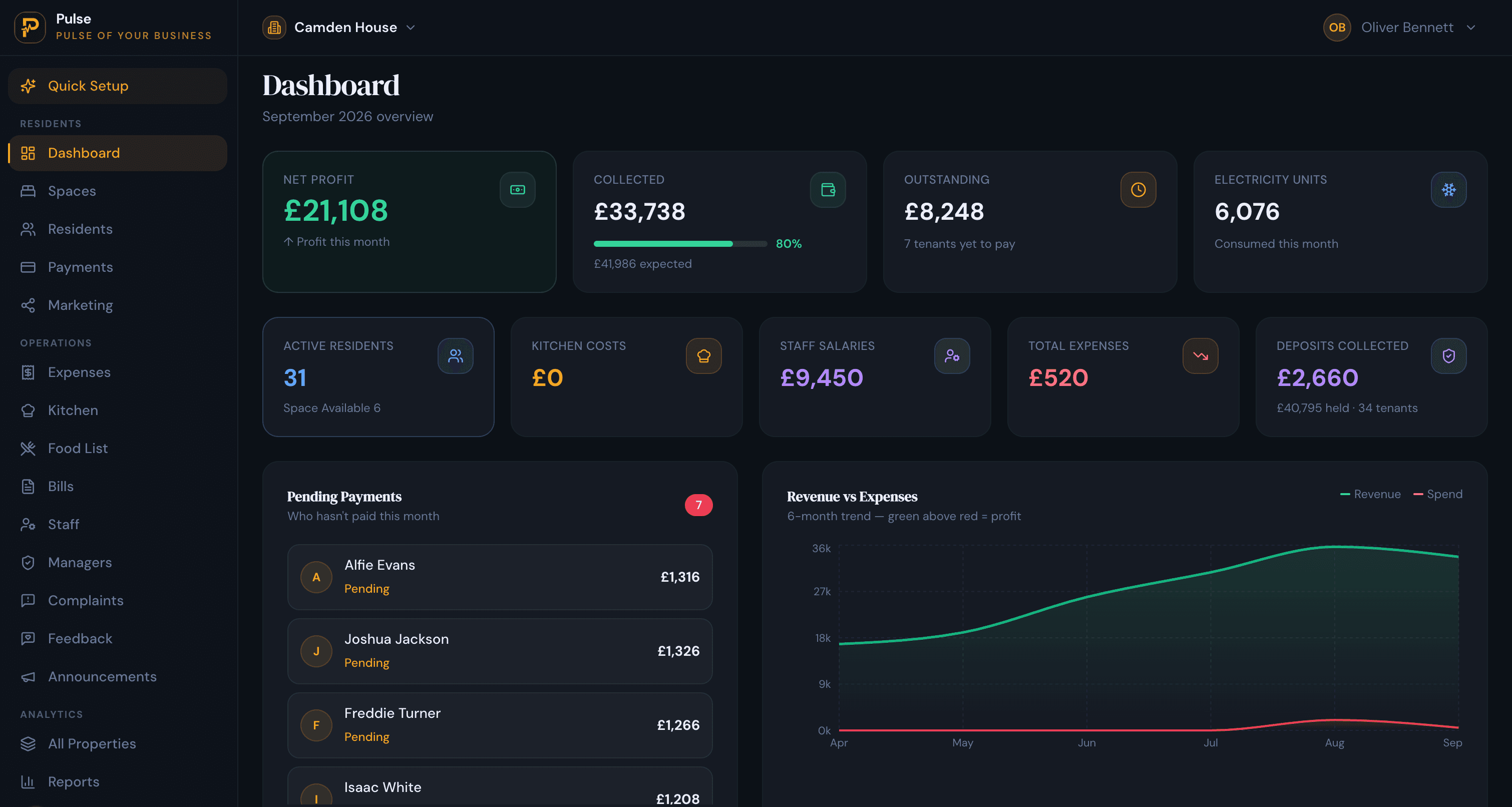
PBSA management software runs purpose-built student accommodation from one place: applications, room and bed occupancy, one bill per resident, deposits and guarantor records, maintenance, and every scheme in one view. The enterprise platforms are built, and priced, for large towers. This guide is for the independent and mid-sized operator who wants that control without the weight, and it is honest about where PulseHub fits and where it does not.
Purpose-built student accommodation has grown fast, and most of the software written for it assumes a big scheme with its own booking engine, channel distribution and university nomination agreements. If you run a converted block, a cluster of student houses, or a smaller scheme, those systems are heavier and more expensive than you need, while a generic landlord tool cannot bill a bed or see a flat as part full. This guide covers what the category does, what the large platforms include, and the lighter way to run a smaller PBSA operation.
What PBSA management software does
At its core it runs a scheme’s daily operations: a record for every resident with their guarantor, deposit and documents, true occupancy down to the bed, one bill that gathers rent and any shared costs, the payments against it, maintenance issues as they come in, and a clear view of how each property is performing. Instead of a bed list in one spreadsheet and a rent tracker in another, it keeps them together, for one scheme or a whole portfolio.
What the large PBSA platforms add, and what it costs
Platforms built for large schemes layer a booking engine, a marketing website, distribution to student-housing marketplaces, and university nomination workflows on top of the operations. For a tower releasing hundreds of beds in a single cycle, that distribution machinery earns its keep. It also comes with per-bed pricing, longer implementations, and more system to learn.
A smaller operator rarely fills beds that way. You let through your own enquiries, a local agent, or returning residents, and the cost of a per-bed enterprise suite is hard to justify. What you actually need is the operations layer done well: beds that cannot be over-filled, one bill per resident, deposits and guarantors on record, maintenance tracked, and the numbers in one place.
The features that matter for an independent operator
Use this as a checklist when you compare tools:
- By-the-bed occupancy that cannot be over-filled, so a six-bed cluster flat with four residents reads as two-thirds full.
- One bill per resident, with part-payments tracked as installments and the real balance carried forward.
- Guarantor and document records, keeping a parent or guarantor as a contact on the resident’s record, with signed documents uploaded and the full payment history alongside.
- Deposits held against each record and settled at check-out.
- Arrears tracking and automatic reminders, so overdue rent is chased without you doing it by hand.
- Maintenance that residents can report without needing an account, routed to your team.
- Your own public page, with live bed availability, so prospects enquire with you directly.
- Portfolio reporting, with occupancy and collections per property, and manager access scoped to one scheme.
- Flat per-property pricing, rather than a fee for every bed.
How PulseHub fits
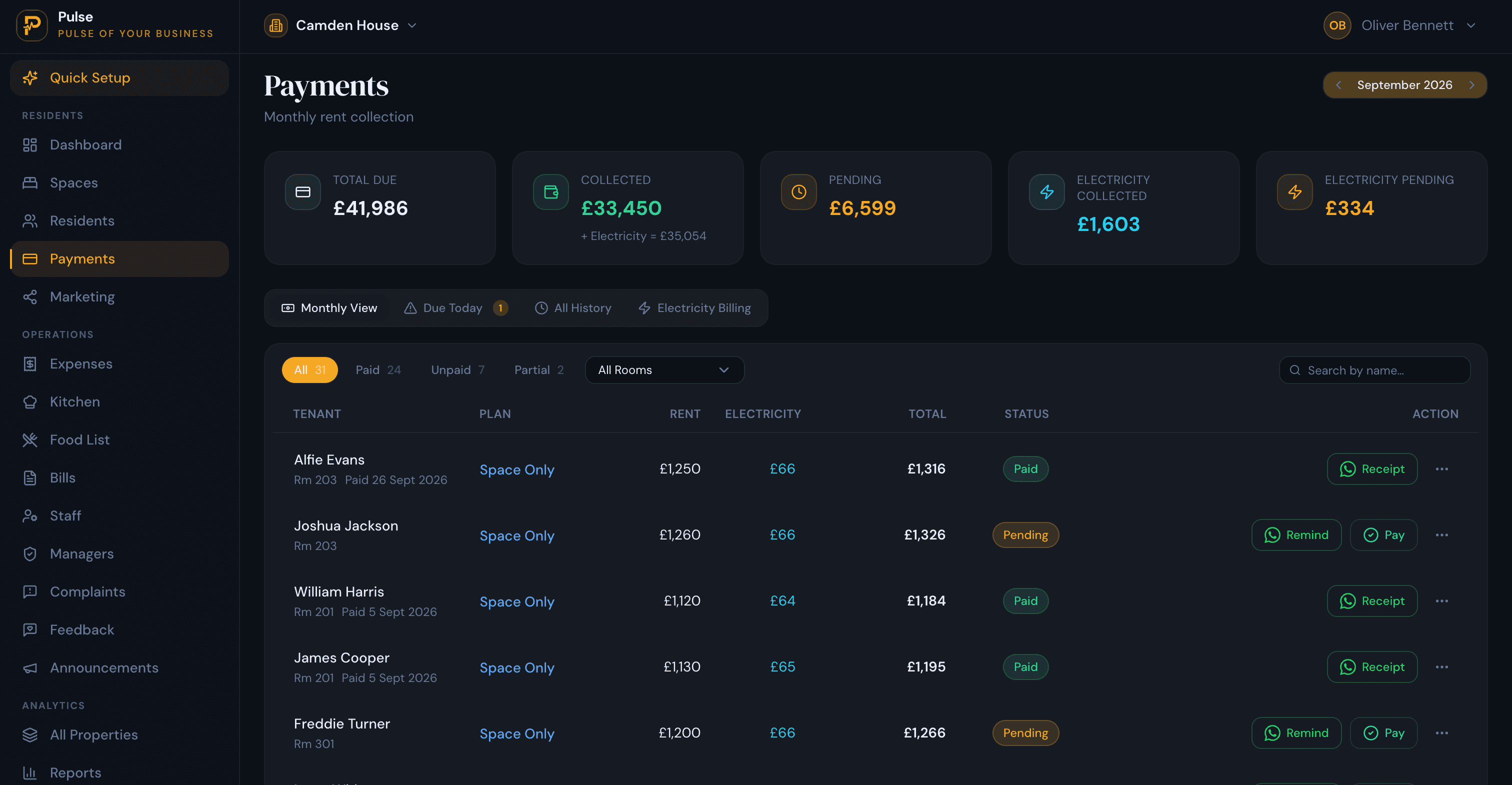
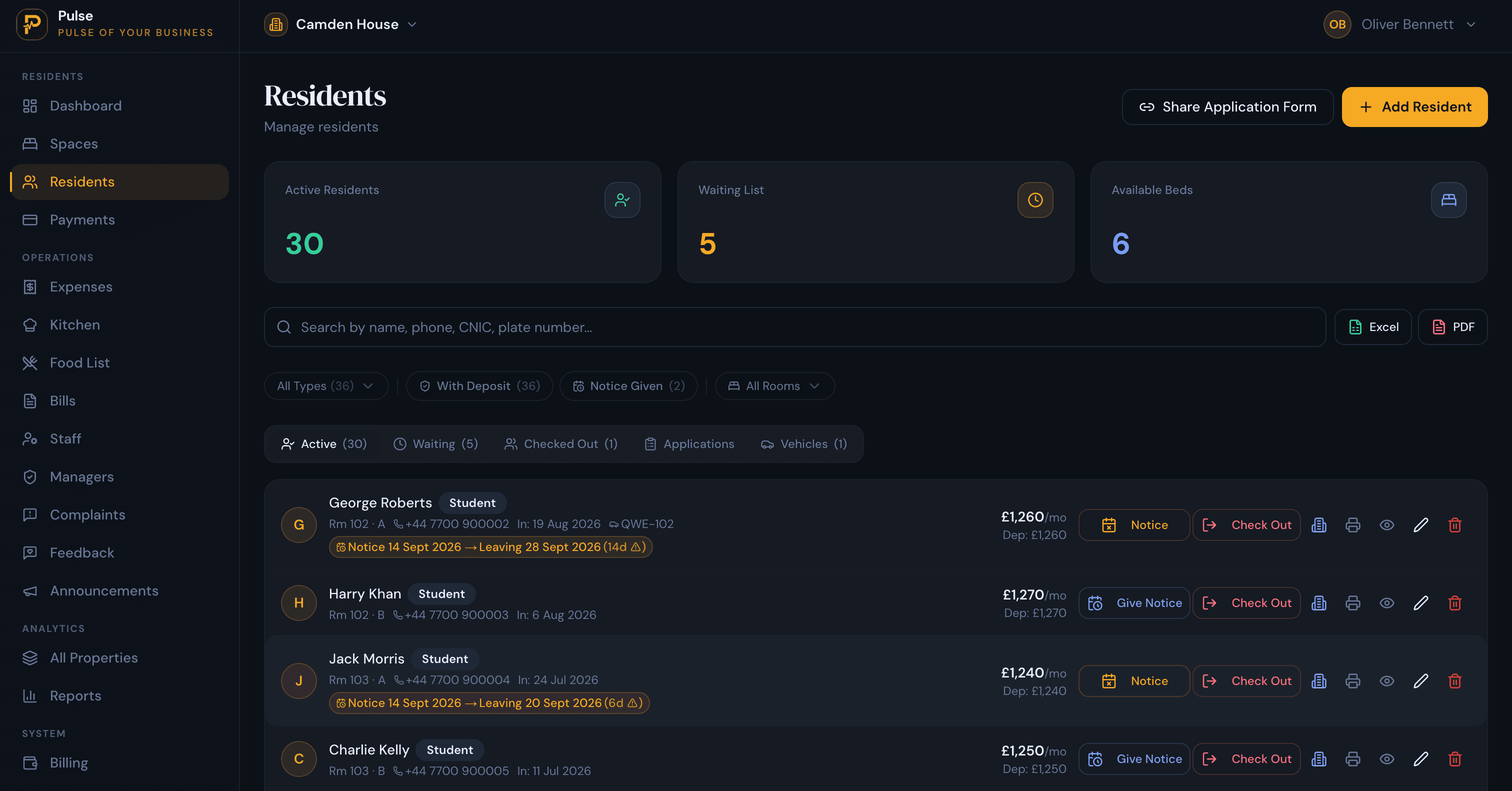
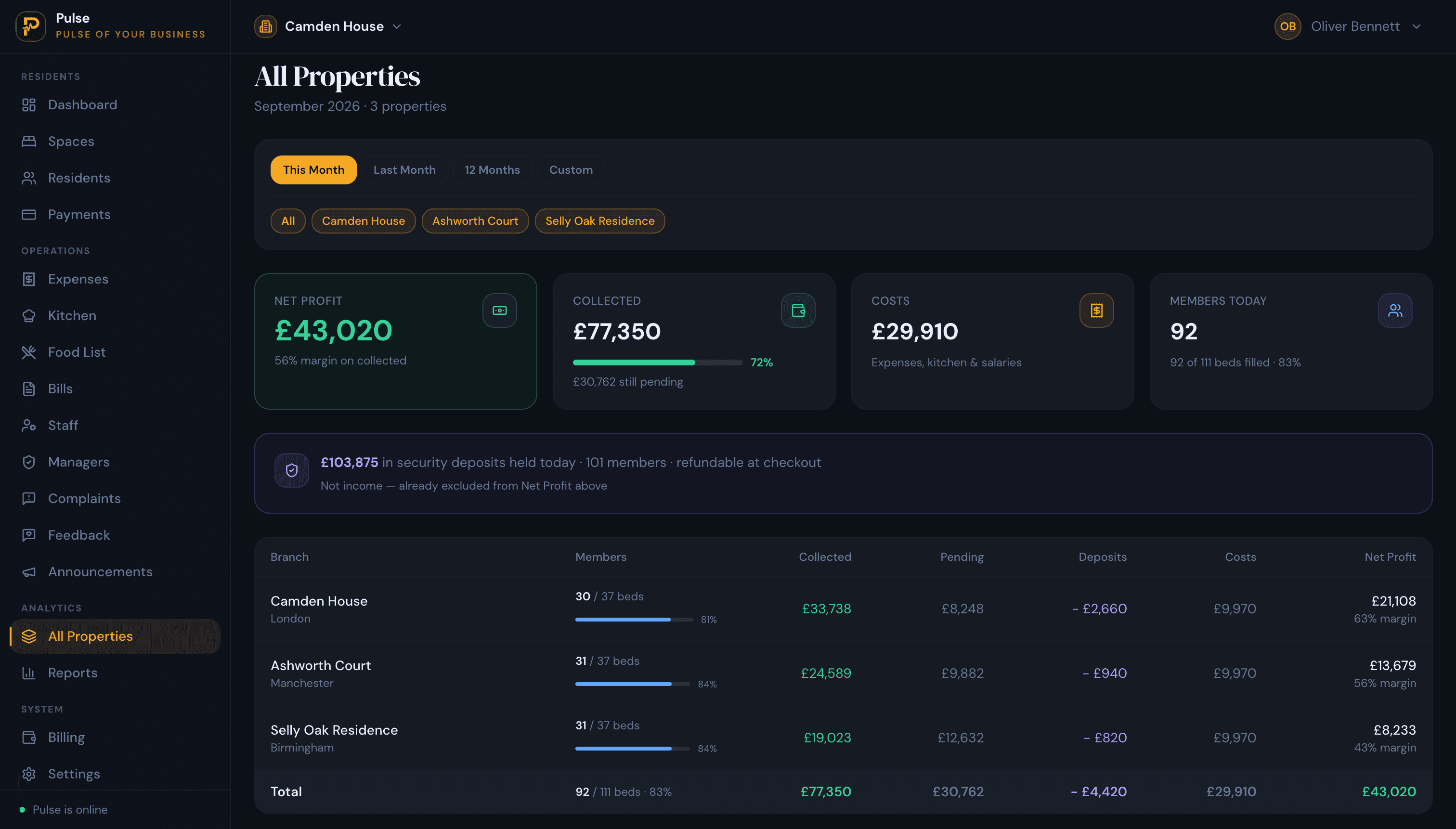
PulseHub is built for letting by the room and the bed, which is exactly the PBSA model. It organises each property into rooms and beds, keeps occupancy true, and every resident is one record with their guarantor, deposit and documents. Each resident gets one bill, with part-payments recorded as installments, arrears chased automatically, and maintenance tracked from report to fix. Every property sits in one portfolio view, each gets a free public page with live availability so you fill beds from your own link, and plans are flat per property, with no per-bed fees.
One honest boundary: PulseHub runs the operations and records payments, but it is not a booking engine or channel manager, it does not distribute rooms to third-party marketplaces or handle university nomination agreements, and compliance stays your responsibility. If you need channel distribution for a large scheme, pair it with a dedicated booking platform; if you run an independent or mid-sized operation, it may be all the system you need. For the product in general, see student accommodation management software and our UK guide to student accommodation management; comparing tools? Read how to choose student accommodation management software, and keeping rent on track is covered in student accommodation rent collection.
In short
If you run purpose-built student accommodation as an independent or mid-sized operator, you need the operations layer done properly, not a per-bed enterprise suite built for distribution you do not use. Look for true by-the-bed occupancy, one bill per resident, guarantor and deposit records, maintenance, your own page to fill beds, portfolio reporting, and flat per-property pricing.