Boarding houses
How to Run a Boarding House in the Philippines: An Operator’s Guide
· 10 min read
A boarding house looks like a simple business from the outside: rent out the rooms, serve meals, collect the money. Run one for a month and you find it is really three businesses stacked together, a small landlord, a canteen and a cashier, and the owner is all three at once. This guide walks through how to run a boarding house in the Philippines as those jobs actually arrive: pricing room and board, filling the rooms, collecting the rent, feeding the house without losing money, and keeping it all steady enough that you can one day open a second one.
It is written for the owner who is past the idea stage and into the daily work, whether you have one house near a campus or a few near the BPO towers. Nothing here is legal advice; where permits and rules come up, the one safe rule is to check with your own local government before you act.
Before you open: the setup
Most of what makes a boarding house easy or painful to run is decided before the first boarder arrives. Two things are worth getting right at the start. The first is permission and paperwork: if you do not own the building, get the owner’s written consent to take in boarders, and square away the usual permits, a barangay clearance, a mayor’s or business permit, and BIR registration, with fire and sanitary requirements on top. What exactly you need varies by local government, so treat your city or municipal hall as the authority, not a blog.
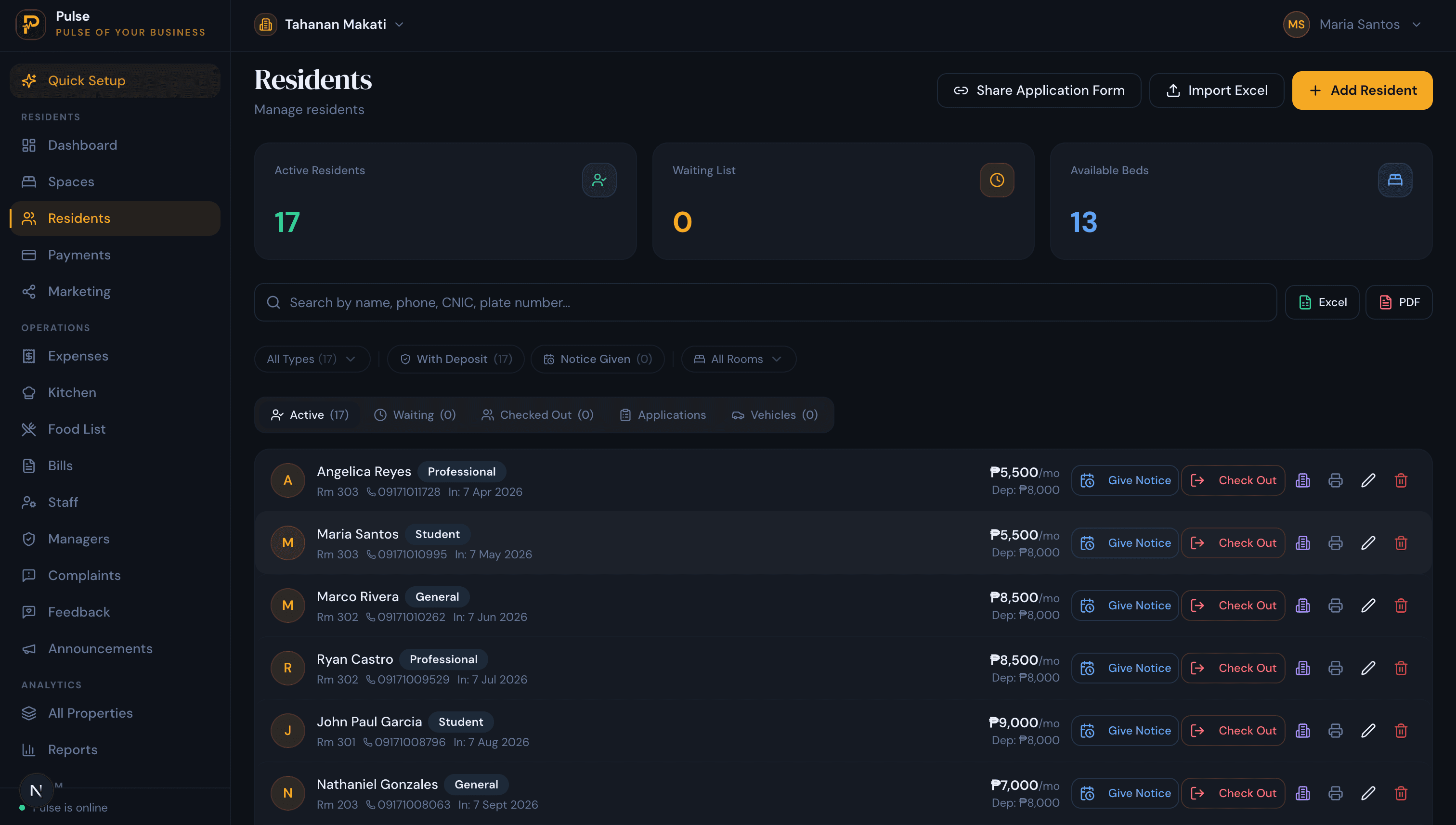
The second is how you think about the building. A boarding house is let by the bed, not by the unit, so it pays to map it that way from day one: floors, then rooms, then the number of beds in each, with a rate attached and a note of whether the room has air-con. Once the house is drawn as rooms and beds, everything after it, pricing, occupancy, billing, follows naturally. If you want the wider picture of running rooms this way, our accommodation management system guide covers it across every kind of shared housing.
Set your room-and-board rates
The most common pricing mistake is to copy the rate of the house down the road and hope it works. Price from your own costs instead, because yours are the only ones that have to be covered. Build the number up in layers:
- The room. What a bed in that room costs you a month once you divide rent, water and the shared bills across its beds.
- The board. The real cost of feeding one boarder: groceries, gas and the cook’s wage, divided by how many actually eat.
- The power. An air-conditioned room draws more, so an air-con bed should carry a premium a boarder can see the reason for.
- The margin. What is left after all of that is the business, so the margin goes on top, not into the gaps.
Do that once and you have three clean prices to offer: a full-board bed, a room-only bed for those who cook for themselves, and an air-con premium. Lay the rooms and their rates out in one place so you are quoting from a list, not from memory, and so a half-empty four-bed room is obvious at a glance.
Fill the rooms, and keep them full
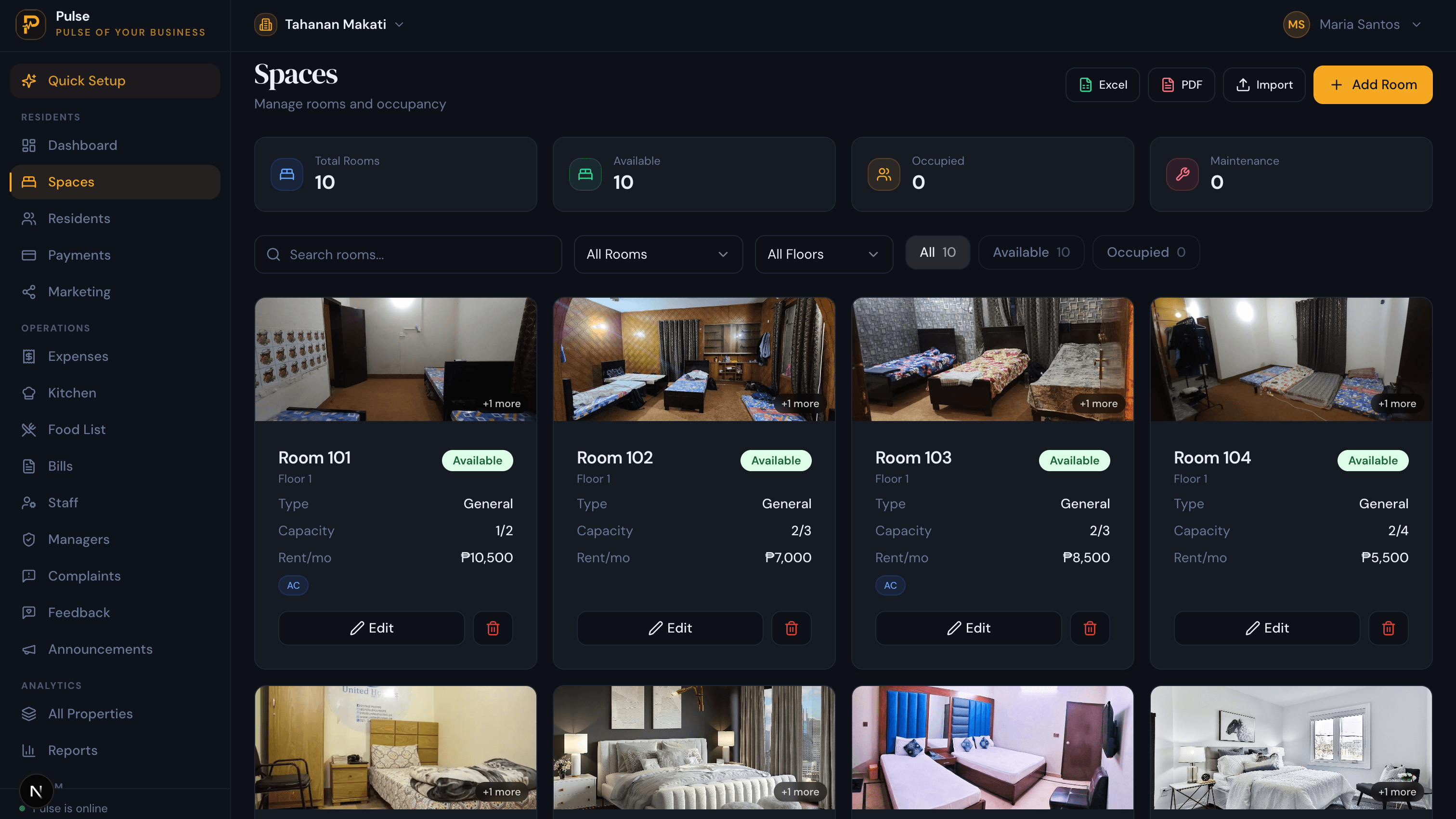
An empty bed earns nothing and still costs you, so filling rooms is not a one-time launch job, it is the thing you never stop doing. Three channels carry most Philippine boarding houses. Word of mouth is the strongest: a boarder who left happy sends their batchmate or workmate, which is why a fair move-out matters as much as a good move-in. An online listing is now the first place a stranger looks, so a page that shows your rooms, what they cost with board, and which beds are open today does the work a gate sign used to. And a waiting list turns a notice into an opportunity: when someone gives notice, you already know who is next.
When a boarder does move in, keep it simple but complete: a short written agreement, a copy of their ID, an emergency contact, the deposit recorded, and the meal plan they are taking. That one record, captured at the door, is what saves you an argument a year later.
Collect the rent without chasing
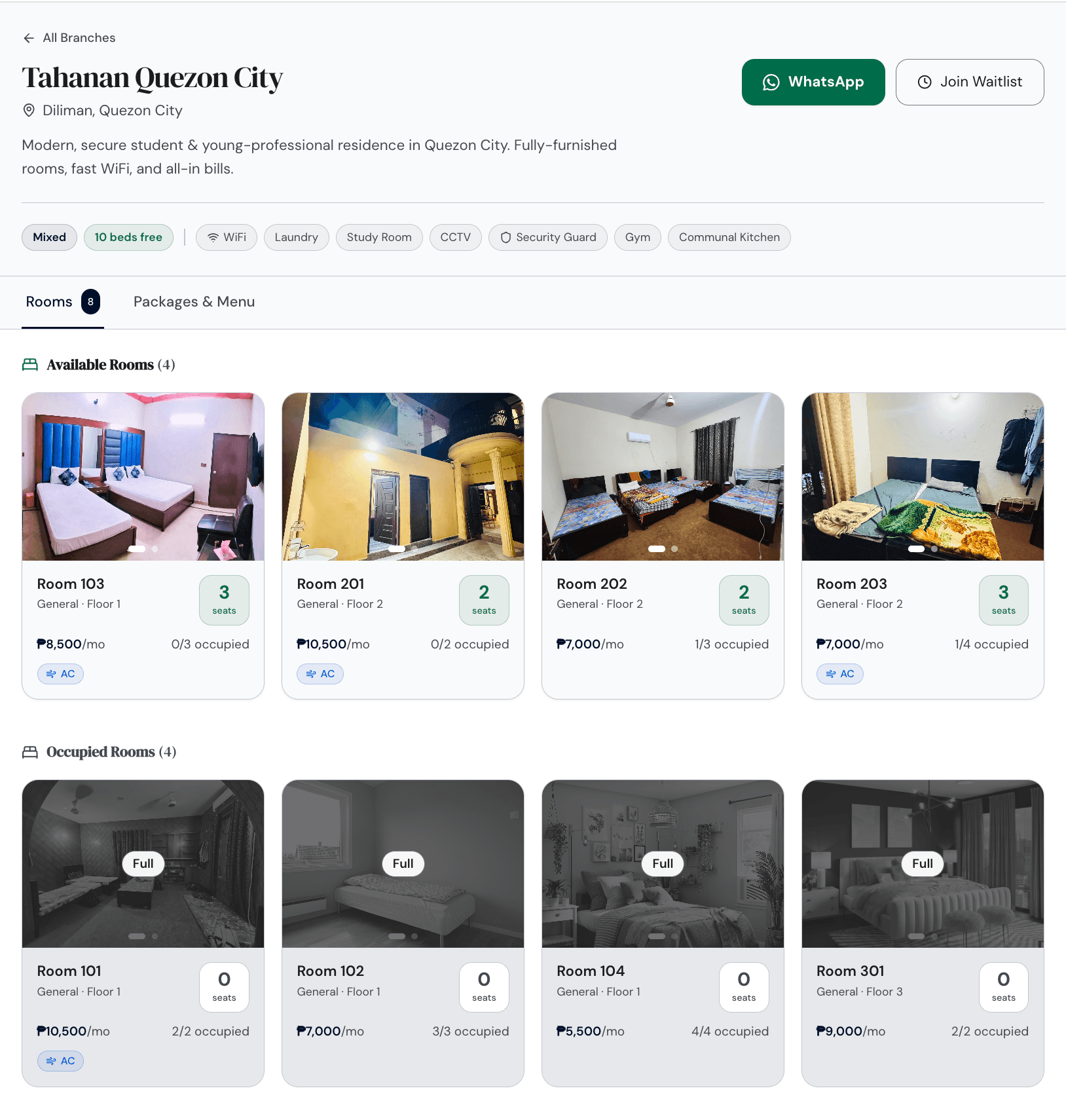
Rent is where a boarding house quietly leaks money, not through bad boarders but through a dozen small amounts falling due on a dozen different days and nobody tracking them. The fix is less effort, not more. Put everyone on one or two fixed dates rather than their own anniversary. Bill each boarder once for everything they owe, rent, board and power on a single statement, instead of three separate asks. Take whatever they pay, cash on payday, a bank transfer, an e-wallet, and record it against them with a receipt the moment it lands, so nobody can honestly say later that they paid when they did not.
When a boarder pays only part of the month, record the part and carry the rest forward as a balance, so the amount owing is always a real figure and never a guess. A short, standard reminder a few days before the due date collects far more than chasing after it. Done this way, the whole house pays on a rhythm you set rather than on thirty different ones. For the version of this that scales across more than one house, see our guide to managing multiple properties without spreadsheets.
Feed the house without losing money
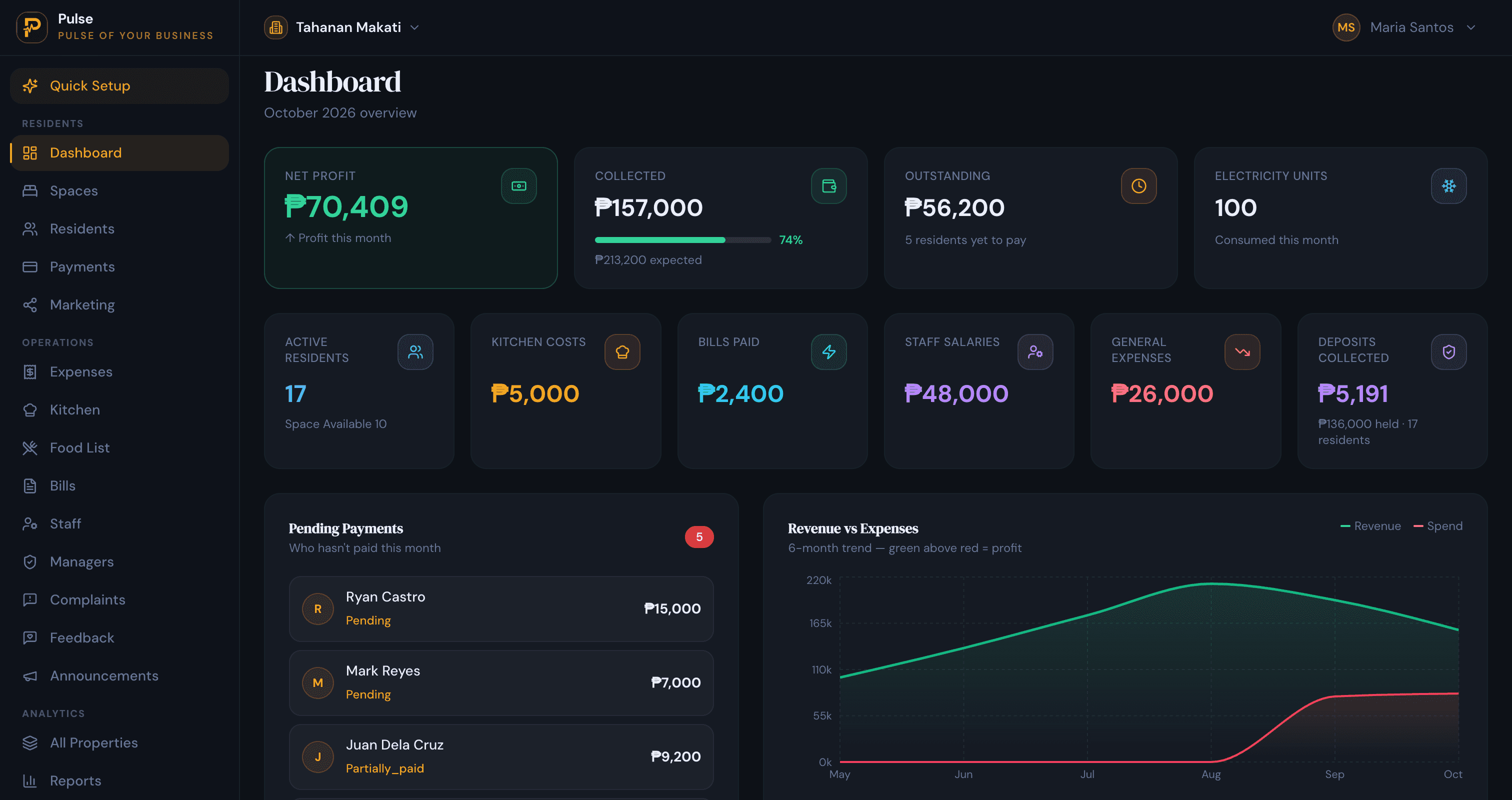
Board is what makes a boarding house a boarding house, and it is also where profit disappears if nobody is watching. The trap is that the kitchen feels like a household, not a business, so its spending never gets counted against the meal charges. Run it the other way. Each month, take a headcount of the boarders who actually eat, since anyone paying for the room alone should not carry the food bill. Add up the kitchen’s spend on groceries, gas and wages. Then put that total next to what the meal plans brought in: if the spend has overtaken the charges, the plan is due a rise, and you catch it in time only by looking every month rather than once a year.
A weekly menu helps on both sides of this. It tells boarders what they are paying for, and it lets you buy to a plan instead of improvising, which is usually cheaper. Keep the kitchen’s costs in the same place as the rest of the house’s numbers so the food business is never a mystery bolted onto the side.
Keep the peace
Boarders live on top of one another and share the kitchen, the bathrooms and the quiet, so most of the friction in a boarding house is between boarders, not with the owner. A short set of house rules, agreed at move-in, heads off the worst of it: quiet hours, guest and curfew rules, who cleans what, and how to report a problem. Rules that are written down and reasonable hold up; rules that live only in the owner’s head do not. Give boarders an easy way to flag a leaking tap or a broken lock and deal with it quickly, because a small repair ignored is how a good boarder starts looking elsewhere.
Handle move-out cleanly
How a boarder leaves decides what they say about you afterwards, and in a business built on word of mouth that matters more than almost anything. Do the sums out loud: add up their last days in the house and any balance still owing, subtract it from the deposit you held, and walk the boarder through the figure you are handing back or asking for, line by line, before they leave. A boarder sent off with a fair, itemised settlement is the one who sends you the next three.
Know your numbers, then grow
Running a boarding house well comes down to watching a few figures without letting them run you. Occupancy tells you how much of your capacity is earning. Collections against what was billed tells you whether the rent is actually arriving. And income minus every cost, the kitchen included, tells you whether the house is a business or a hobby. Once those numbers are steady and you are not holding them all in your head, a second house stops being a leap. The owners who grow are the ones who turned the work into a system first, so that a new house is one more of something that already runs, not a fresh improvisation.
Where software earns its place
Every job above can be done on paper, and for one small house it often is. What changes the maths is the moment there is more than one person needs to remember, or more than one house to remember it for. Software earns its place by holding the beds, boarders, bills, payments, deposits and kitchen costs in one record the whole house can read, and by doing the monthly billing and the move-out arithmetic for you. Our guide to boarding house management software goes through what to look for. PulseHub is built for Philippine boarding houses, priced by the number of properties, with a free trial: see PulseHub for the Philippines, compare plans on the pricing page, or talk to the team.
A boarding house in one monthly rhythm
Most of running a house settles into the same loop, month after month:
- Bill. Send each boarder one statement for rent, board and power.
- Collect. Record every payment and hand over a receipt as it comes in.
- Buy. Feed the house to the menu and log what the kitchen spends.
- Check. Compare meal charges against kitchen cost and arrears against the bill.
- Fill. Work the waiting list so any notice has a replacement ready.
- Settle. Close out every move-out against its deposit, in the open.
Get that rhythm steady in one house and it is the same rhythm, not a harder one, in the next.
Frequently asked questions
How do you start a boarding house in the Philippines?
In rough order: secure the property and, if you do not own it, the owner’s written permission to take in boarders; sort out your permits with the barangay, city hall and BIR; lay the building out as rooms and beds; set a room-and-board rate that covers your kitchen; then take your first boarders with a simple contract, their ID and a deposit. The running of it, rent, meals, deposits and keeping rooms full, is what this guide is about.
How much should I charge for a bedspace with board?
Price from your costs, not from the house down the street. Add up the monthly cost of the room, then the real cost of feeding one boarder (groceries, gas and the cook’s wage divided by how many eat), then the power an air-conditioned room draws, and put a margin on top. That gives you a floor for a full-board bed, a room-only rate, and an air-con premium, all defensible when a boarder asks why.
How much deposit should a boarding house ask for?
One month advance and one month deposit is the common arrangement, though the exact terms are yours to set within what the law allows. Whatever you choose, write it into the contract, record what you are holding against each boarder, and settle it in the open at move-out against the final bill. A deposit a boarder feels was handled fairly is the quietest way to protect your reputation.
Do I need permits to run a boarding house in the Philippines?
Yes, generally: a barangay clearance, a mayor’s or business permit from the city or municipality, and registration with the BIR, with fire-safety and sanitary requirements on top. The exact list and any zoning rules depend on your local government, and this is not legal advice, so confirm what applies with your own city or municipal hall before you open.
How do I keep my boarding house full?
Three things carry most houses: word of mouth from boarders who left happy, a simple online listing that shows what is free and what it costs, and a waiting list so a room that opens has someone ready for it. An empty room pays nothing while its share of the bills carries on, so the aim is to have the next boarder lined up before the current one leaves.
How do I stop losing money on meals?
Run the kitchen as its own small business with its own books. Each month, tally only the boarders who genuinely eat, set the grocery, gas and cook bills against what the meal plans brought in, and nudge the plan up the moment the gap closes. Prices creep, so a meal rate you fixed last year can fall behind your costs without a single boarder noticing; only a monthly look catches it.
What is the best software to run a boarding house?
Look for a tool that lets by the bed, puts rent, board and power on one monthly bill, records cash, transfer and e-wallet payments with a receipt, tracks your kitchen costs, and runs more than one house from a single account. PulseHub is built for exactly this in the Philippines, with pricing per property and a free trial.
Run your boarding house on PulseHub
Once the house is full, the kitchen is feeding a table of boarders, and the money is coming in three different ways, the running of it stops fitting in a notebook. PulseHub keeps the rooms, boarders, bills, payments, deposits and kitchen costs for every house in one place and does the monthly billing for you, in pesos. See PulseHub for the Philippines, compare plans on the pricing page, or start a free trial and set up your house in minutes.