Student accommodation
Student Accommodation Management Software in South Africa
· 9 min read
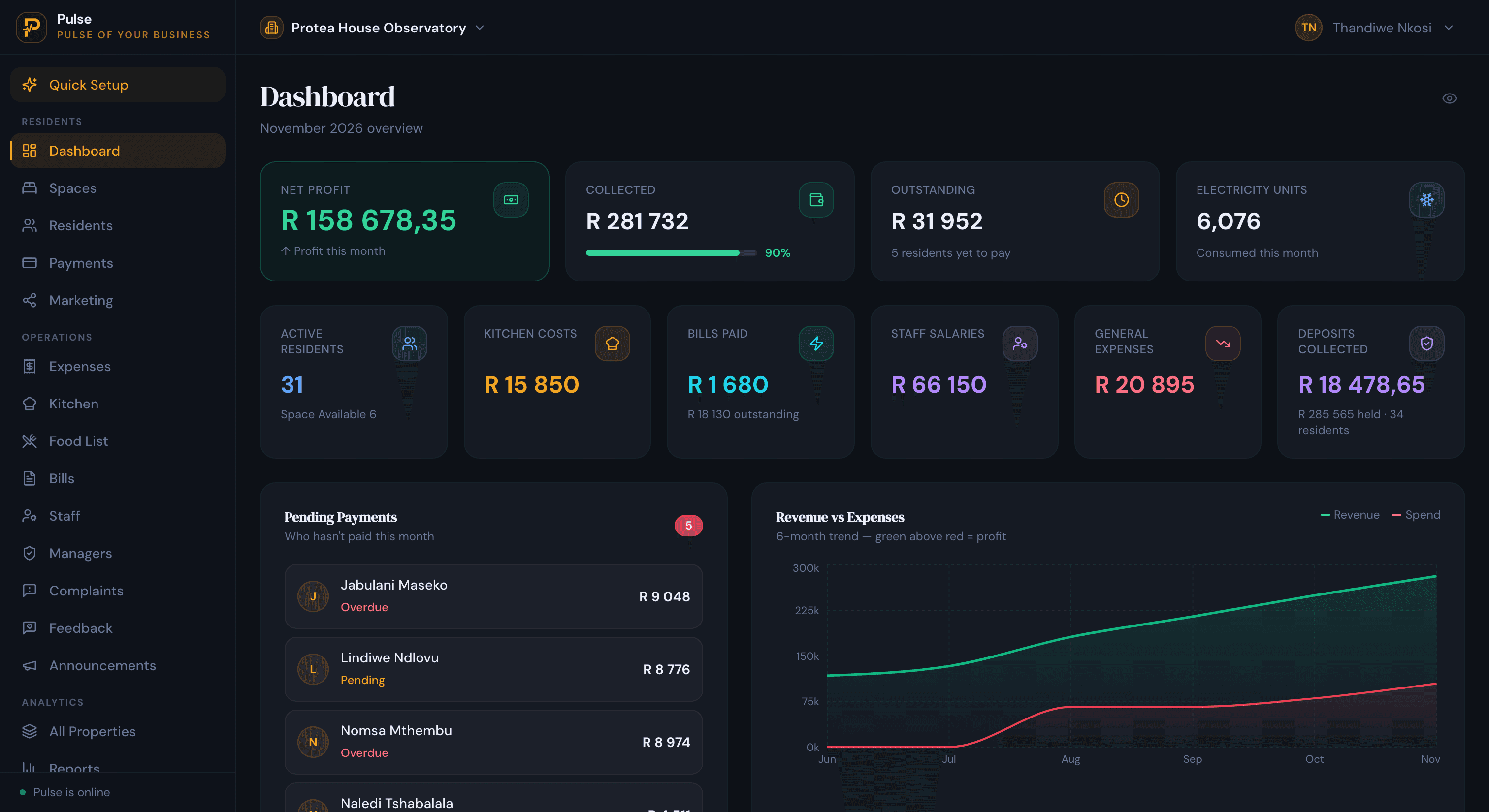
Student accommodation management software for South Africa runs a private student residence from one place: applications, room and bed occupancy, one bill per resident in rand, deposits and arrears, your own page to fill beds, and every residence in one view. It is built for letting by the room and the bed, the way private residences and landlords near South African campuses actually operate, not the whole-flat model a generic rental tool assumes.
If you run a private residence or let rooms to students near a university or TVET college, in Johannesburg, Cape Town, Pretoria, Durban or Bloemfontein, a spreadsheet stops coping once you pass a few rooms. Beds fill and empty around the academic year, rent and NSFAS payments arrive in parts, deposits pile up, and turn season is chaos. This guide covers what the software does, why a generic tool does not fit, the features that matter here, and how to choose.
What student accommodation software is
It is software that runs a residence’s daily operations from one place: a record for every student with their deposit and history, true occupancy down to the bed, one bill that gathers rent and shared costs, the payments against it, and a clear view of how each residence is doing. Instead of a bed list in one spreadsheet and a rent tracker in another, it keeps them together, for one residence or a whole portfolio.
Why a generic rental tool does not fit
Most property tools assume one tenant signs for one whole flat and pays one rent. A student residence does not work like that: many students live under one roof, each renting a bed, each with their own rent, deposit and sometimes an NSFAS arrangement. Run that on a whole-unit tool and you fight it every year, you cannot bill a bed, you cannot see a room as part full, and the turn-season churn becomes a manual rebuild.
University residence systems run the institution’s own halls, not your private residence. A private operator needs software built to let beds, bill each student, and keep the money and the records straight.
The features that matter in South Africa
Use this as a checklist when you compare tools:
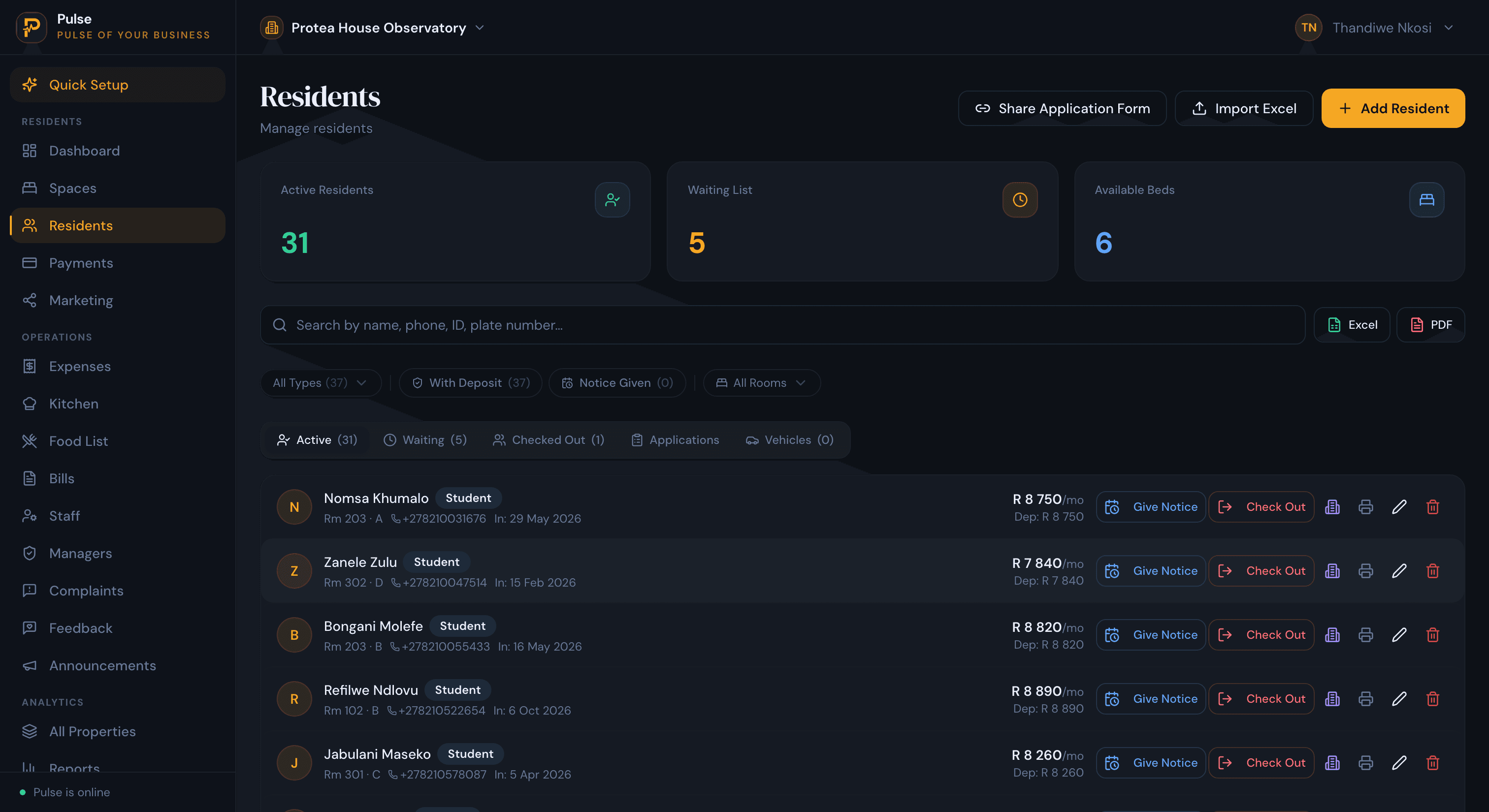
- Room and bed-level occupancy that cannot be over-filled, so a four-bed unit with three students reads as three-quarters full.
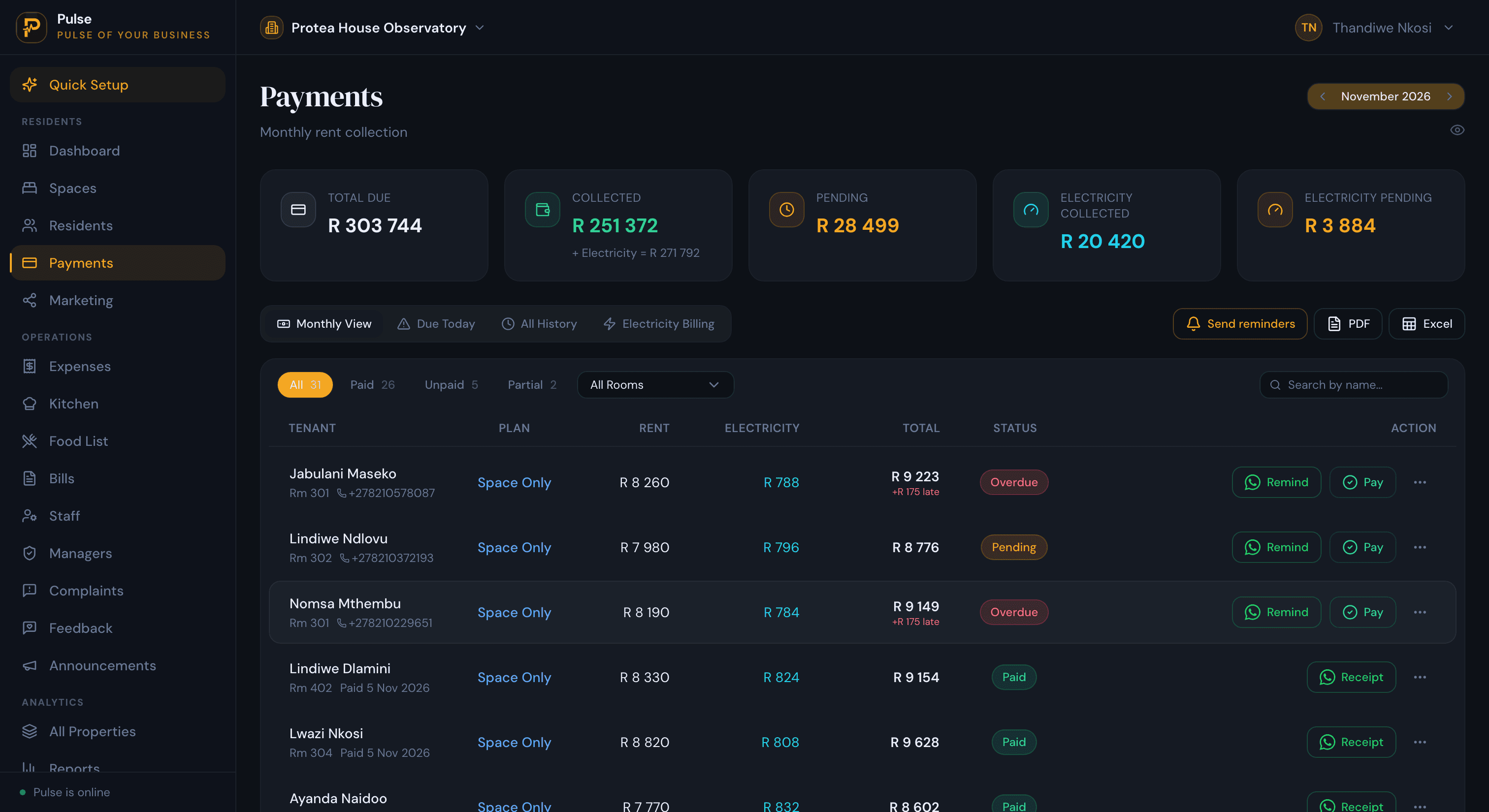
- One bill per resident in rand, with part-payments tracked as instalments and the real balance carried forward.
- Payments recorded with receipts, including NSFAS, bank transfer and cash, so collections are never a guess.
- Arrears tracking and automatic reminders, so overdue rent is chased without you doing it by hand.
- Deposits and move-in / move-out, held and settled, with turn season handled rather than rebuilt.
- Your own public page, with live bed availability, so students enquire with you directly.
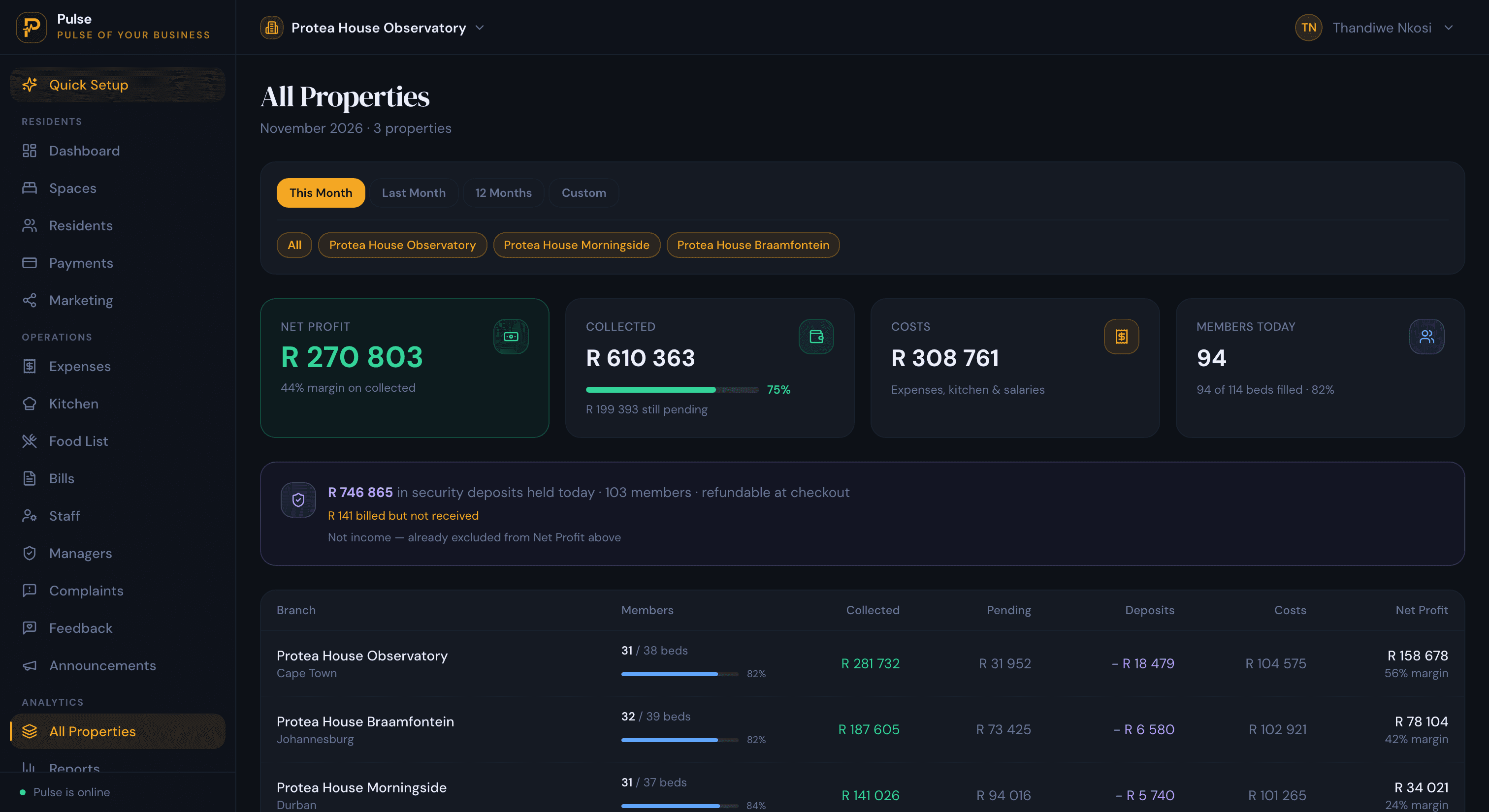
- Portfolio reporting, with occupancy, collections and cost per residence, and manager access scoped to one residence.
- Data in and out, with bulk import to start and export whenever you want.
How PulseHub fits
PulseHub is built for letting by the room and the bed, which is exactly the student-residence model. It organises each residence into floors, rooms and beds, keeps occupancy true, and every student is one record with their documents, deposit and history. Each resident gets one bill in rand, with part-payments recorded as instalments, arrears chased automatically, and every residence in one portfolio view. Each residence also gets a free public page with live availability, so you fill beds from your own link.
One honest boundary: PulseHub runs the operations and records payments, including NSFAS payments, but it does not submit NSFAS accreditation or claims, which stay with NSFAS and your institution, and it is not a payment gateway. For the product in general, see student accommodation management software and our guide to choosing student accommodation software; new to the category? Read what a property management system is.
In short
If you run private student accommodation in South Africa, by the bed, in rand, and often more than one residence, you need software built for that model, not a whole-flat rental tool or a university system. Look for true bed-level occupancy, one rand bill per resident, NSFAS and other payments recorded with receipts, your own page to fill beds, and a single view across every residence.