Accommodation management
SRO (Single Room Occupancy) Management Software
· 7 min read
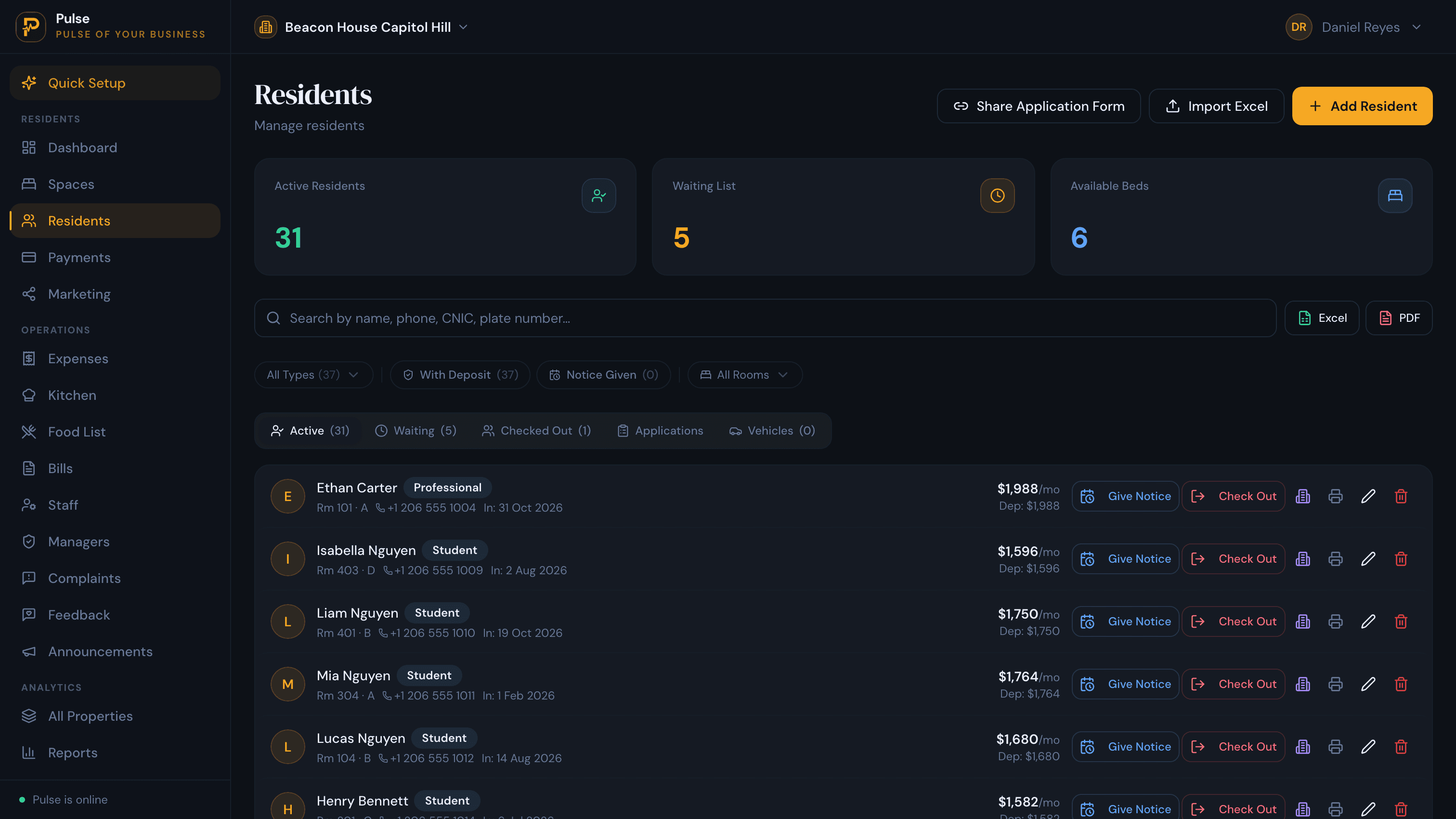
SRO management software is software for operators who rent single rooms, not whole units: each resident has a private room, shares a kitchen and bathrooms, and pays by the room. It needs to do the opposite of an enterprise lease system: track occupancy room by room, bill each resident, and split shared utilities fairly. This is what single room occupancy operators should look for, and how PulseHub handles it.
What single room occupancy means
Single room occupancy, or SRO, is one of the oldest forms of affordable housing in US cities: a resident rents a single room, with kitchens and bathrooms shared down the hall, and pays monthly with utilities usually included. In practice it sits alongside rooming houses, co-living and boarding houses. Whatever the label, the operating model is the same, and so is the software you need: you let and bill by the room.
What SRO management software should do
The essentials for running single room occupancy well:
- Room and bed-level occupancy so you always know which rooms are filled, empty or on notice, and a room is never double-booked.
- A record per resident with their agreement, documents, deposit and payment history.
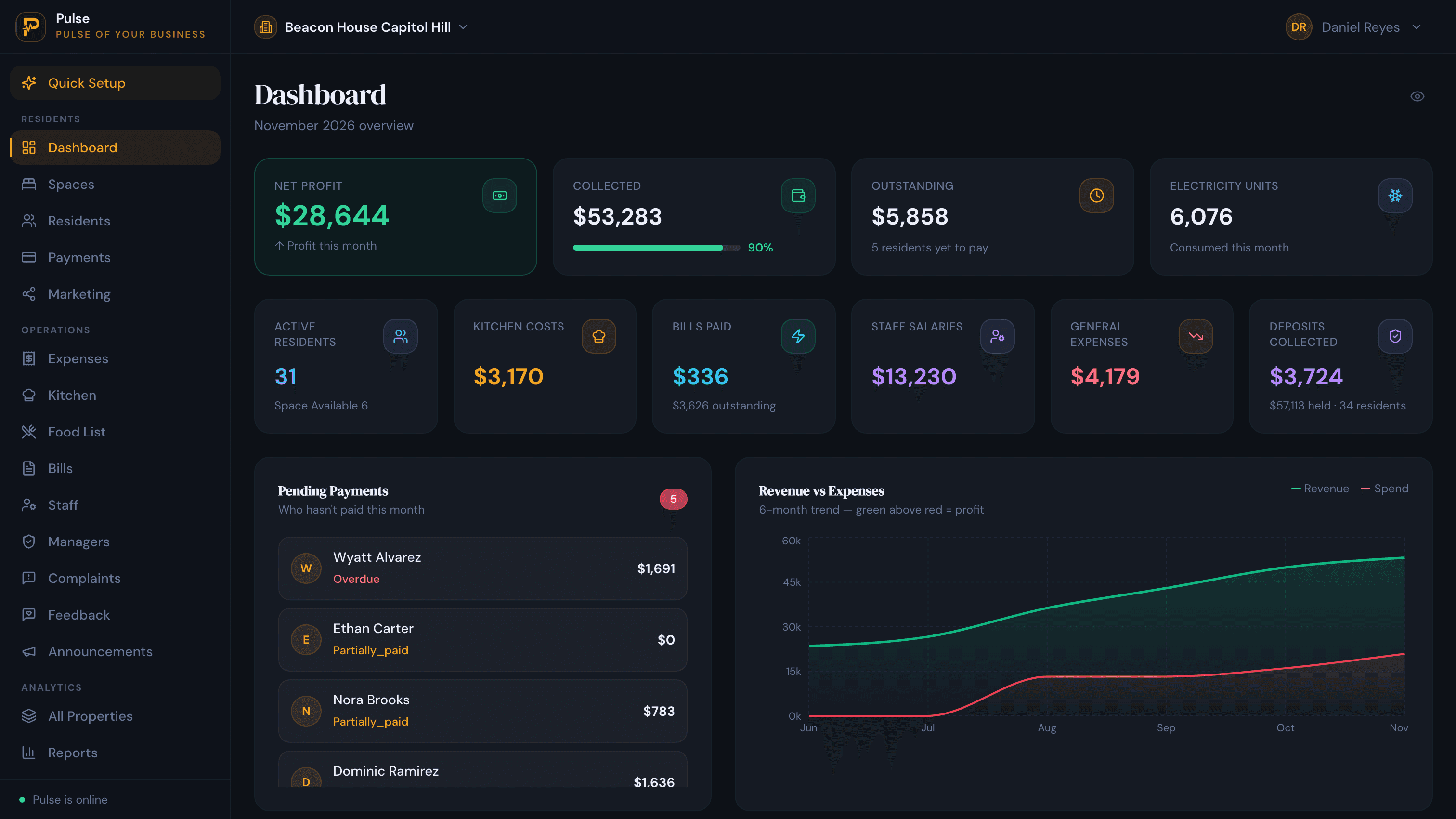
- One bill per resident for room rent plus their share of utilities, with part-payments and receipts.
- Fair utility splitting between rooms, rather than a flat division that overcharges a late arrival.
- Deposits tracked and settled against the final bill at move-out.
- A portfolio view across every building, with occupancy, collections and dues side by side.
How PulseHub fits SRO operators
PulseHub models each building as rooms and beds, keeps occupancy accurate down to the room, and raises one bill per resident that gathers room rent and a metered share of electricity split between residents by room and move-in date, with water and gas as recurring charges. Deposits are tracked and settled at move-out, and every building sits in one portfolio view. Being clear about the edges: PulseHub records payments rather than processing them, so it is not a payment gateway, and it is not an accounting or compliance package. Local SRO and occupancy rules remain your responsibility, and this is not legal advice.
Why it is not enterprise student-housing software
It is worth being clear about what SRO software is not. Enterprise student-housing and PBSA systems are built for campus-scale operations with leasing, marketing and accounting suites, and they price and work accordingly. An SRO or rooming-house operator letting individual rooms needs the opposite: a lightweight, room-level tool that bills each resident and tracks occupancy by the room. That is the gap PulseHub is built for.
Where to go next
See rent-by-the-room software for the US, the companion guide to how to manage a rooming house, or the wider shared-housing platform and co-living management.
Frequently asked questions
What is single room occupancy (SRO)?
Single room occupancy, or SRO, is housing where each resident rents a single private room, usually with shared kitchens and bathrooms, and pays by the room rather than for a whole unit. It overlaps with rooming houses, co-living and boarding houses. The operating model is the same: you let, bill and track occupancy room by room.
What should SRO management software do?
At a minimum it should let you rent by the room: track occupancy down to the room or bed, keep a record and agreement per resident, raise one bill per resident for rent and utilities, hold deposits, and report across every property. PulseHub does all of these. It is not a whole-unit property system retrofitted for rooms, and it is not an accounting suite.
How does PulseHub handle SRO utilities?
It meters electricity and splits it between residents by room and their move-in dates, and lets you add recurring charges such as water and gas, so each resident gets one bill covering their share rather than a flat division. That matters in SROs, where utilities are usually part of the room charge.
Does PulseHub collect SRO rent for me?
PulseHub records payments and issues numbered receipts; it is not a payment gateway, so rent moves through your own bank or payment app and you mark it received. What it automates is the tracking and the chasing: every resident’s balance at a glance, and reminders before and after the due date.
Is SRO management software the same as student or enterprise housing software?
No. Enterprise student-housing and PBSA systems are built for large, campus-scale operations with leasing, marketing and accounting suites. SRO and rooming-house operators let individual rooms and need the opposite: a lightweight, room-level tool that bills each resident and tracks occupancy by the room. PulseHub is built for that model.