Accommodation management
How to Manage a Rooming House: Rooms, Rent and Utilities
· 8 min read
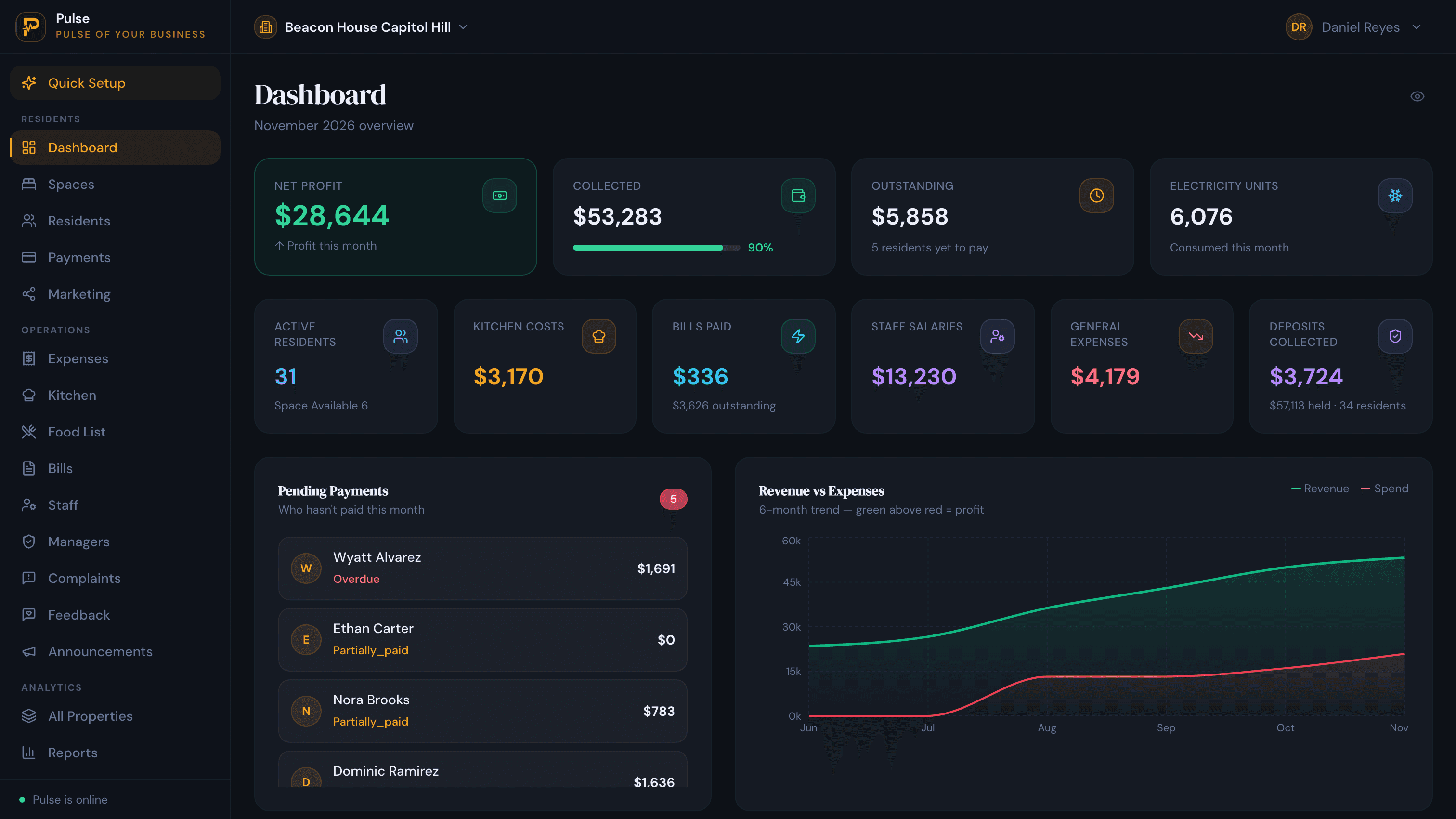
Managing a rooming house comes down to running rooms, not a lease: each room has its own resident, its own rent and its own share of the utilities. Do that on paper and it is a scramble of rent books and spreadsheets; do it with software built to rent by the room and it is a few screens. This is a practical, step-by-step guide to running a rooming house in the US, and where rent-by-the-room software takes the load off.
1. Set up the house, down to the room
Map the property as it actually is: rooms and beds, each let on its own, with the rent and any features (private or shared bathroom, furnished, square footage) recorded per room. This is the foundation, because occupancy, billing and your vacancy list all flow from it. Done right, a room is never double-booked and you always know what is empty.
2. Screen and onboard residents
Each resident becomes one record holding their contact details, documents, agreement and deposit. New residents can also apply through the property’s own public listing page, which shows live room availability and an inquiry form, so you fill vacancies directly rather than only through listing sites.
3. Collect per-room rent on one bill
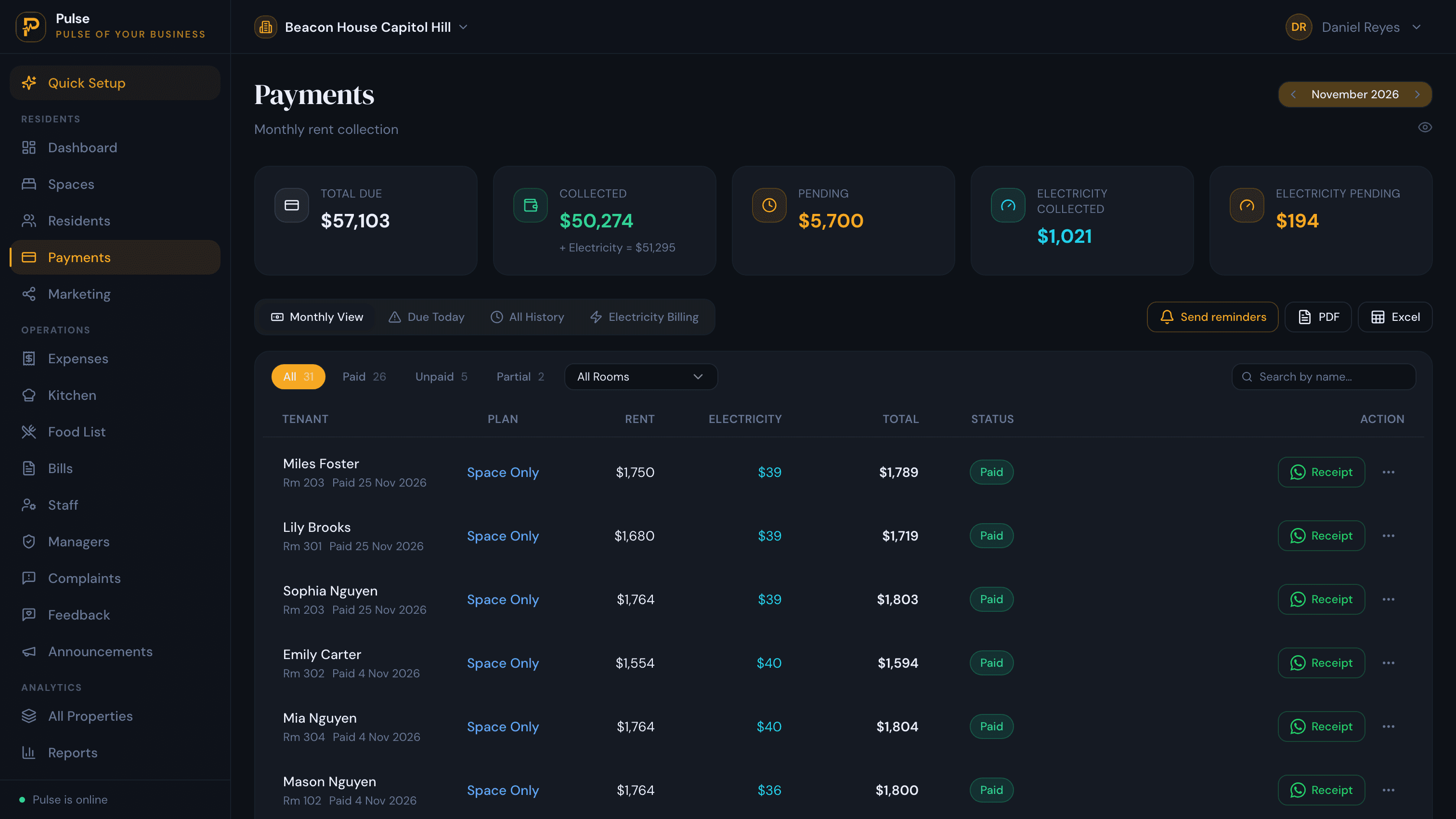
Rent in a rooming house is per resident, so raise one monthly bill per person covering their room rent and any add-ons. PulseHub records full or partial payments as they come in and issues a numbered receipt for each one, with the balance carried forward. It records payments rather than processing them, so money moves through your own bank or payment app and you mark it received.
4. Split utilities fairly between rooms
If you include utilities in the rent, you need a fair way to spread the cost rather than guessing. PulseHub meters electricity, splits it between residents by room and their move-in dates, and lets you add recurring charges such as water and gas, so each resident’s share lands on their own bill. A resident who arrived mid-month pays for their share, not a flat cut.
5. Hold deposits and handle move-outs
Track each resident’s deposit against their record, and at move-out settle the final utility charge and any outstanding rent against it, so you can see exactly what to collect or refund. The room then returns to vacant and the resident’s history stays on file.
6. Stay on the right side of local rules
Many US cities and counties regulate rooming houses and SROs through zoning, occupancy limits, licensing or inspections, and the rules vary widely by location. Keeping clean records of who occupies which room, with dates, makes those requirements far easier to meet. This is general information, not legal advice, so confirm what applies to your property with your local housing or code department.
Bringing it together
Running a rooming house well is mostly about not letting the small things slip: a room sitting empty, a bill raised late, a deposit no one can find at move-out. Bringing rooms, residents, rent, utilities and deposits into one place is what frees you from the paperwork. See rent-by-the-room software for the US, or the related SRO management software guide, co-living management and the wider shared-housing platform.
Frequently asked questions
What is a rooming house?
A rooming house is a property where people rent individual rooms rather than a whole unit, usually sharing a kitchen and bathrooms, and often paying monthly with utilities included. It overlaps with SROs (single room occupancy), co-living and boarding houses. The common thread is that you let and bill by the room, not by the whole lease.
How do you collect rent in a rooming house?
Per resident, not per property. Each room has its own rent and its own resident, so you raise one bill per person and track who has paid. With rooming house software like PulseHub you record each payment and issue a receipt; it is not a payment gateway, so money still moves through your own bank or app and you mark it received.
How are utilities handled in a rooming house?
Many operators include utilities in the rent, which means you need a fair way to spread the cost. PulseHub meters electricity and splits it between residents by room and move-in dates, and lets you add recurring charges such as water and gas, so each resident gets one bill covering their share rather than a flat split.
Do rooming houses have special rules?
Often yes. Many US cities and counties regulate rooming houses and SROs through zoning, occupancy limits, licensing or inspections, and the rules vary widely by location. This guide is general information, not legal advice, so confirm what applies to your property with your local housing or code department before you operate.
Can one system manage more than one rooming house?
Yes. PulseHub runs every property from one account: switch between them, move a resident or a room between properties, and compare occupancy, collections and outstanding balances across all of them in one view.