Co-living
How to Start a Co-Living Business: An Operator’s Guide
· 11 min read
Co-living, renting private rooms in a shared, serviced home with communal space, has gone from a niche idea to a real business that fills a gap between a hotel and a flat. Search how to start one, though, and you mostly find two things: thin posts that stop at “find a property and build a community,” and paid courses promising riches from leasing other people’s houses. Both skip the parts that actually decide whether a co-living business works: the numbers, and the day-to-day running.
This guide is operations-first. It covers the two ways to start (lease or own), the figures that make or break the margin, a practical step-by-step to launch, and the operational reality of running rooms, residents and bills, which is where most new operators get caught out. It is general guidance for operators anywhere, not legal or financial advice.
To start a co-living business: secure a property to lease or buy, work out your break-even occupancy before you sign, design and price it per room, fill it from a listing with live availability, then run the monthly operations (admissions, one bill per resident, arrears and voids) tightly.
What a co-living business actually is
A co-living business rents out private rooms (or beds) in a shared property, with communal kitchens and living space, usually bills included, and often light services like cleaning and a bit of community. The resident rents a room on a flexible term, not a whole flat on a long lease. For the operator that means more revenue per property than a single let, but also more work: several residents, several agreements, shared bills and constant turnover. It is run like a small hospitality business, not a passive buy-to-let.
Lease or own: the two ways in
Before anything else, decide how you will hold the property, because it changes your capital, your margin and your risk.
Lease and run (rental arbitrage)
You rent a property on a normal lease, furnish it, and let the rooms individually for more than you pay in rent. The upfront cost is low, a deposit, furniture and a few months of running costs, so it is how most people start. The trade-off is a thinner margin and total dependence on the landlord: the lease has to permit letting rooms separately, and if the landlord ends it, your business ends with it. The model itself is legitimate, it is how most operators start; it is the get-rich hype around it that is not.
Own the property
You buy, convert and let. This needs far more capital and carries the risks of ownership, but you keep more of the profit, you control the asset, and you are not exposed to a landlord. Many operators start by leasing to prove the model, then buy once they know it works.
The numbers that decide it
This is the part the “find a property and build a community” guides skip, and it is the part that determines whether you have a business. Three figures matter most.
- Occupancy. This is the lever. Industry guidance commonly points at keeping occupancy in the high 80s to mid 90s percent; below that, the margin thins fast. Do not build your model around full occupancy from day one, because it takes time to fill and rooms turn over.
- Margin and costs. Rent or mortgage is almost always your largest cost, followed by bills, cleaning and maintenance. A common rough marker is keeping operating costs well under a third of revenue, but it varies, so model your own.
- Cost and revenue per room or bed. Co-living lives or dies by the room, so track revenue and cost at that level, not just for the property as a whole.
Work out your break-even occupancy
Before you sign a lease or buy, add up your fixed monthly costs (rent or mortgage, bills, cleaning, software, everything), then divide by the rent you can charge per room. That is the number of rooms you must keep filled every single month just to cover costs. If a property needs seven of its eight rooms filled to break even, you have almost no margin for voids, and you should probably walk away. The numbers here are illustrative; your market sets the real ones.
A step-by-step to launch
- Validate demand and pick the property. Choose a location people actually want: near transit, workplaces or a university, with a layout that gives each resident a real private room plus genuine shared space.
- Check zoning and licensing. Many places regulate letting rooms separately, and some require a licence or registration. Confirm it before you commit, not after.
- Design the space. Balance private rooms against communal areas, and sort the practical things residents judge you on: wifi, a usable kitchen, storage, and enough bathrooms.
- Set your pricing. Price per room or bed, decide what is included (bills-included is popular but puts the utility risk on you), and set a deposit.
- Furnish and write the house rules. Furnish for shared living and wear, and write clear rules on guests, cleaning, utilities and conduct so expectations are set from day one.
- Fill the rooms. Put the property online with photos, prices and live availability, make it easy to enquire or join a waitlist, and drive traffic to it.
- Run it. Admissions, billing, utilities, maintenance and community, month after month. This is the real job, and the next section is about getting it right.
The operations that make or break it
Most co-living content stops at the launch. But a co-living business is won or lost in the monthly grind, and it is where new operators underestimate the load. Each resident is a separate agreement, a separate balance and a separate set of shared costs, and they move in and out constantly. The jobs that pile up:
- Admissions and turnover: onboarding each resident with their documents and deposit, and turning a room around fast when someone leaves.
- One bill per resident: gathering rent and each resident’s share of the bills into a single monthly charge, and tracking part-payments.
- Arrears: knowing exactly who owes what, and chasing it before it builds up.
- Occupancy and voids: keeping a true, live picture of which rooms and beds are free so you fill them before they cost you.
- Maintenance and community: logging issues, getting them fixed, and keeping the house a place people want to stay.
A spreadsheet handles a room or two. Add a few residents, bills to split and people coming and going, and the copying between tabs starts costing you time and the odd expensive mistake, a missed arrear, a double-booked bed, a room left empty because nobody updated the sheet.
Run it on software built for rooms and residents
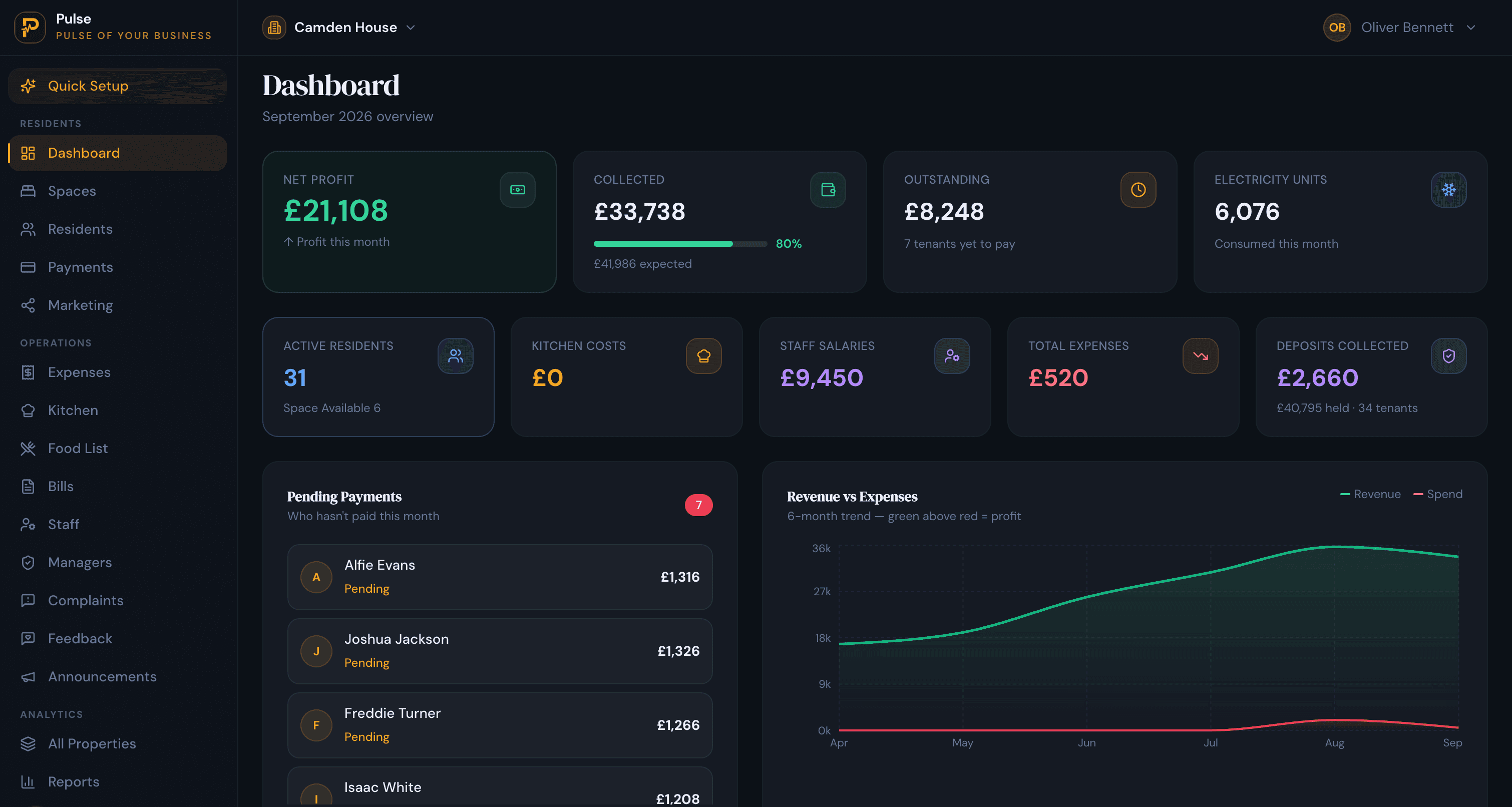
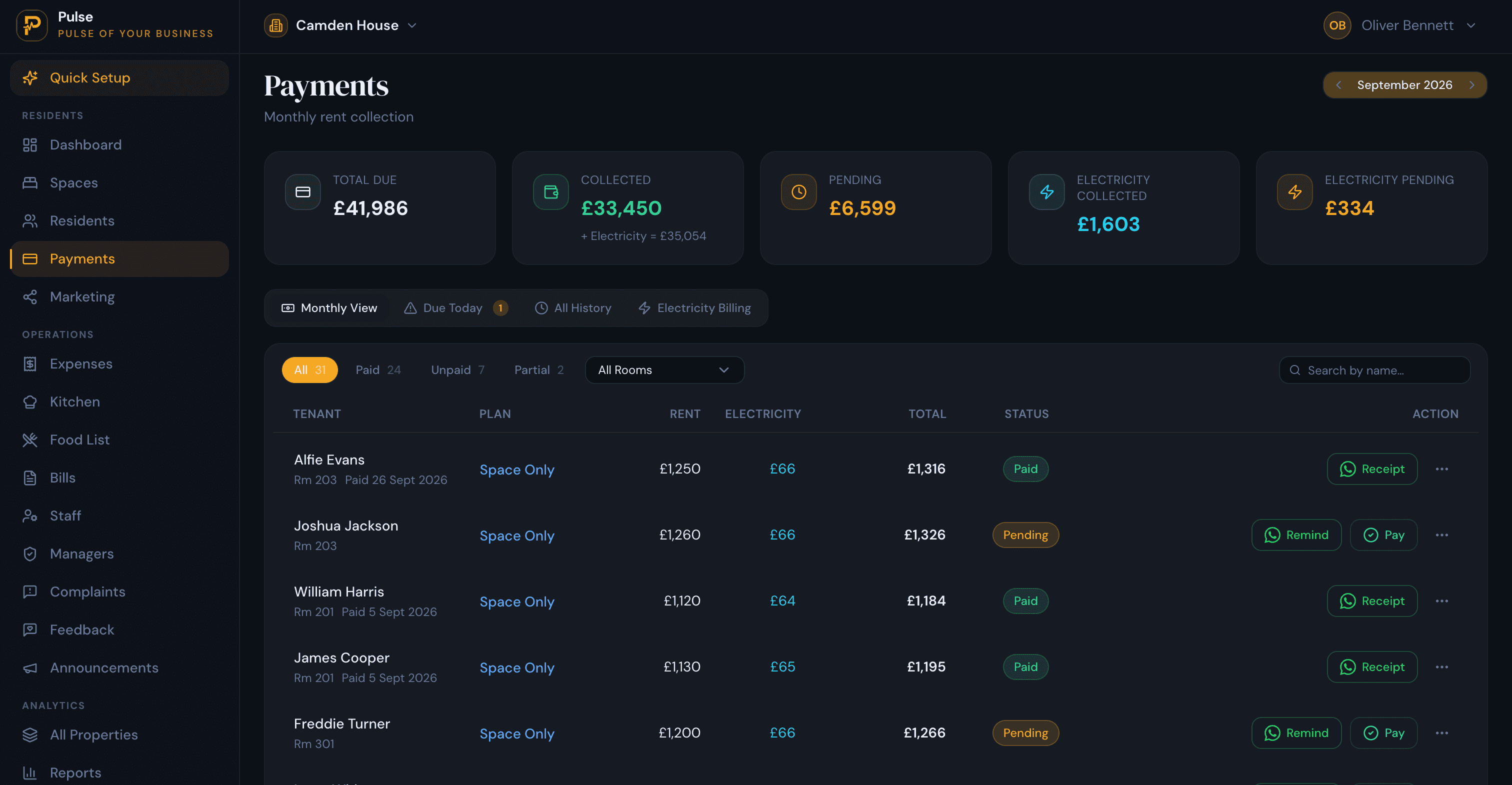
PulseHub is property management software built for exactly this model: renting by the room and the bed. It keeps occupancy true down to the bed so a room is never double-booked, gives each resident one monthly bill that gathers rent and their share of metered electricity and other shared costs, tracks part-payments and arrears, and shows occupancy, collections and voids across every property at a glance. Each property also gets a public listing page with live availability and a waitlist, so you fill rooms from your own site, and residents raise maintenance and get reminders without an app.
For the wider picture, see co-living management software and how to choose a co-living platform, the broader property management software for shared housing, and what a property management system is.
In short
Decide lease or own, work out the break-even occupancy before you sign, design a property people want to live in, fill it from a real listing with a waitlist, and then run the operations tightly, because co-living is a business won in the monthly detail, not the launch.