Hostel management
Hostel and Mess Management Software for Bangladesh
· 8 min read
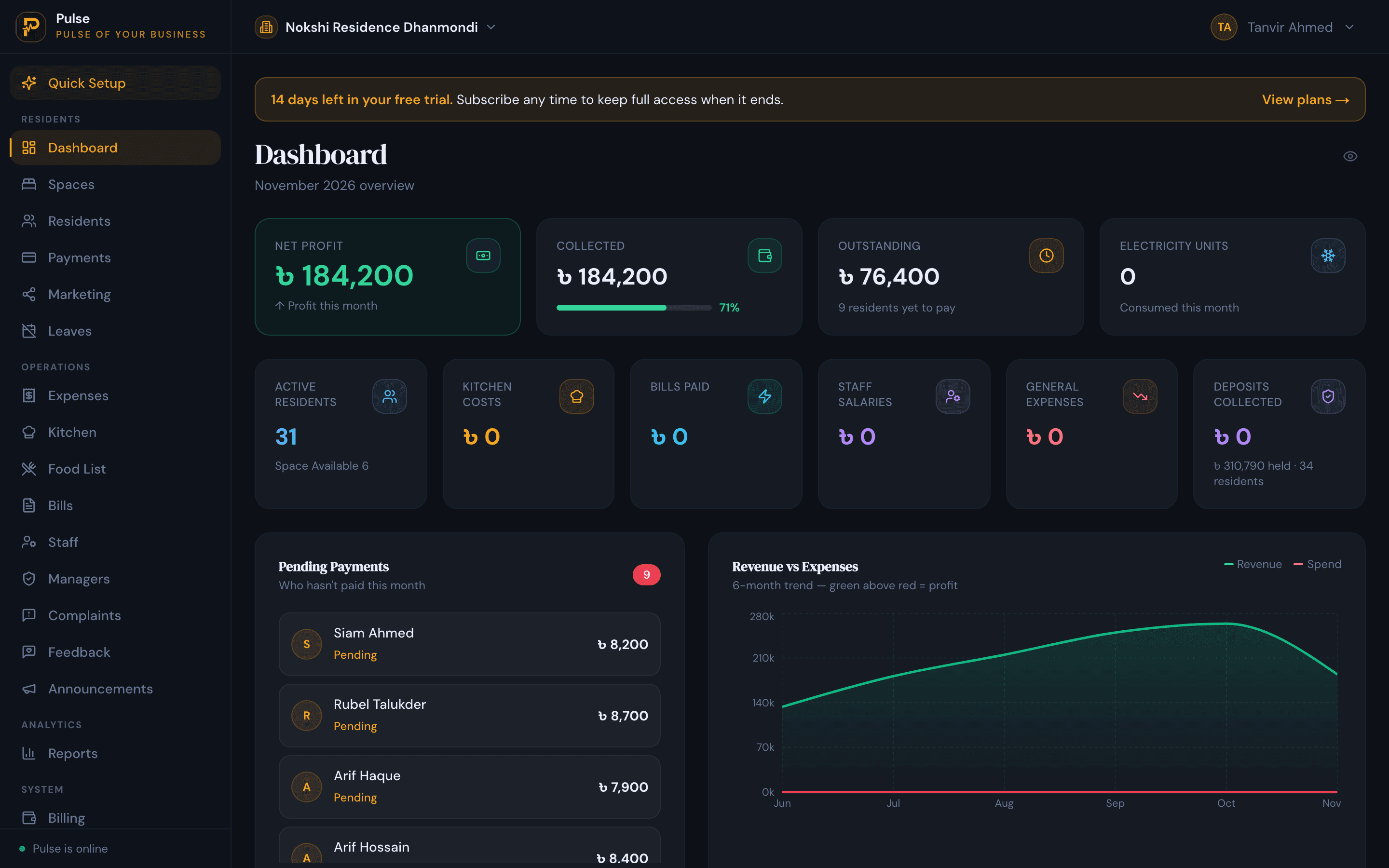
PulseHub runs hostels and messes in Bangladesh from one place: bed-level occupancy, monthly rent recorded in taka, a fair split of shared electricity, meals billed as a package, kitchen costs tracked, and WhatsApp receipts and reminders so collection does not depend on chasing people in person. It is built for operators who have outgrown a paper register and want the beds, the money and the costs in one clear place.
One honest note first: PulseHub bills meals as a monthly package and tracks your kitchen spending, which fits a set monthly mess fee. If your mess runs on daily meal counts with a rate that changes each month, that per-meal tallying is a job for a dedicated mess app, not PulseHub. More on that below.
Running a hostel in Bangladesh
A student or working hostel in Bangladesh is a monthly operation with a lot of moving parts: beds filling and emptying each term, rent due from everyone, a shared electricity bill to divide, a mess to run and pay for, and deposits to hold and return. A paper register and a phone cope at first, but once a hostel is full, or you run more than one, it gets hard to answer simple questions: who has not paid, which beds are free this month, and what each resident actually owes once the shared costs are worked out.
That is the gap PulseHub fills. It keeps the beds, the rent, the shared costs and the mess in one place, so the monthly cycle runs on a system instead of memory.
What PulseHub does for a hostel
PulseHub models each hostel as floors, rooms and beds, records money in taka, and covers the whole month:
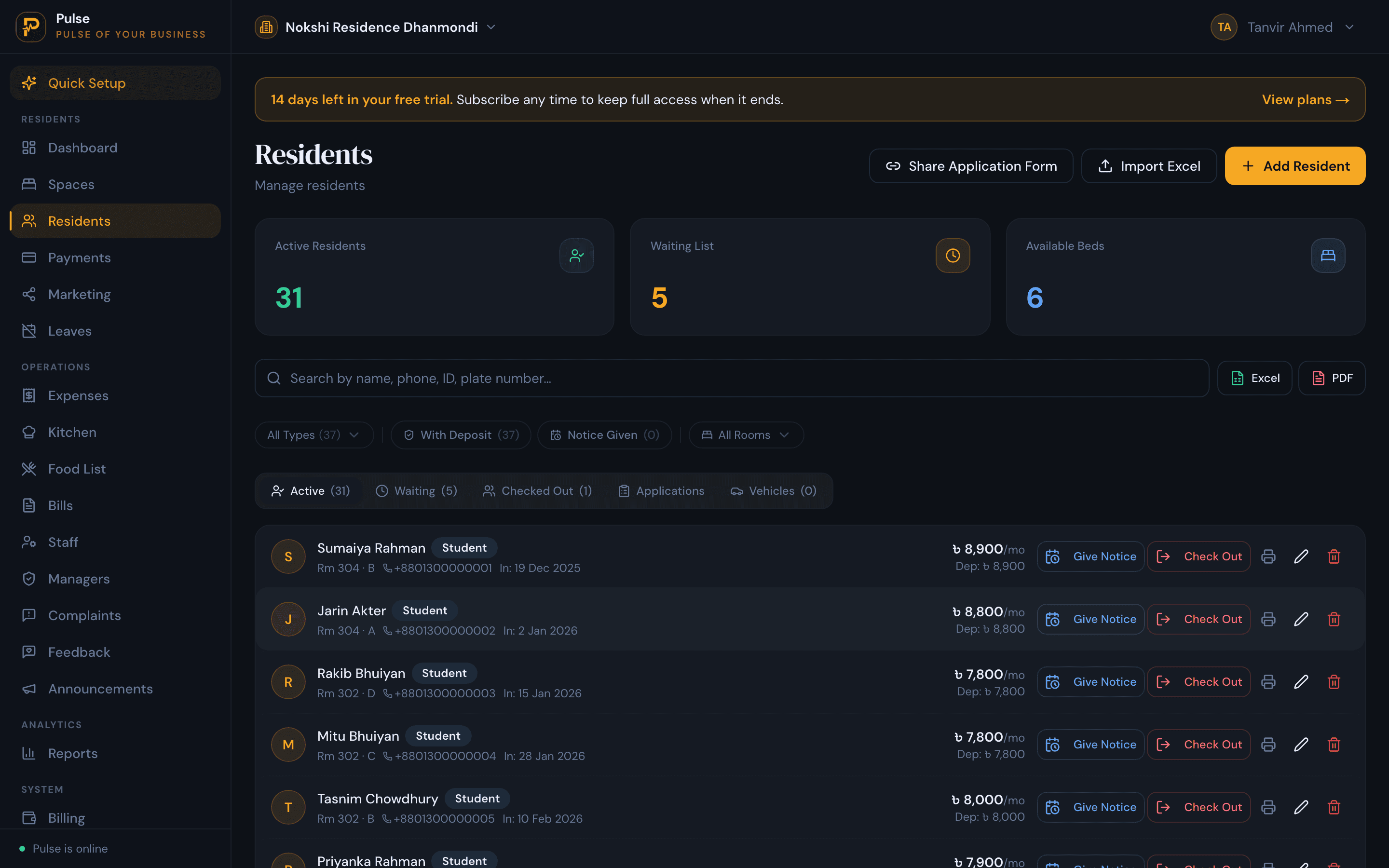
- Bed-level occupancy. Every free and occupied bed at a glance, who is in each and since when, with no double-booking and a waiting list for incoming students.
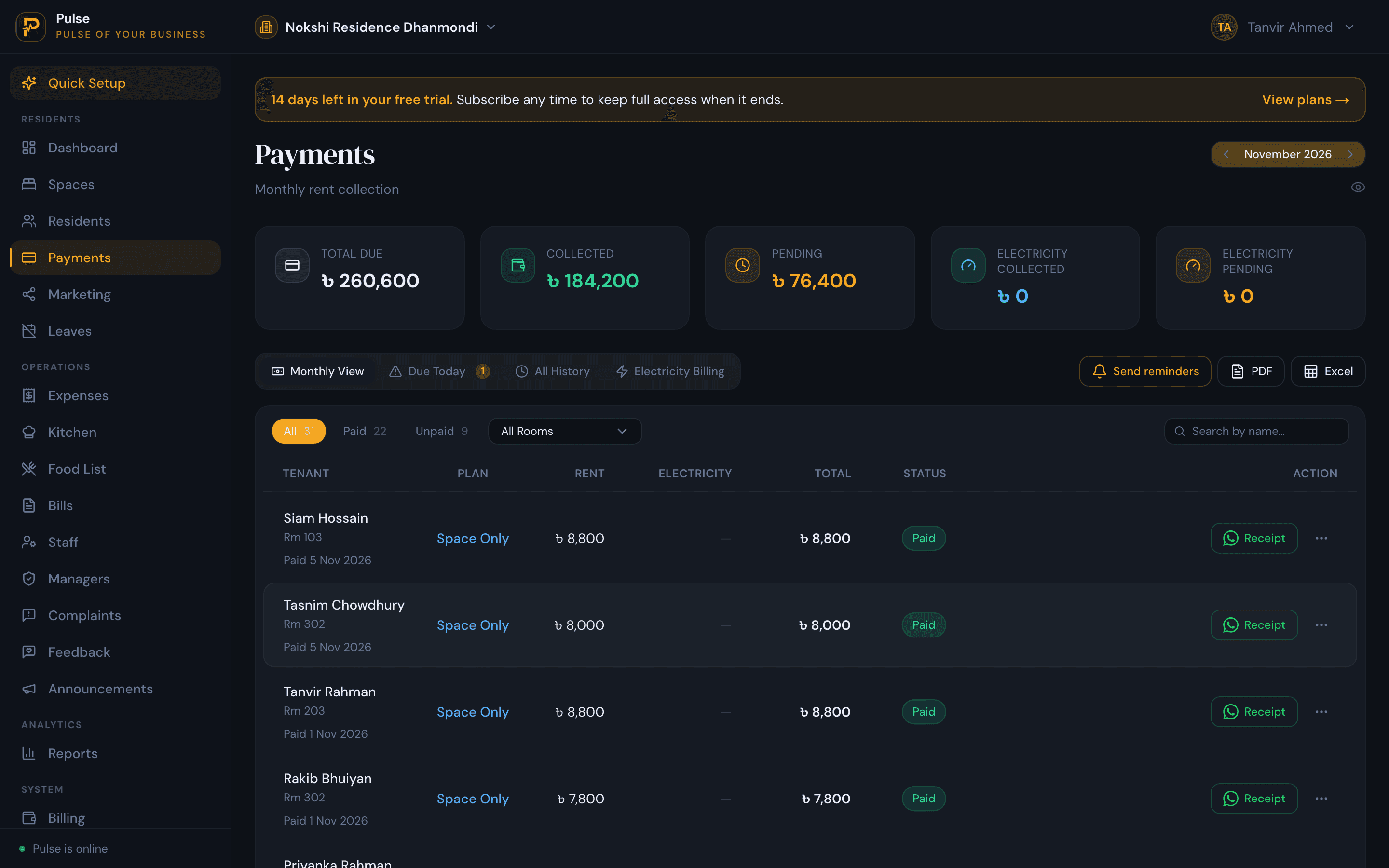
- Rent and deposits. Each resident has their own rent, deposit and running balance; partial payments are fine and dues carry forward to the next month.
- One bill per resident. Rent, a metered share of electricity, and recurring charges such as water or internet all land on one monthly bill.
- WhatsApp receipts and reminders. A receipt for every payment, and automatic reminders to whoever has not paid, sent where residents read them.
- Deposits settled at check-out. Deposits are recorded on arrival and settled against any balance when someone leaves, so nothing is lost track of.
The mess: meals and kitchen costs
PulseHub handles the mess the way many hostels actually charge for it: as a monthly package on each resident’s bill, with a weekly menu residents can see, while you record grocery and kitchen spending that feeds your profit figure. That covers a hostel with a set monthly mess fee cleanly.
Be clear about the edge, though. If your mess runs on daily meal counts, where each person’s meals are tallied and the monthly rate changes with total consumption, that per-meal counting is what a dedicated mess app is for, and PulseHub does not replace it. PulseHub bills a package and tracks the cost; it does not count each plate. If a set monthly mess fee works for you, it is a good fit; if you need daily meal rates, pair it with a mess tool or keep that part separate.
Splitting shared costs fairly
Shared electricity is where hostel billing causes arguments. PulseHub lets you enter a meter reading, prices it against your tariff, and divides the cost between the residents who shared that room, weighted by their move-in dates, so a student who joined mid-month does not pay for weeks they were not there. Each resident’s share lands on their own bill next to the rent, and water or internet can be added the same way as recurring charges.
Filling empty beds
An empty bed is lost rent, so PulseHub gives each hostel a branded public page with rooms, monthly rent, available beds and amenities, a message button and a waitlist form, marked up so search engines and AI assistants can read it. Students apply themselves and land in a waiting list you approve from, so your intake is organised rather than scattered across messages.
Who it is for
PulseHub fits an operator running one or more student or working hostels in Bangladesh who wants beds, rent, shared costs and the mess in one place, and who charges a set monthly mess fee rather than counting daily meals. If you run a single room and a handful of lodgers, it is more than you need; if you run a full hostel, it is built for you.
See how PulseHub handles the wider category in hostel management software, or read how to run a hostel for the operations side. Running hostels in a neighbouring market too? See hostel software for Nepal.
In short
PulseHub runs hostels in Bangladesh end to end: bed-level occupancy, rent and deposits in taka, a fair split of shared electricity, meals billed as a package with kitchen costs tracked, WhatsApp receipts and reminders, and a listing page to fill empty beds. It suits a set monthly mess fee rather than daily meal counts. Start a free trial and see it on your own hostel.