Comparisons
COHO Alternative: How PulseHub Compares for HMO and Co-Living
· 9 min read
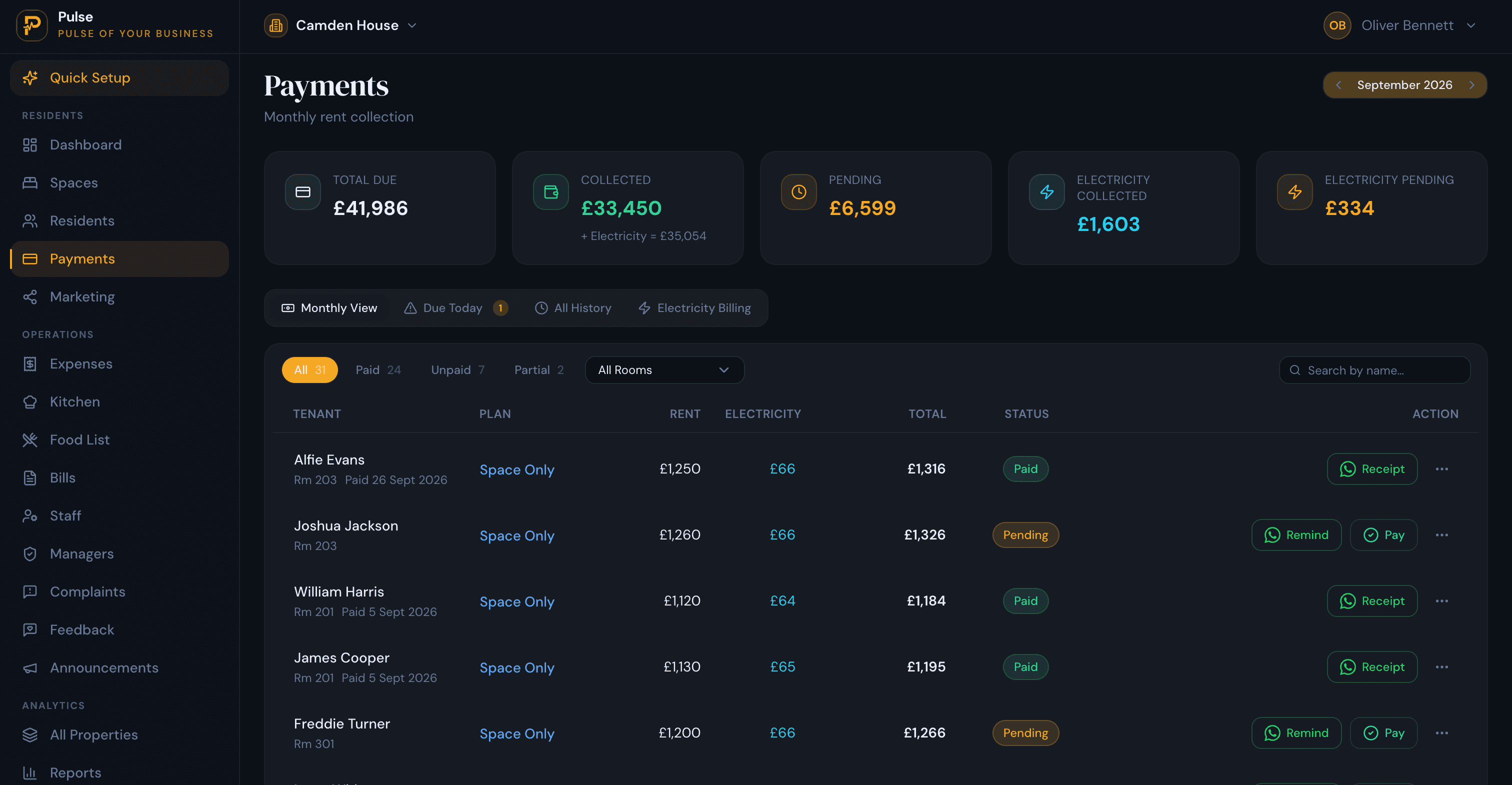
COHO is a UK-focused platform for shared housing: HMOs, co-living and student lets, with a room marketplace and UK compliance tracking. PulseHub is a multi-market COHO alternative that runs HMOs and co-living by the room, the bed or the night, puts rent, metered utilities and meals on one bill per resident, and tracks England HMO compliance too. If your operation reaches beyond the UK, or beyond plain room rent, PulseHub is built for the wider job.
If you run HMOs or co-living and are weighing up COHO, this is a straight comparison rather than a takedown: COHO is a real product and the facts about it below are accurate. The aim is to show what each tool is built for, so you can tell quickly which one fits how you operate. We make PulseHub, so treat this as our considered case rather than a neutral review, and check both against your own portfolio.
What COHO is
COHO is a UK proptech platform for shared housing, launched in 2019 and pitched as tenant-focused. It is aimed at operators of shared housing, and it covers HMOs, co-living, student and mixed portfolios. In outline, it does four things:
- UK compliance tracking for certificates and licences such as gas safety, EICR and HMO licences, with reminders before they expire.
- A tenant marketplace that advertises your available rooms, with housemate matching.
- A tenant message centre for communication between operators and residents.
- Room-level rent tracking across mixed portfolios of HMOs, single lets and student lets.
On pricing, COHO publishes a per-unit model, where a unit is roughly a bedroom, so your bill scales with the number of rooms you let. Check COHO’s own pricing page for current rates, as published figures and third-party listings do not always agree.
What PulseHub is
PulseHub is an operating system for shared living: hostels, student accommodation, co-living and HMOs, where the operator rents a bed rather than a whole flat and money arrives in pieces through the month. It models each property as floors, rooms and beds, keeps occupancy true so a bed is never double-booked, and runs across many markets with the currency, terminology and date format set per country.
Its centre of gravity is billing. Each resident gets one monthly bill that gathers rent, a metered share of electricity split between the residents who shared it by their move-in dates, recurring charges such as water and gas, and meals where you provide them. Partial payments, deposits, discounts and receipts are all handled, and dues carry forward as a single running balance. PulseHub records payments and issues receipts; it is not a payment gateway, so money still moves through your own bank or wallet.
PulseHub vs COHO at a glance
The table below sets the two side by side on the things operators ask about most. The detail, and the honest caveats, follow underneath.
| COHO | PulseHub | |
|---|---|---|
| Primary market | UK-focused, with lettings and compliance built around UK rules | Multi-market: UK, US, UAE, Singapore, Malaysia, South Asia, the Philippines and more, with currency and terminology set per country |
| Property types | HMOs, co-living, student and mixed lets | HMOs, co-living, student, hostels, PG and boarding houses, worker dormitories and bedspaces |
| How you let space | By the room | By the room, the bed, or the night |
| Resident billing | Room-level rent | One bill per resident: rent, a metered share of electricity, water and gas, and meals |
| Finding tenants | Tenant marketplace with housemate matching | A branded public listing site per property, with live availability and an application form |
| HMO compliance | Yes: certificates and licences tracked with reminders | Yes, for England: gas safety, EICR, EPC, fire alarm and HMO licence, with reminders |
| Tenant experience | Tenant message centre | Complaints inbox, private feedback and announcements |
| Pricing model | Per unit (roughly per bedroom) | Per-property plans |
Feature lists change, so treat this as a map rather than a contract, and confirm the current detail with each provider. The row that matters most is usually “primary market”, because it shapes everything else.
Where PulseHub differs
Four differences tend to decide it for operators who choose PulseHub over COHO:
- More than one market. COHO is built for the UK. PulseHub runs the same model across the UK, the US, the UAE, Singapore, Malaysia, India, Pakistan, the Philippines and more, so if your portfolio crosses borders, or might, you are not stuck with a UK-only tool.
- Shared-cost billing. Beyond rent, PulseHub meters electricity and splits it between residents fairly, adds water and gas as recurring charges, and bills meals, all on one per-resident bill. This is the core of running a shared house, and it is where a room-rent tracker leaves you doing sums by hand. See HMO utility billing for how that works.
- A wider range of property types. PulseHub handles not just HMOs and co-living but hostels, PG and boarding houses, student halls and worker dormitories, by the bed or the night. If your operation is broader than classic HMOs, one system covers it.
- Your own listing site. Rather than only advertising rooms on a shared marketplace, PulseHub gives each property its own branded public page with live availability, prices, photos and an application form, marked up so search engines and AI assistants can read it. You build demand on your own site and brand, not under someone else’s.
One thing you do not give up by moving: PulseHub tracks England HMO compliance too, including gas safety, EICR, EPC, fire-alarm and HMO-licence dates with reminders and evidence files. It is a tracker to keep you organised, not legal advice.
How to judge a COHO alternative
PulseHub will not be the only tool you look at, and you should shortlist a few before you decide. However you compare them, judge each one on the same handful of questions rather than the length of its feature list:
- Does it bill a room and a bed, and can it split a shared utility bill, or only track whole-unit rent?
- Does it match your markets and property types, now and where you are heading?
- Does it keep you on top of compliance for the places you operate?
- Can you get your data in and out cleanly, so you are never locked in?
- Does the pricing model suit your room counts, not just the headline number?
Who should pick which
The short version: PulseHub is the one to pick if you want to bill rent, metered utilities and meals on one per-resident bill, run across more than one market, let by the bed or the night, or manage hostels, PG and worker housing alongside HMOs, while still tracking England HMO compliance. COHO is narrower by design, built for UK-only, room-level lettings, so the further your operation goes beyond that, the more PulseHub gives you.
If you are leaning PulseHub, the quickest way to be sure is to see it on your own property type: HMO management, co-living management, student accommodation, or the wider shared-housing overview. New to the category? Start with what a property management system is.
In short
COHO is a UK-first, tenant-marketplace platform for room-level lettings. PulseHub covers more ground: multiple markets, letting by the room, bed or night, one bill per resident for rent, metered utilities and meals, a wider range of property types, and England HMO compliance alongside. If your operation reaches beyond a single UK market or beyond plain room rent, PulseHub is built for it. Start a free trial and see it on your own portfolio.