Shared housing
Rooming House Management Software in Australia
· 8 min read
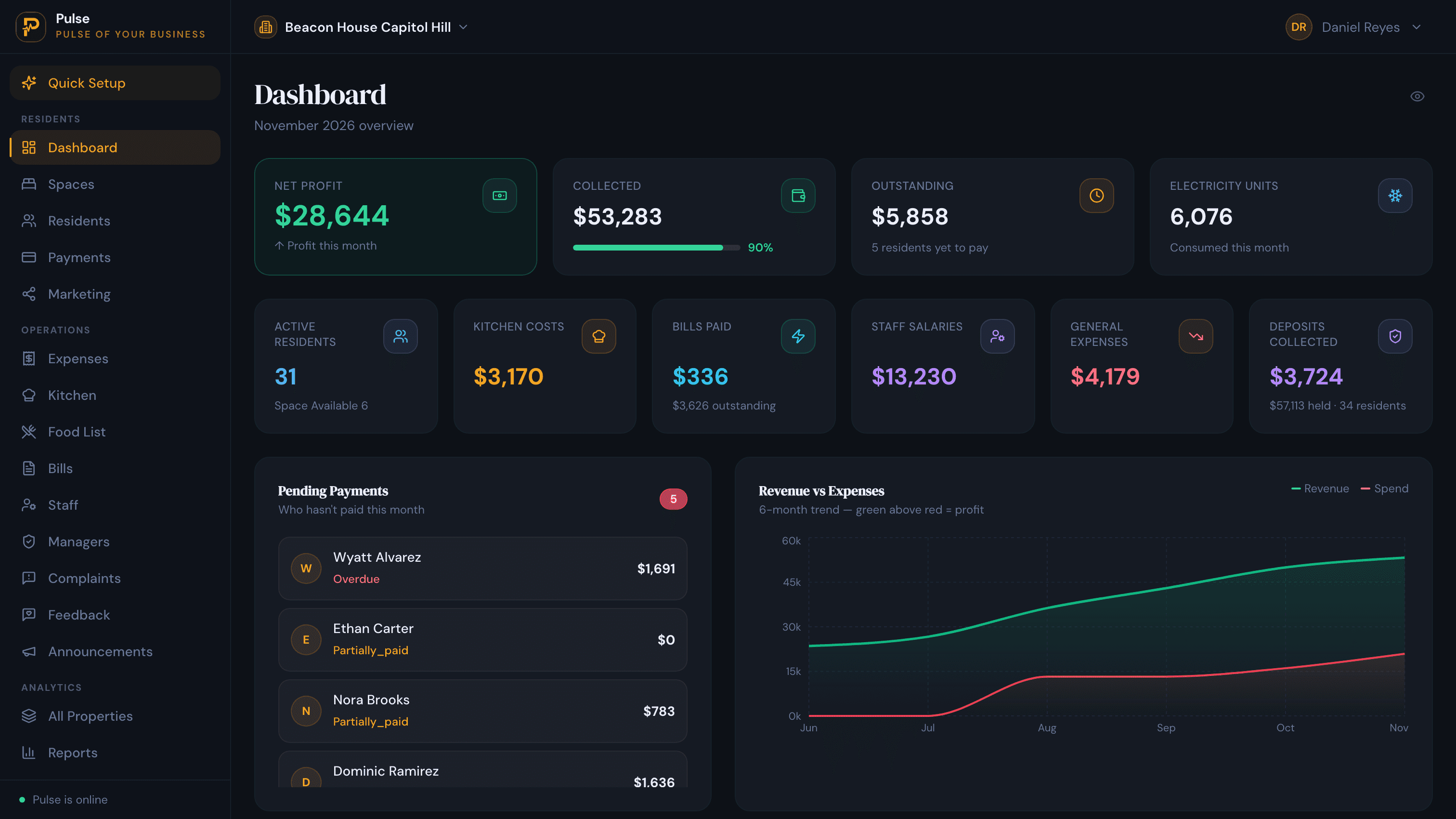
Rooming house management software for Australia runs a rooming or boarding house from one place: who is in which room, one bill per resident in Australian dollars, bonds and payments, maintenance, and every house in one view. It is built for letting room by room, each with its own resident and rent, the way rooming houses actually run, not the whole-property model a standard rental tool assumes.
Rooming houses are some of the hardest properties to run on a spreadsheet: rooms turn over often, residents pay weekly or fortnightly, bonds come and go, maintenance is constant, and the rules are strict. If you run rooming or boarding houses in Melbourne, Sydney, Brisbane or a regional town, this guide covers what the software does, why a standard rental tool does not fit, the features that matter here, and how to choose.
What rooming house software is
It is software that runs a house’s daily operations from one place: a record for every resident with their bond and history, true occupancy room by room, one bill that gathers rent and any charges, the payments against it, and a clear view of how each house is doing. Instead of a room list in one spreadsheet and a rent book in another, it keeps them together, for one house or a whole portfolio.
Why a standard rental tool does not fit
Most property tools assume one tenant signs for one whole property and pays one rent. A rooming house does not work like that: each room is let on its own, to its own resident, with its own rent and bond, and residents come and go often. Run that on a whole-property tool and you cannot bill a room, cannot see a house as part full, and every move-in and move-out becomes a manual edit.
The features that matter in Australia
Use this as a checklist when you compare tools:
- Room-level occupancy that cannot be over-filled, so a house with eight of ten rooms taken reads as eighty per cent full.
- One bill per resident in Australian dollars, with rent collected weekly, fortnightly or monthly and recorded as part-payments.
- Bonds held against each record and settled at the end of the residency.
- Payments recorded with receipts, so collections are never a guess and you have a clean record for your accountant.
- Complaints logged and tracked to resolution against the room.
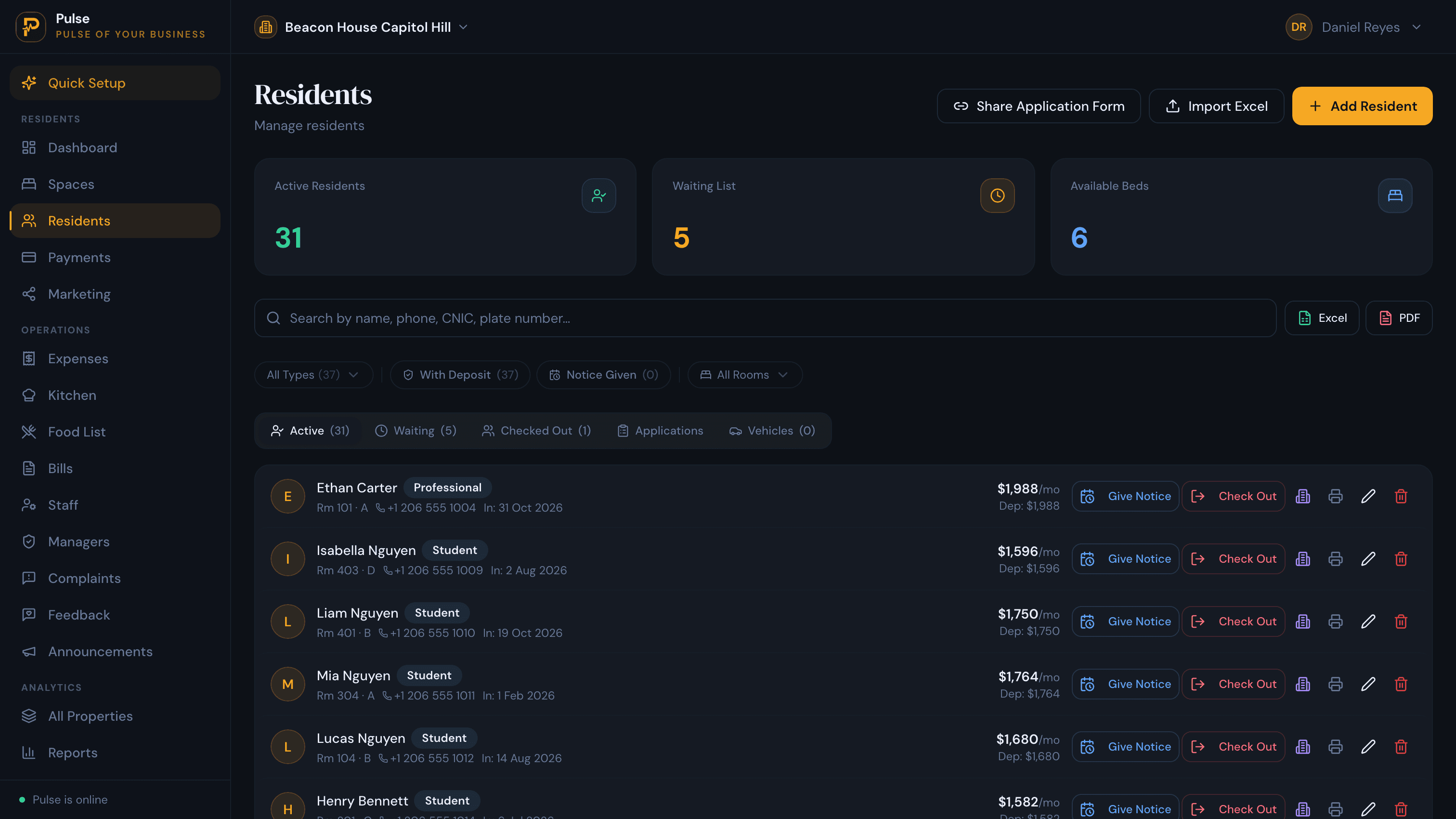
- A record per resident, with documents, emergency contact and full history.
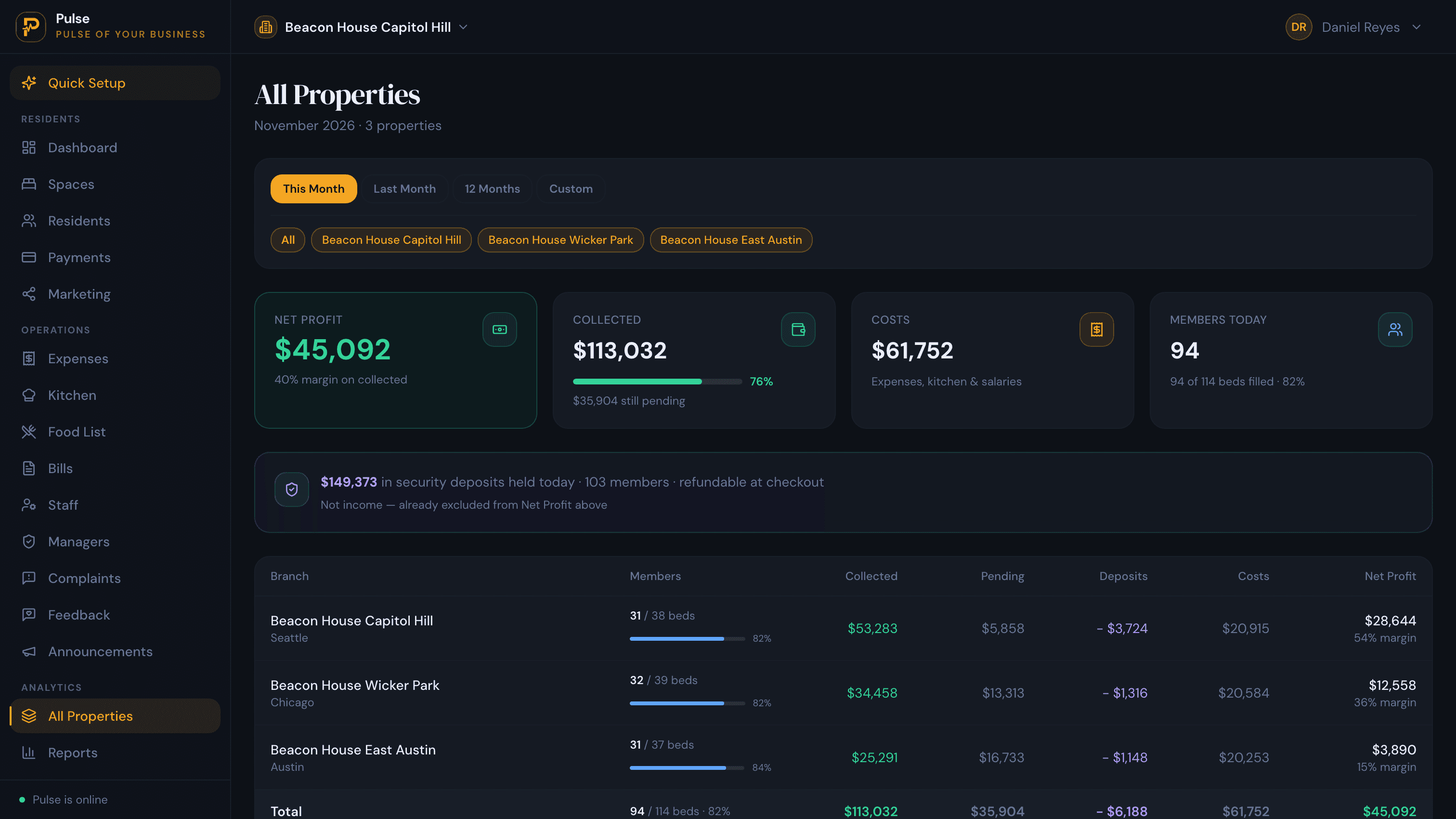
- A portfolio view across every house, with occupancy and collections per house, and manager access scoped to one house.
- Your own public page, with live room availability, so you fill rooms directly.
How PulseHub fits
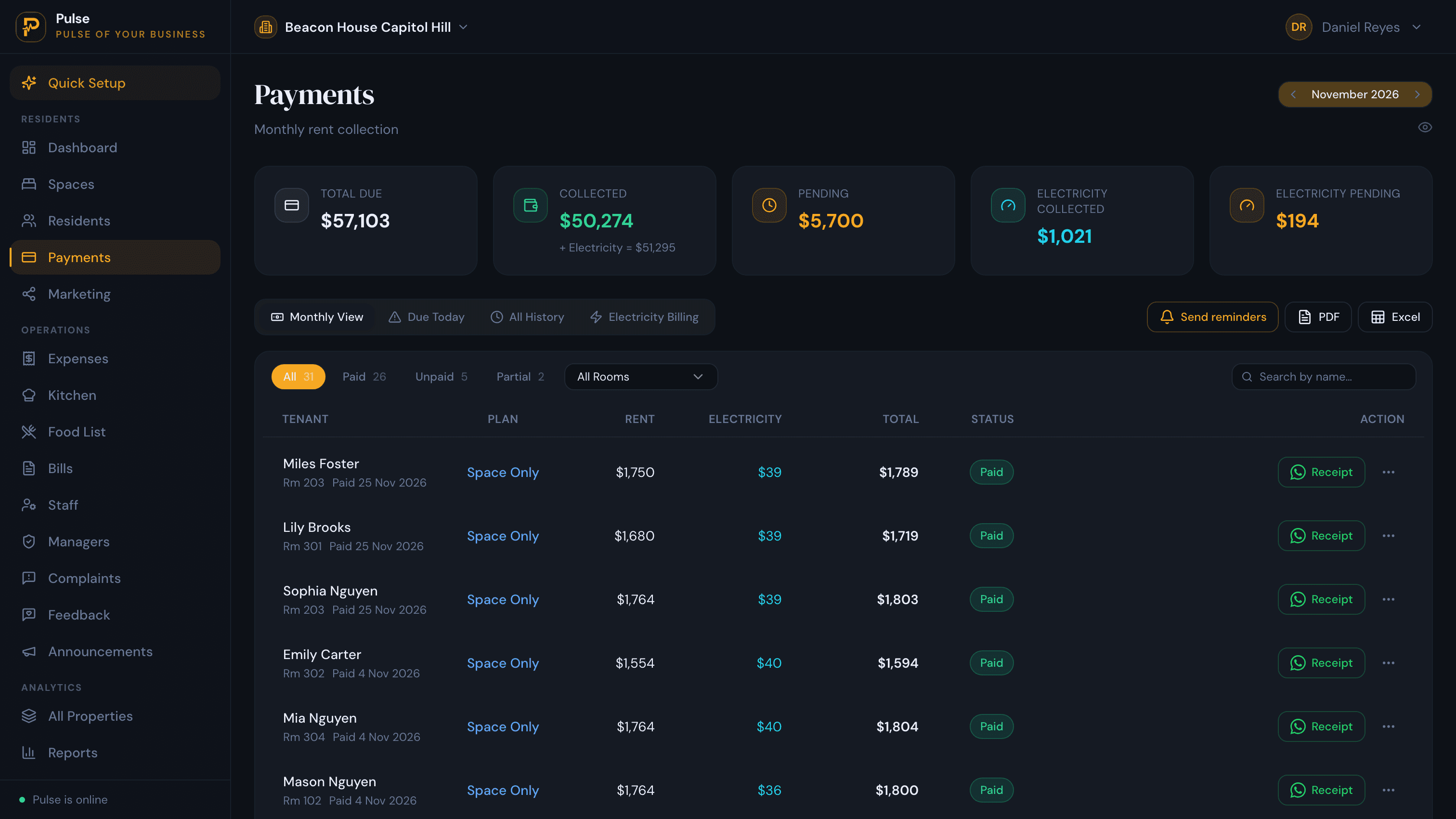
PulseHub is built for renting by the room and the bed, which is exactly the rooming house model. It organises each house into rooms, keeps occupancy true, and every resident is one record with their documents, bond and history. Each resident gets one bill in Australian dollars, with rent paid weekly, fortnightly or monthly and recorded as part-payments, bonds settled at the end, and every house in one portfolio view. Each house also gets a free public page with live availability, so you fill rooms from your own link.
One honest boundary: PulseHub runs the operations and records payments, but it does not register your rooming house with Consumer Affairs Victoria or the relevant state authority, and it is not legal advice, so meeting rooming house standards stays your responsibility. For related reading, see how to run a boarding house and property management software for shared housing; for the market, see PulseHub for Australia.
In short
If you run rooming or boarding houses in Australia, room by room, in Australian dollars, and often more than one, you need software built for that model, not a whole-property rental tool. Look for true room-level occupancy, one bill per resident, bonds held and settled, payments recorded with receipts, and a single view across every house.