Comparisons
RentOk Alternative: How PulseHub Compares for PG and Hostel Operators
· 8 min read
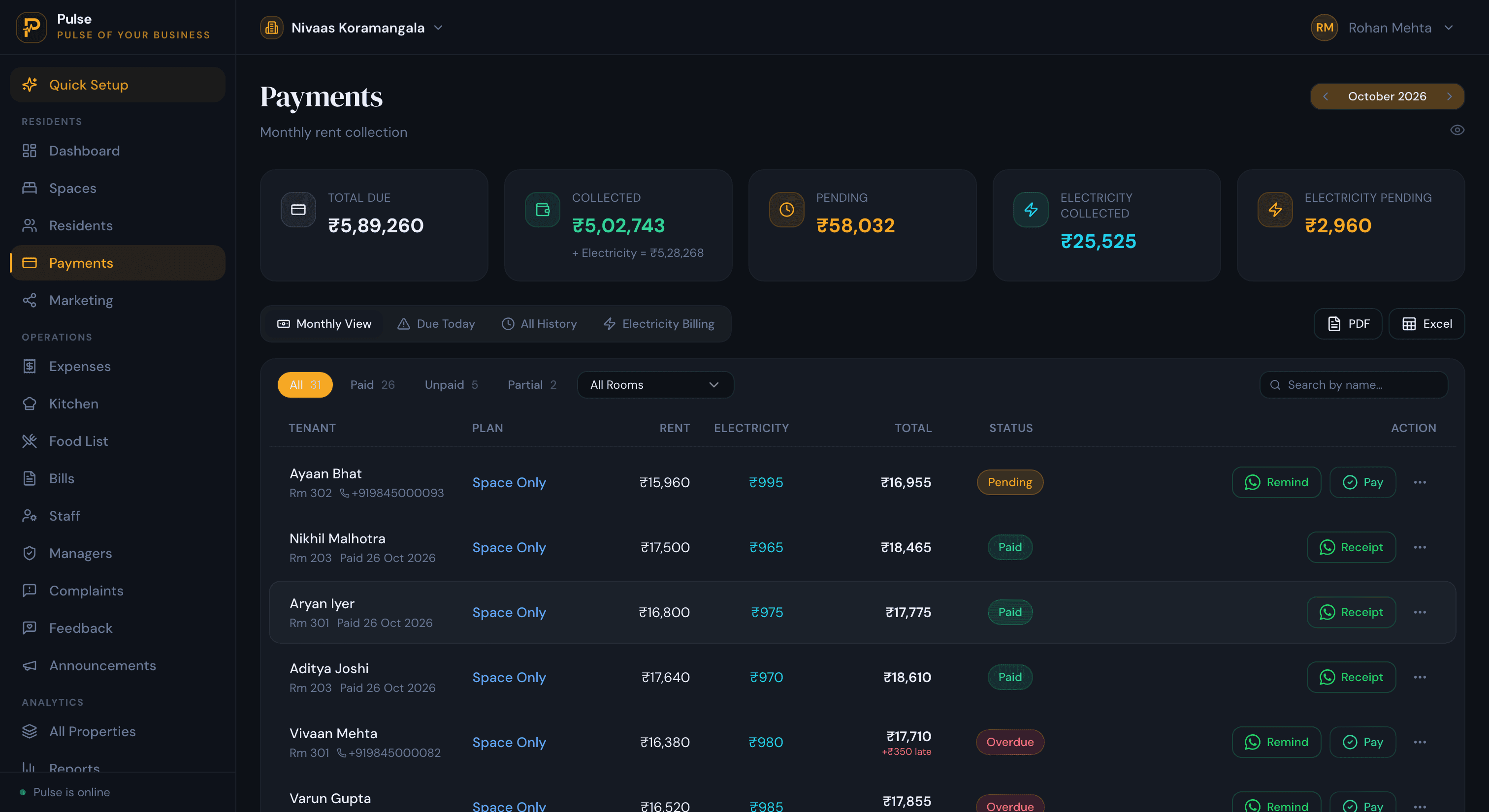
RentOk is an India-native, mobile-first app for PG, hostel and flat owners, strong on UPI AutoPay and Aadhaar e-KYC. PulseHub is a web-based RentOk alternative with deeper operations: true bed-level occupancy, one bill per resident for rent, food and a metered share of electricity, kitchen costs and a view across every PG, running in India and other markets. If native UPI auto-debit on a phone is your one must-have, an India-specific app fits that; if deep operations, or more than one market, matter, PulseHub is built for it.
If you run a PG or hostel and are weighing up RentOk, this is a straight comparison rather than a takedown: RentOk is a real, popular product and the facts about it below are accurate. The aim is to show what each tool is built for, so you can tell quickly which one fits how you operate. We make PulseHub, so treat this as our considered case rather than a neutral review, and check both against your own PG.
What RentOk is
RentOk is an Indian property-management app for PG, hostel, flat and co-living owners, made by EazyApp Tech and built mobile-first. It is aimed squarely at the Indian market, and in outline it does these things:
- Rent collection with UPI AutoPay, so rent can be auto-debited from a tenant, plus online payments.
- Aadhaar e-KYC for tenant verification at onboarding.
- Reminders and lead generation, chasing dues and bringing in enquiries for vacant beds.
- Rooms, expenses and maintenance, with reports exportable to PDF and Excel.
Those India-native payment and KYC features are a genuine strength if you operate only in India and want everything on a phone. On pricing, RentOk publishes a per-tenant model (for example a monthly charge per tenant on AutoPay), so your bill scales with tenant count. Check RentOk’s own pricing for current rates, as published figures and third-party listings do not always agree.
What PulseHub is
PulseHub is PG and hostel management software built around the operations of running shared accommodation. It models each PG as floors, rooms and beds, keeps occupancy true so a bed is never double-booked, and gives every resident one monthly bill that gathers rent, food where it is part of the package, and a metered share of electricity, with part-payments recorded as installments against a running balance. The kitchen’s own costs are tracked so you can see the real cost per resident, deposits are held and settled at check-out, and every PG rolls up into one portfolio view. It records payments and chases dues with automatic WhatsApp reminders, with numbered receipts to share; it is web-based and runs across India and other markets.
PulseHub vs RentOk at a glance
The table sets the two side by side on what PG operators ask about most. The honest detail follows underneath.
| RentOk | PulseHub | |
|---|---|---|
| Primary market | India, built around Indian PG and rental operators | India and beyond, adapting currency, wording and payment methods per market |
| Platform | Mobile-app first | Web-based, works on any device |
| Rent payments | UPI AutoPay auto-debit and online payments | Records payments (cash, bank, wallet) with automatic WhatsApp reminders |
| Tenant KYC | Automated Aadhaar e-KYC | ID type, number and document kept on file |
| Shared electricity | Rent and expense tracking | Metered and split between residents by join dates |
| Food and mess | Rent-collection focus | Food packages with kitchen cost tracked per resident |
| Filling vacancies | Lead generation | Your own public PG page with live vacancies and a waitlist |
| Pricing model | Per tenant | Per property |
Feature lists change, so treat this as a map rather than a contract, and confirm the current detail with each provider. The rows that usually decide it are payments and market: how you want to collect rent, and whether you operate only in India.
Where PulseHub differs
Four differences tend to decide it for operators who choose PulseHub:
- Metered electricity, split fairly. PulseHub meters each room and splits the charge between the residents who shared it by their join dates, onto the same bill as rent. A flat share, or tracking it outside the system, is where a rent-first tool leaves you doing sums by hand.
- Food and mess, costed properly. Food can sit in a resident’s package, and the kitchen’s groceries, gas and cook wages are recorded, so you can see the real cost per resident rather than guessing whether the mess pays for itself.
- Not built for India alone. PulseHub runs PGs and hostels in India and other markets, adapting currency and local payment methods, so if you ever operate beyond India, one system comes with you.
- Your own listing page. Rather than only feeding a lead marketplace, each PG gets its own public page with live vacancies, rent, amenities and a WhatsApp button, so enquiries come to you.
One honest boundary, so you can judge the fit. PulseHub records payments rather than auto-debiting them, so it does not do UPI AutoPay, and it keeps ID and documents rather than running automated Aadhaar e-KYC. If native UPI auto-debit on a phone app is the single thing you are buying for, an India-specific tool does that more directly. PulseHub earns its place when the operations, or more than one market, start to matter.
Who should pick which
The short version: PulseHub is the one to pick if you want bed-level occupancy with rent, food and metered electricity on one bill, kitchen costs tracked, your own listing page, and one system that is not locked to India alone. RentOk is narrower by design: an India-only, phone-first tool centred on UPI auto-debit and Aadhaar, so the more your needs go beyond collecting rent on a phone in India, the more PulseHub gives you.
If you are leaning PulseHub, the quickest way to be sure is to see it on your own setup: PG management software, hostel management software, or PulseHub for India. New to the category? Read our guide to PG management software in India.
In short
RentOk and PulseHub both run PGs, but they are built for different operators. RentOk is an India-first, phone-first tool centred on UPI auto-debit and Aadhaar. PulseHub is an operations-first, web-based platform that bills rent, food and metered electricity per resident, tracks kitchen costs, and is not locked to India alone. Match the tool to how you collect rent, how deep your operations go, and the markets you run in, then trial the one that fits.