Shared housing
How to Split Utility Bills in a Shared House
· 7 min read
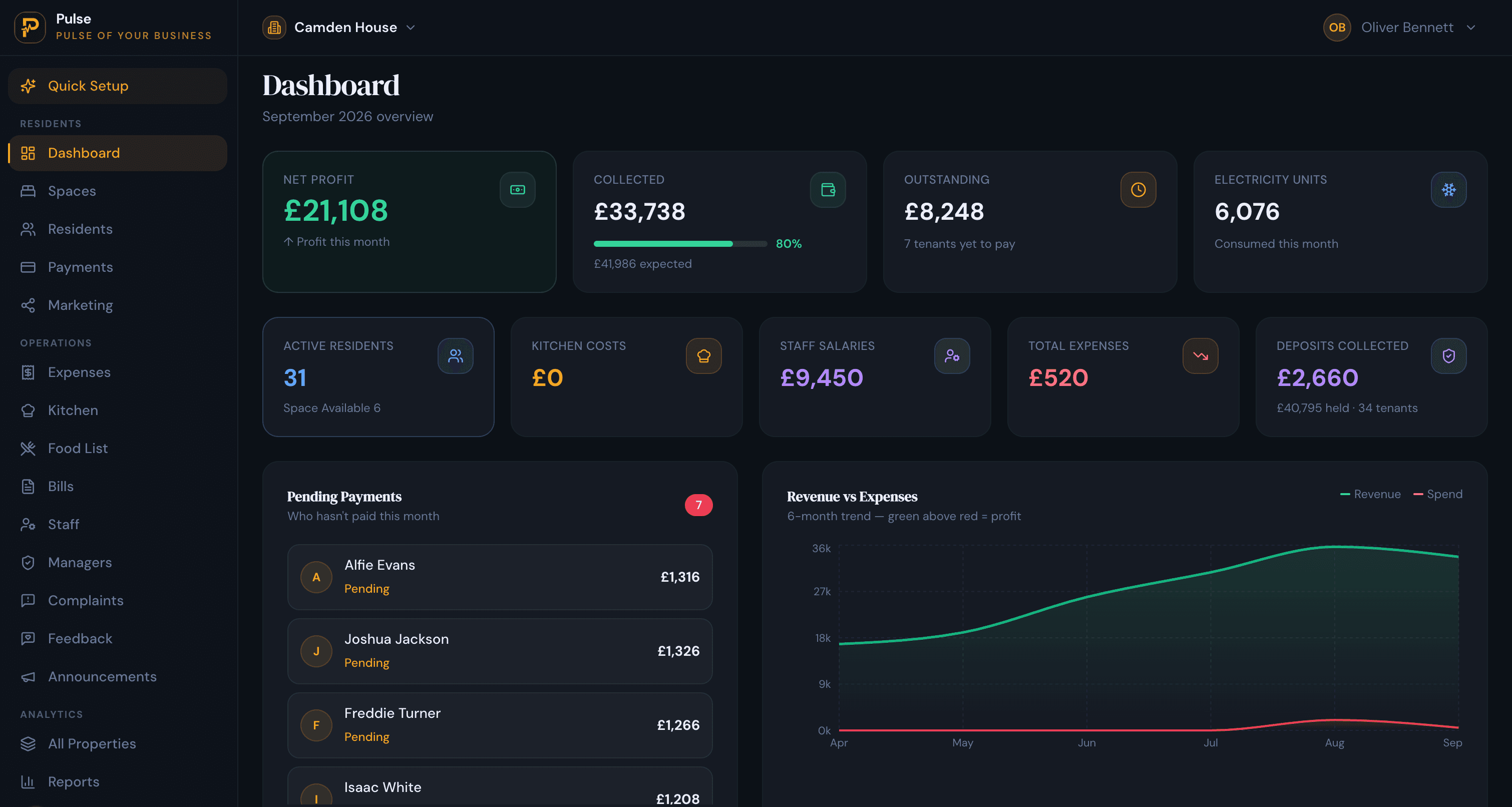
Splitting utility bills in a shared house comes down to one principle: variable, metered costs should be split by a meter reading and by the dates each resident was there, and genuinely fixed costs can be split evenly. Get that right and the shares are fair, defensible and quick to produce. Get it wrong, with a flat per-head guess, and you either lose money or face an argument every month.
In a house share, co-living space or HMO, the utilities are one of the few costs that genuinely vary with who is living there and how they use the place. This guide covers how to split each type of bill fairly, how to handle residents who join or leave mid-period, and how software turns the whole thing from a spreadsheet chore into a line on each resident’s bill.
Metered costs: split by reading and by dates
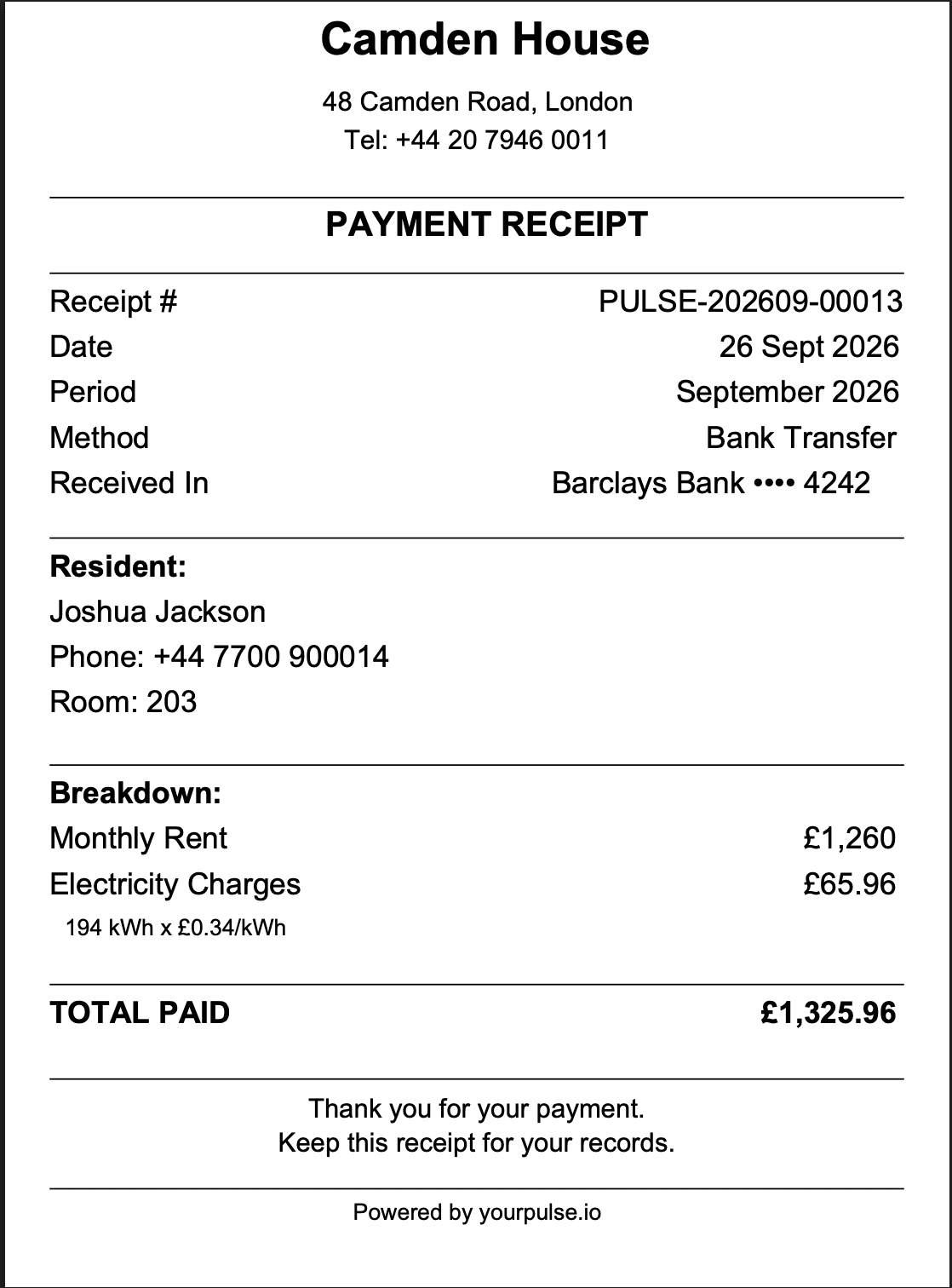
Electricity is the bill that varies most, especially where one room runs a heater or an AC unit. The fair way to split it is from an actual meter reading over the period, priced at the property’s tariff, then divided between the residents who were living there, weighted by how long each was present. That is very different from dividing the total evenly by the number of beds, which overcharges the person who was away for two weeks and undercharges the one who ran the AC all month.
The practical requirement is a reading at the start and end of the period, a tariff, and the move-in and move-out dates for each resident. With those, the split is arithmetic, and it holds up if anyone questions it.
Fixed costs: split evenly as a recurring charge
Broadband, and often water and a standing gas charge, do not vary with usage in a way you can measure per room. These are fairest split evenly and simplest handled as a set recurring charge that appears on every resident’s bill each period. The resident sees a predictable line rather than a surprise, and you are not re-reading a meter for a cost that does not move.
Residents who join or leave mid-period
This is where flat per-head splitting falls apart. If someone moves in on the 20th, charging them a full month of electricity is indefensible; if someone moves out on the 10th, billing them to month-end is worse. Splitting by the dates each resident was present solves both: the meter period is divided by presence, so each person pays for their own days. Doing this by hand is error-prone, which is the main reason operators move to software for it.
How software handles it
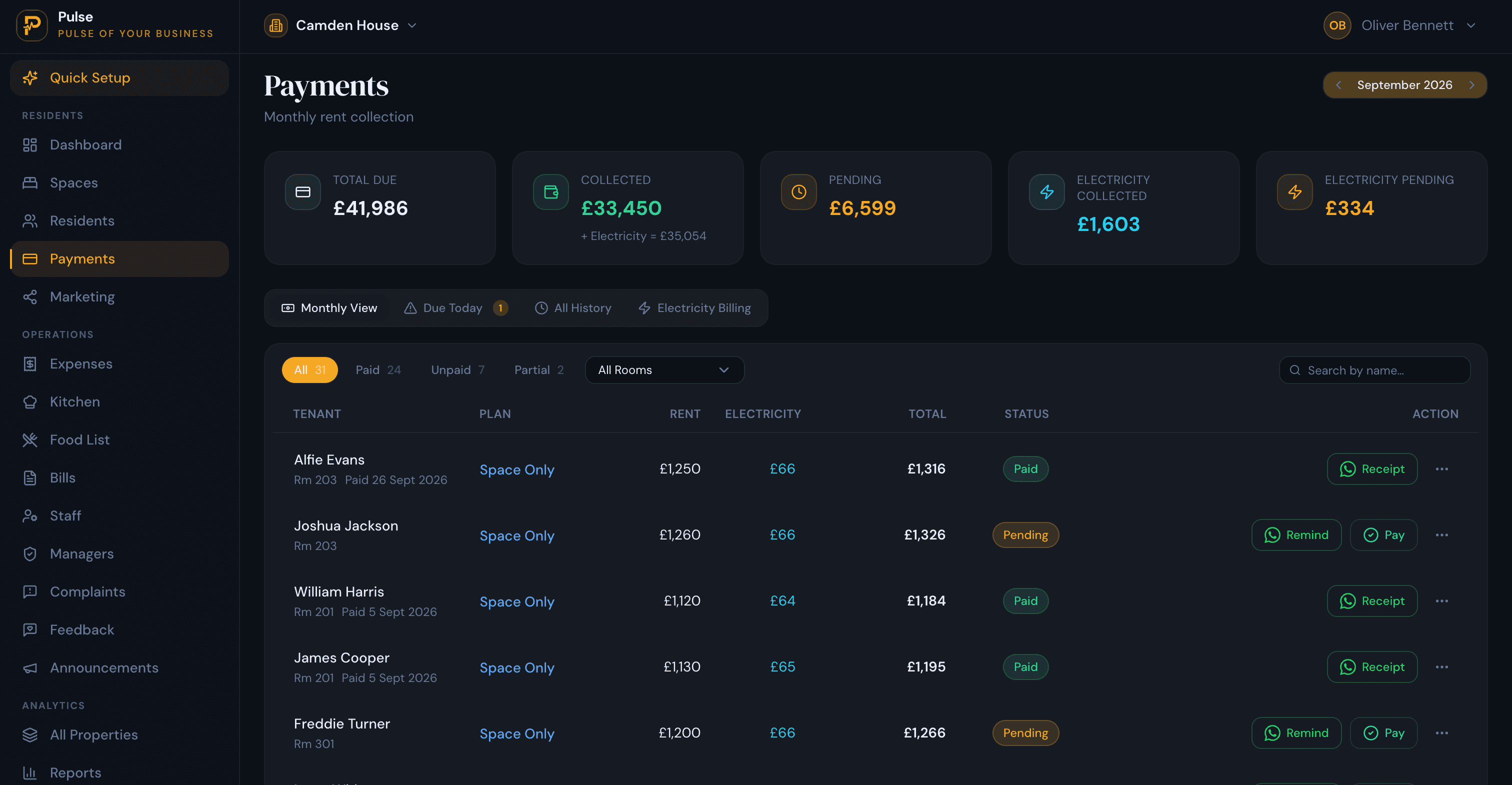
Good software turns the split into a step, not a spreadsheet. You enter the meter reading, it applies the tariff and divides the cost between residents by their dates, and each share lands on that resident’s own bill alongside their rent. Fixed costs sit as recurring charges. The point is that every resident gets one clear bill, each line is explainable, and you are not rebuilding the maths every month.
How PulseHub does it
PulseHub splits metered electricity automatically: enter the reading and it applies the property tariff and divides the cost between residents by their join dates, so a mid-month arrival pays only for their days. You can attach a photo of the meter as evidence, and if a reading is wrong you can re-price the period in place. Water, gas and broadband can be set as recurring charges that appear on every bill. Each share sits on the resident’s one bill, with a receipt that breaks rent and electricity out, so the basis is always visible.
One honest boundary: PulseHub records and bills these shares, but it is not a utility supplier and does not pay your energy, water or broadband provider for you. You settle with the provider as usual; PulseHub handles the fair split and puts it on each resident’s bill. It suits the shared-living models directly: HMO management software, co-living management software, hostel management software and property management software for shared housing.
In short
Split metered electricity by a reading and by each resident’s dates, split fixed costs evenly as a recurring charge, and make sure every share traces back to a reading, a tariff and the dates. Software that does this automatically, and puts each share on the resident’s own bill, turns the monthly utility split from an argument into a line item.